
Russian Accent | Blog of Nadia Sikorsky


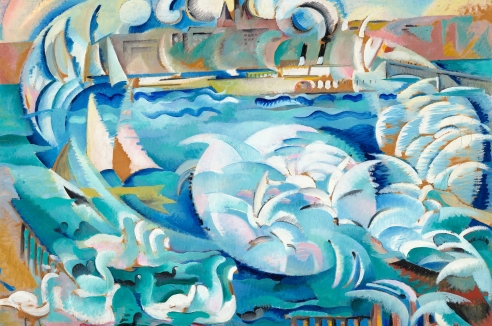


British artist Monster Chetwynd has installed a gigantic sculpture in the grounds of Switzerland’s largest art museum. Visitors are not merely allowed to touch it: they can climb inside and clamber about.


The multitude of people one meets in life can easily be divided into two groups: those who lift us up and those who drag us down. The first group outweighs the second, and the earlier we choose it, the more interesting and fulfilling our existence becomes. In my youth, I had the incredible fortune of meeting many exceptional people who influenced me. James Baldwin is one of them.


The Siberia Job in its original version is the fourth novel overall and the second thriller of American Josh Haven. It was published very recently, in 2023, and one should congratulate Éditions Buchet/Chastel for having it quickly translated into French and published under the surprisingly English title: Wild Wild Siberia.

Despite everything, this is still a season of light and gifts; of lux and luxury. So I decided to combine the two by going to La Scala for Boris Godunov. I know this opera by heart; I have seen it… I no longer remember how many times, in all kinds of productions, including at the Grand Théâtre de Genève and at Opernhaus Zürich.


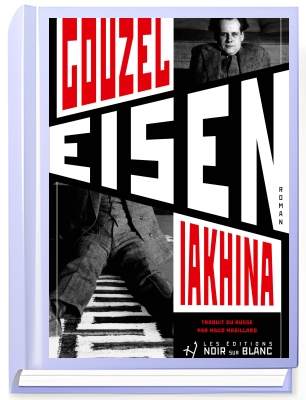
To mark the publication in French of Guzel Yakhina’s novel A Volga Tale by Éditions Noir sur Blanc in Lausanne, we spoke once again to the acclaimed Russian writer and asked her thirteen questions. Maud Mabillard’s translation will reach Swiss bookshops tomorrow, 19 August 2021.

A scandal has erupted in Russia over the television adaptation of Guzel Yakhina’s novel Zuleikha, whose final episode was broadcast yesterday on Rossiya 1. The accusations levelled at the production team strike us as symptomatic of Russian society.

It so happened that over the past couple of months I have plunged headlong into the work of the 35-year-old Russian director Timofey Kulyabin, towards whom I had previously – and now it can be admitted – felt a certain wariness: the scandalous story with Tannhäuser had indeed left that notorious taint.

On 29 May, the Mikhailovsky Theatre in St Petersburg will host a gala concert marking the 40th anniversary of the artistic career of the distinguished Georgian singer. I had the opportunity to speak with him shortly before this event.
Paata, you were born in Tbilisi, studied in Milan and Odessa, yet you describe yourself as a representative of the Russian bass school. Why?


Last August, the Lausanne-based publishing house Noir sur Blanc brought out the French translation of Zuleikha Opens Her Eyes, winner of Russia’s Big Book Award.
In my view, Guzel Yakhina’s debut novel has been one of the most remarkable events in Russian literary life in recent years. And not merely because of the official recognition it has received. What matters most is that I do not know a single person who has remained indifferent to it.


In all the photographs, Elisaveta Ilyinichna Leonskaya, whom the French-language press refers to only as a grande dame, is dressed in black, without a smile. I too imagined her as strict, unapproachable, withdrawn. Yet upon meeting her in person, this image dissolved within minutes. The main feature of Leonskaya’s face is her eyes. Large, blue, radiant, drawing one in. Next comes the smile, which hardly ever leaves her face.


One of the guests at the “Zaubersee” music festival, recently held in Lucerne, was, somewhat unexpectedly, the outstanding Russian animator whose Tale of Tales was признана the greatest animated film of all time. His work was the focus of a special programme, “An Evening with Norstein”. I had the rare opportunity to speak with the Master in a relatively calm setting.
About the author
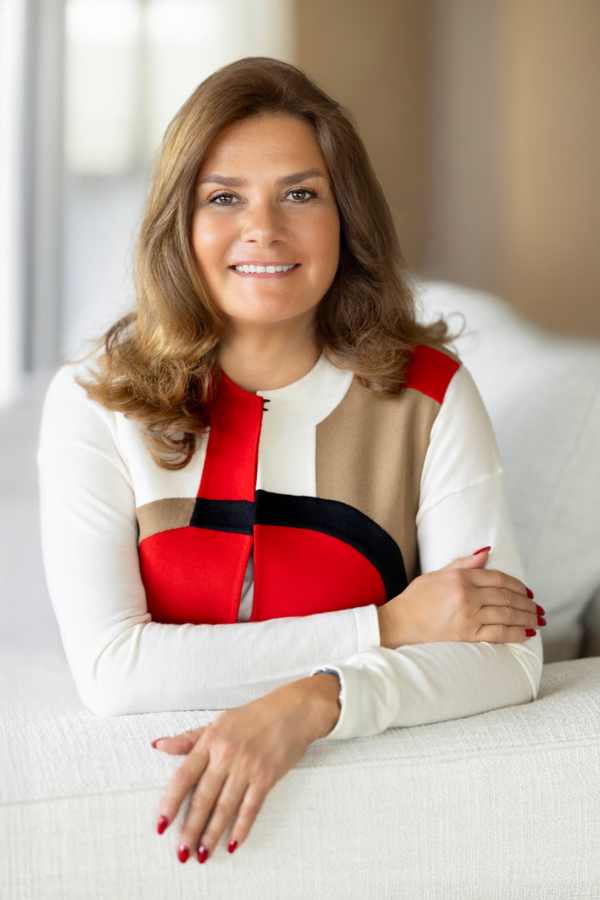
Nadia Sikorsky was born and raised in Moscow. She graduated from the Faculty of Journalism at Moscow State University and went on to complete her postgraduate studies there, earning a PhD in History. She spent 13 years at UNESCO, first in Paris and then in Geneva. After serving as Director of Communications at Green Cross International, founded by Mikhail Gorbachev, she launched NashaGazeta.ch in 2007, Switzerland’s first Russian-language online daily newspaper.
In 2022, Nadia Sikorsky was named to Le Temps’ Forum des 100, which brings together individuals who, in the newspaper’s view, have “significantly contributed to the success of French-speaking Switzerland”, from across public life, business, politics, science and culture.
After 18 years at the helm of NashaGazeta.ch, Nadia Sikorsky decided to devote herself to what had always held a special place in her work as a journalist: culture in all its diversity. This led to the creation of Russian Accent, a trilingual cultural blog in Russian, French and English, born in the heart of Europe, in Switzerland, which has become her second home and whose multiculturalism and multilingualism have helped shape the character of this new project.
At the heart of the project is the perspective of a European of Russian origin, drawing on more than 35 years of professional experience and a deep knowledge of both cultural traditions. Nadia Sikorsky sees her role as that of a cultural mediator between the two. The title of the blog, Russian Accent, reflects this idea: the accent is neither a linguistic barrier nor a political position, but a distinctive cultural imprint within a European context.
Events


Recent comments