
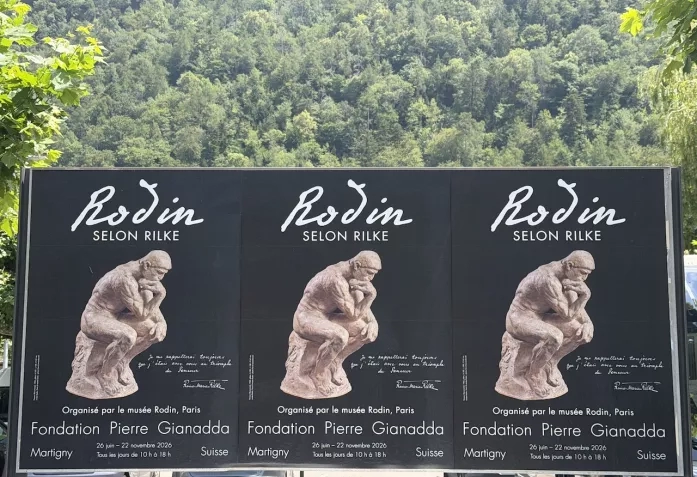
Let me begin with a brief lyrical digression. In November 1989, I came to Paris for the first time to write my thesis. My grant was so modest that even the canteen at UNESCO, where I was an intern, was beyond my means. So when my colleagues went off to lunch, I went out to walk around the city. At least twice a week I would buy myself a sandwich and head to the Musée Rodin on rue de Varenne. A couple of times I bought a ticket for the museum itself; after that, I contented myself with the garden. I do not know how it is now, but at the time entry to the garden was free, or almost free, so one could sit on a bench with a book, wander about, admire the sculptures and imagine who had walked along those paths before.
And so many remarkable people had! The mansion where Auguste Rodin (1840–1917) worked is known as the Hôtel Biron, although the famous Marshal of France merely bought it from the widow of its first owner, the financier Abraham Peyrenc de Moras, for whom it had been built between 1727 and 1732 by the royal architect Jean Aubert. Not everyone remembers that in 1810–1811 the Hôtel Biron was rented for the Russian embassy, headed by Prince Alexander Borisovich Kurakin (1752–1818), and that only in the early twentieth century did it become a kind of colony for artists and performers, where Auguste Rodin and Henri Matisse rented studios for a symbolic sum, Isadora Duncan rehearsed, and many other remarkable figures came and went. (For Russians, the American dancer Duncan will forever be associated with the poet Sergei Yesenin, of course.)
Rainer Maria Rilke was also a frequent visitor. The great poet, born in Prague in 1875, wrote not only in German but also in French and even a little in Russian. On 28 June 1921, he settled in Switzerland, where he died of leukaemia on 29 December 1926 at the Valmont clinic in the canton of Vaud. This year, then, marks a sombre anniversary to which the exhibition is linked.
In 2017, when writing about the international research and exhibition project Rilke and Russia, organised by the German Literature Archive in Marbach, the State Literary Museum in Moscow and the Swiss Literary Archives, I recalled Rilke’s very special relationship with my native country. He was quite literally in love with it. On his first visit to Russia in 1899, Rilke met Leo Tolstoy at Yasnaya Polyana, posed for Leonid Pasternak, father of the future author of Doctor Zhivago, and met the painters Viktor Vasnetsov and Ilya Repin, as well as the sculptor Paolo Troubetzkoy. Upon his return to Europe, he began promoting Russian art, writing articles on Russian painting and translating works by Russian authors, including Mikhail Lermontov’s famous poem “Alone I set Out on the Road”. His extensive correspondence with Boris Pasternak, who dedicated his autobiographical prose work Safe Conduct to Rilke, has survived, as has his correspondence with Marina Tsvetaeva, who shortly before the poet’s death wrote to him: “You are not my dearest poet (‘dearest’—a level), you are a phenomenon of nature, which cannot be mine and which one does not so much love as undergo, or (still too little) the fifth element incarnate: poetry itself or (still too little) that whence poetry comes to be and which is greater than it (you)”, as translated by Margaret Wettlin and Walter Arndt in Letters: Summer 1926: Boris Pasternak, Marina Tsvetayeva, Rainer Maria Rilke, 1985.
So you can imagine the flood of memories and emotions that swept over me when I learnt about the exhibition at the Fondation Pierre Gianadda. Rodin had already “visited” the Fondation several times, but never before in Rilke’s company. It is hard to imagine that the poet, so enchanted by Russian culture, did not share his enthusiasm with his older and deeply revered friend.
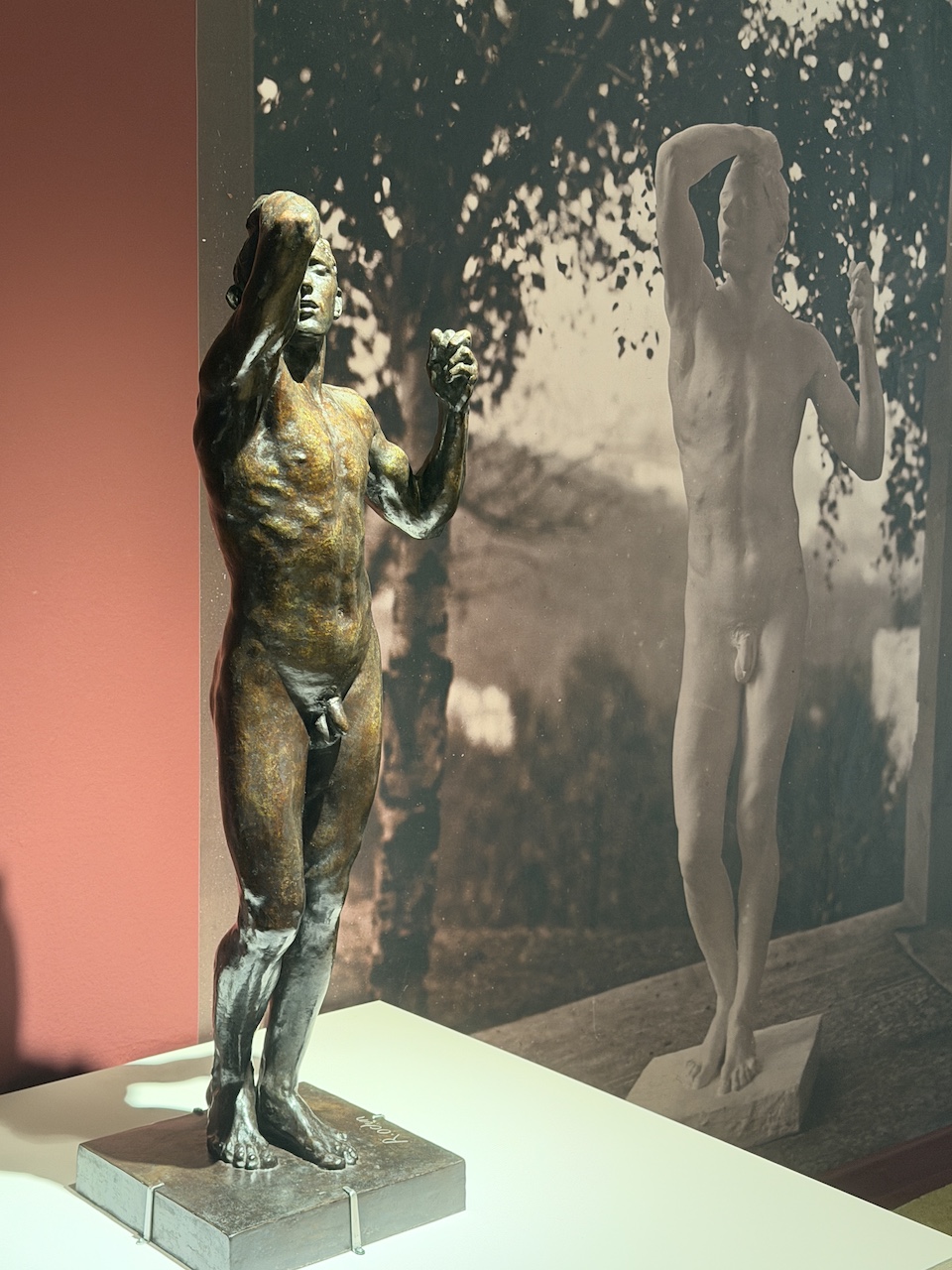
I had the good fortune to see the exhibition before its official opening, to hear the fascinating explanations of its curator, Véronique Mattiussi, head of the research department at the Musée Rodin, and to learn a few details that had previously been unknown to me. For example, I learned that when Rodin first showed the figure later known as The Bronze Age (L’Âge d’airain) in Brussels in 1877, its naturalism was so convincing that the sculptor was accused of moulage sur nature, as though he had not modelled the body at all but taken a cast from a living model. The accusation was unfounded. His model was indeed the Belgian soldier Auguste Neyt, but Rodin modelled the figure from life rather than taking a cast from his body. The scandal, however, did Rodin no harm. On the contrary, it was this very episode that first brought Rodin wide public attention. But I am getting ahead of myself.
Rodin and Rilke met in September 1902. The immediate reason for their meeting was a monograph on Rodin, who was then at the height of his fame. The young poet had undertaken to write it at the request of a German publisher and, possibly, under the influence of his wife Clara Westhoff. She too was a sculptor and in 1900 had attended the short-lived Institut Rodin. The two great talents immediately took to one another, and a special bond quickly formed between them. A few years later, Rodin invited Rilke to stay with him in Meudon, giving him a small pavilion in which to work and entrusting him with some secretarial tasks. In this delicate way, he decided to offer material support to a friend who was in difficult financial circumstances.
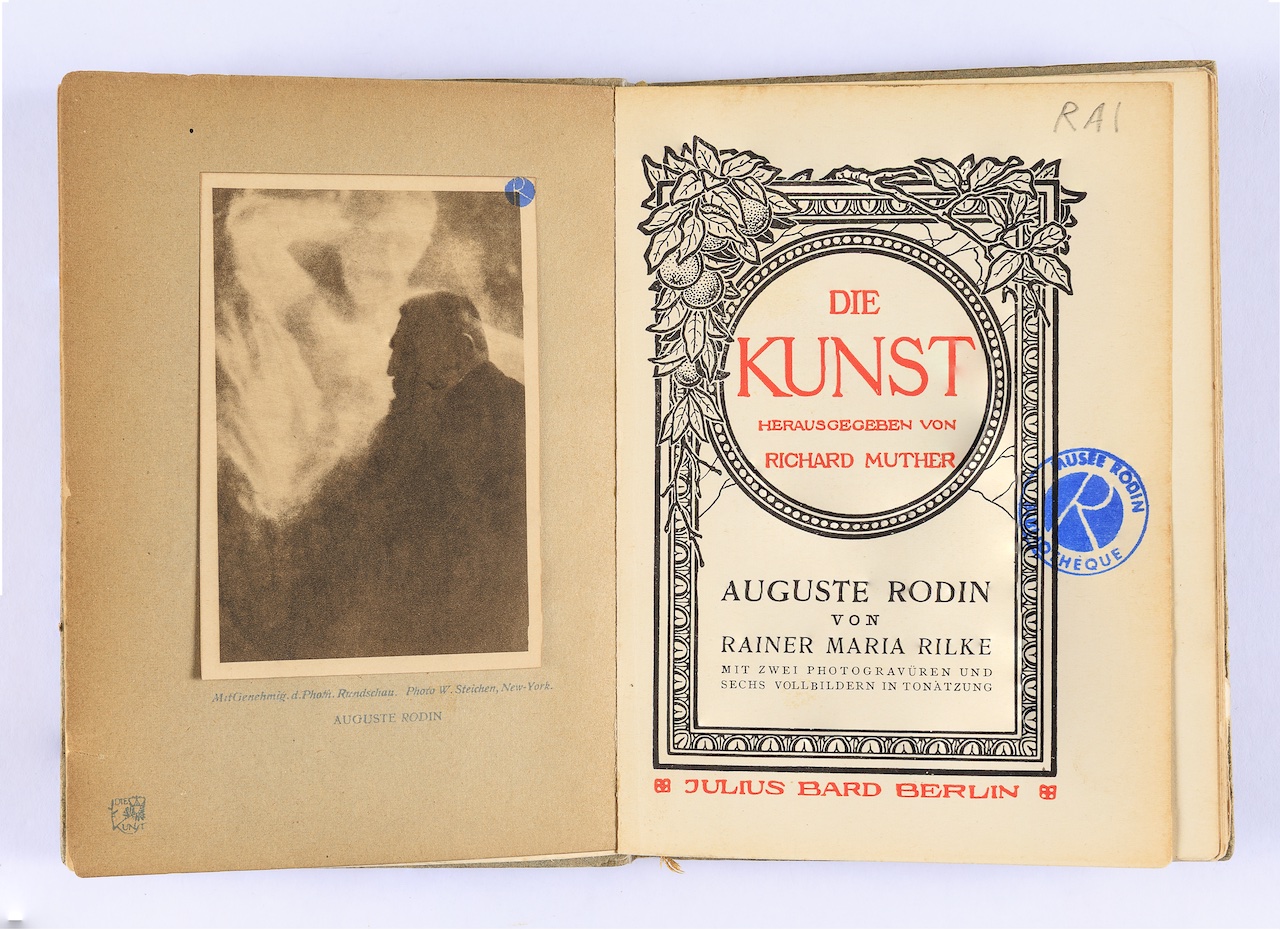
Before that, however, in March 1903, the monograph had been published and became a true hymn to Rodin’s genius. It quickly became a reference work on the sculptor and remains one of the most widely translated books about him. A substantially expanded edition followed in 1907: Rilke revised the text and added a second part, Der zweite Teil. This edition was not published in French until 1928, when both its author and its subject were no longer alive. How deeply Rilke regretted Rodin’s inability to read his book is clear from a copy of the 1907 edition with the following dedication: “To my great friend Auguste Rodin. My best efforts are enclosed in a language that is not yours. I give you this book, which you will never read. By inscribing your glorious name in it, I express my gratitude for the fact that it was your example that educated me in the spirit of intense and sincere work. Rainer Maria Rilke. Paris, in our beautiful palace on rue de Varenne, 16 November 1908.”
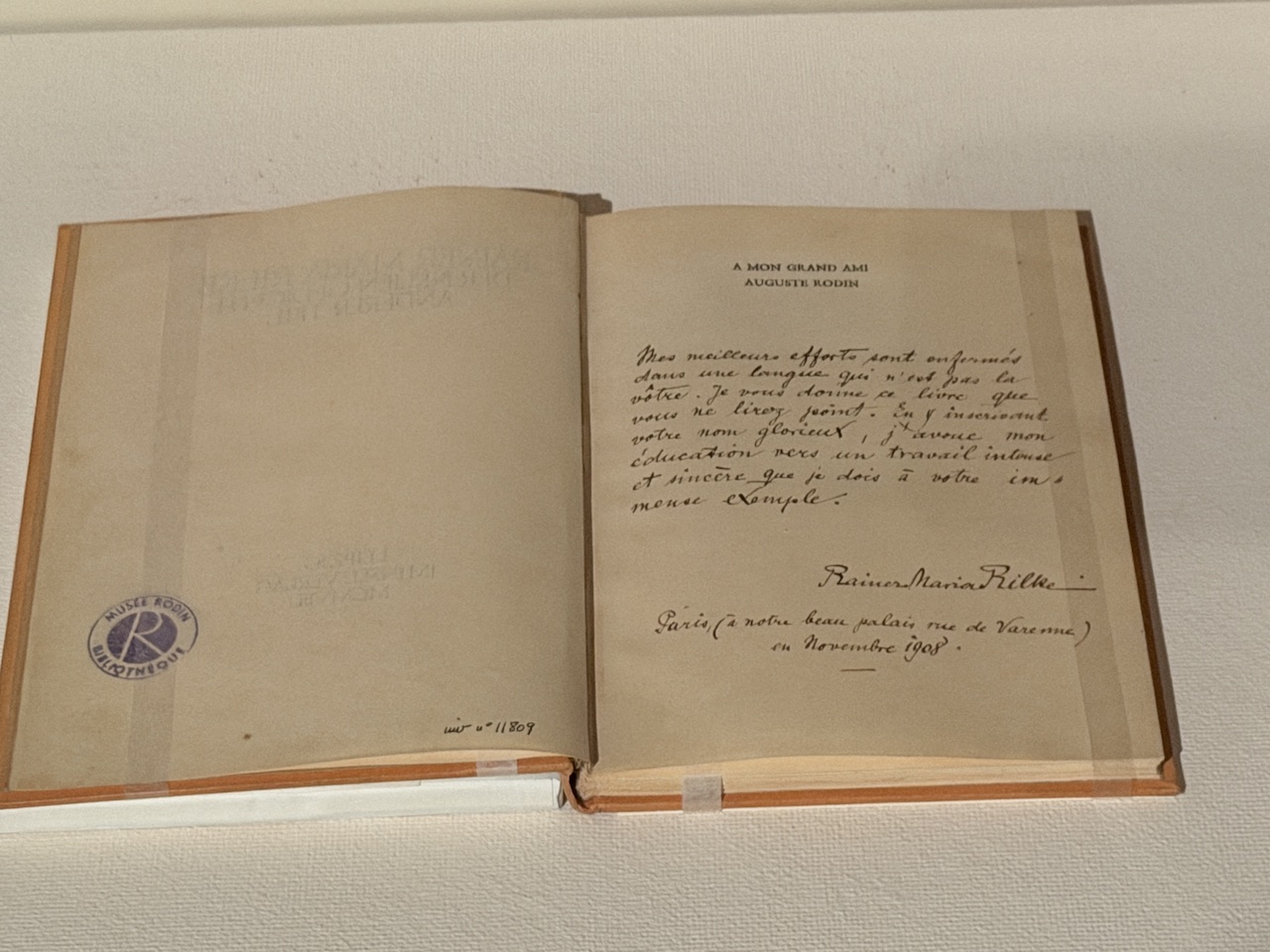
Ah, these language barriers! In English, Rilke’s monograph Auguste Rodin could be read as early as 1919, when it appeared in New York, published by Sunwise Turn, in a translation by Jessie Lemont and Hans Trausil. Russian-speaking readers, as far as I have been able to establish, had to wait until 1971. Only then was this “hymn to Rodin”, translated by Vladimir Mikushevich, included in the volume Worpswede. Auguste Rodin. Letters. Poems, published by Iskusstvo.
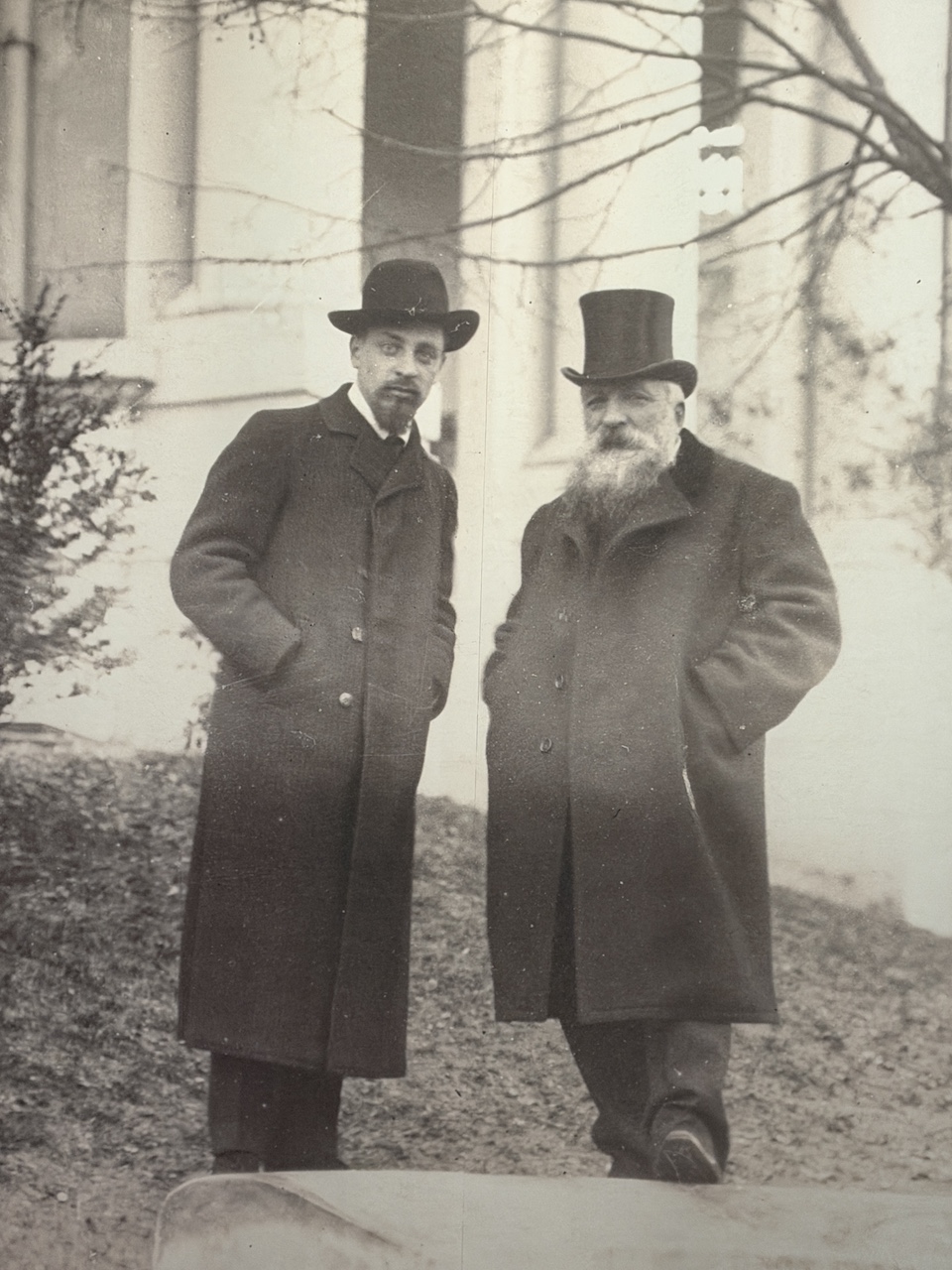
And so visitors to the Fondation Pierre Gianadda in the Swiss town of Martigny are invited to see Rodin’s works through Rilke’s words. It is a wonderful idea. The only drawback is that the quotations on the walls are difficult to read: black lettering against a burgundy background does them no favours. That, however, is about the only criticism one can make of an otherwise fascinating exhibition, which opens with a photograph of Rodin and Rilke taken in Meudon in 1906. At the centre of the exposition, in the Fondation’s atrium, sits the monumental plaster Thinker (1903), Rodin’s most famous and most recognisable work. The sculpture was originally intended for the central upper section of The Gates of Hell.
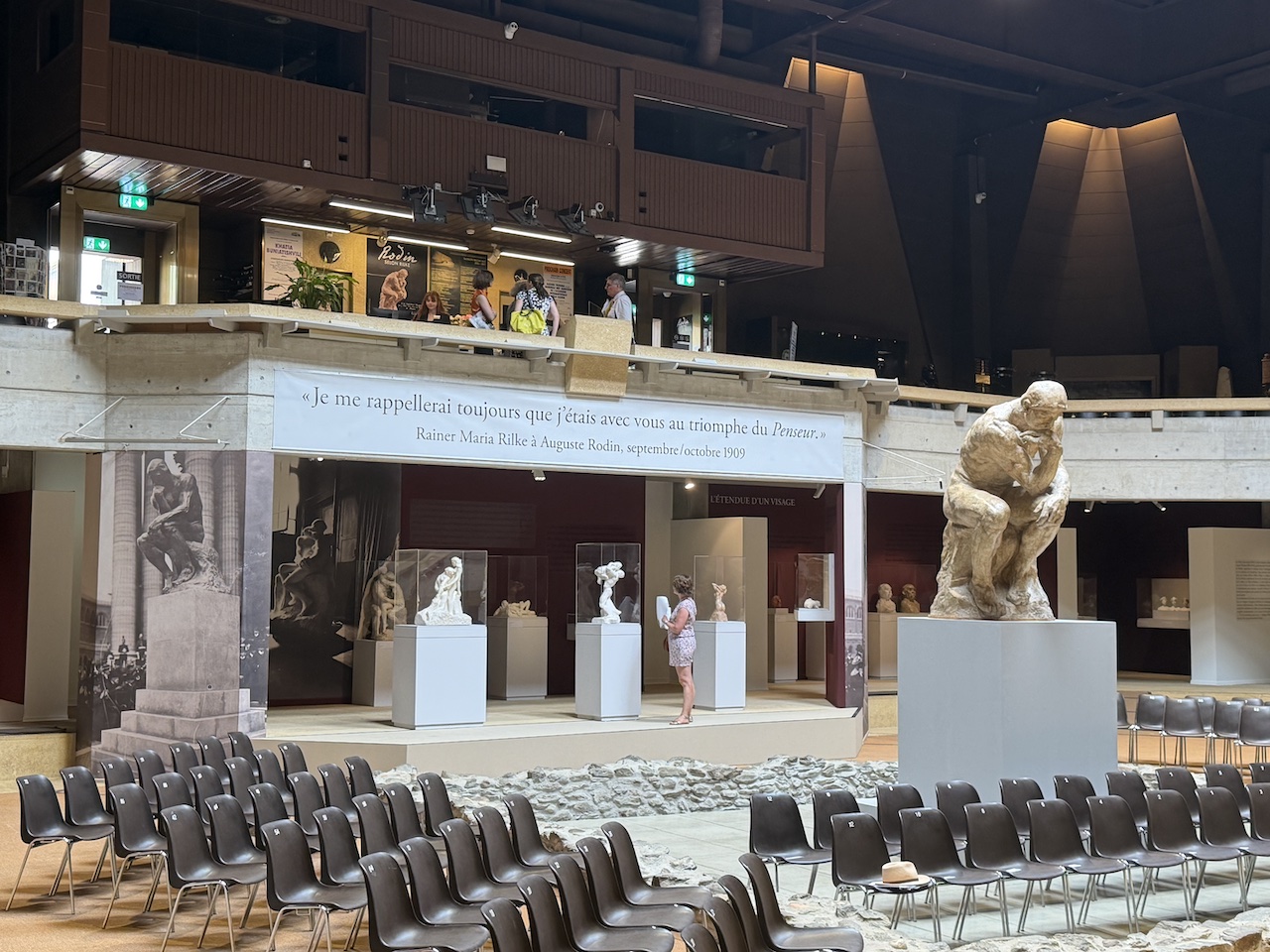
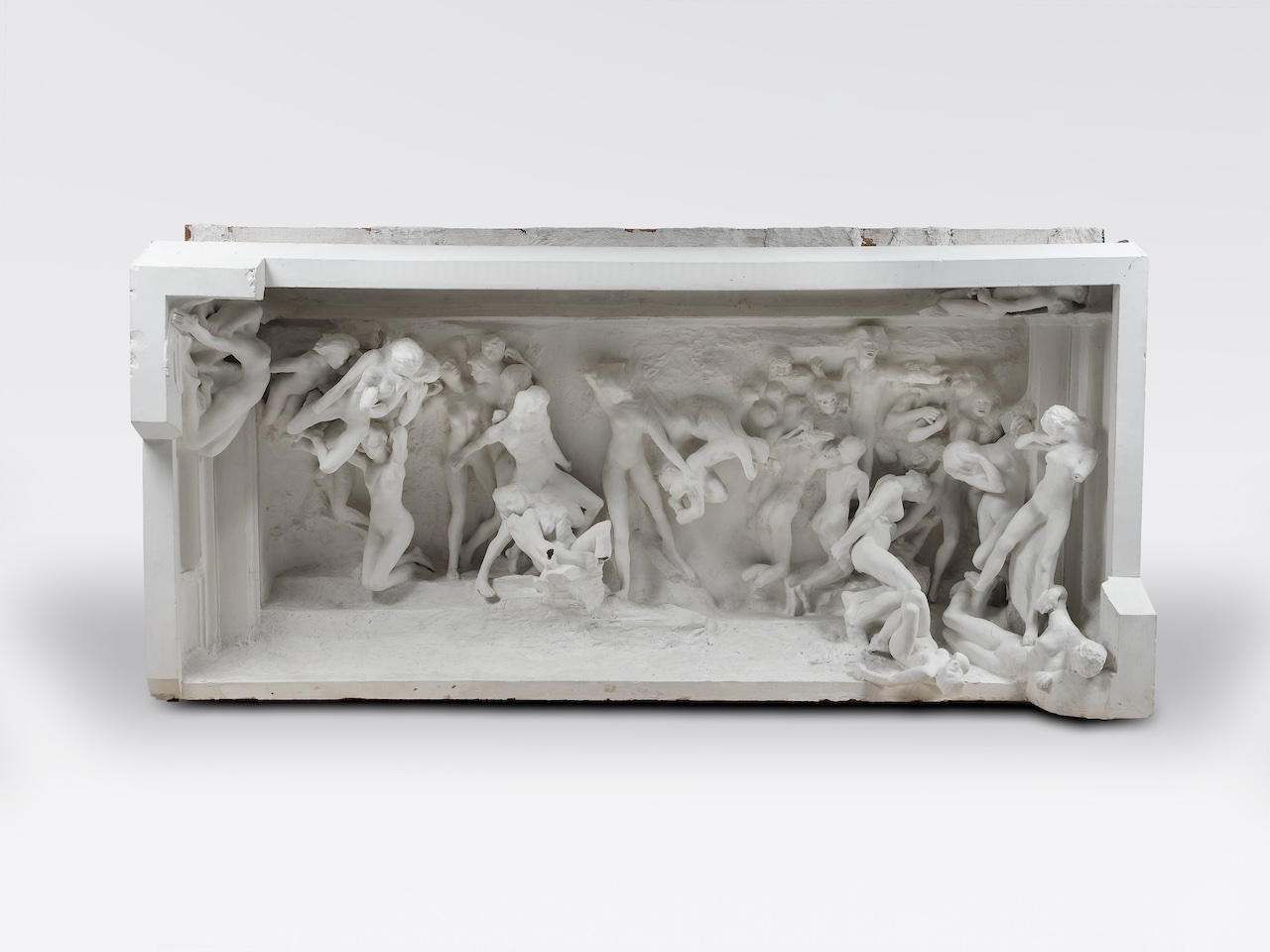
Yes, Rilke is, as it were, our guide through the exhibition, but he is not the only writer present here. It is impossible to imagine Rodin’s art without Dante and Baudelaire. And notice this: above Rodin’s Gates of Hell there is no famous Dantean inscription, “Abandon all hope, ye who enter here”, known to every educated Soviet person thanks to Mikhail Lozinsky’s superb translation of The Divine Comedy. Instead of words, there are the Three Shades, pointing downwards towards an inscription invisible to the viewer, yet clearly implied. This is where a true dialogue between literature and sculpture begins: the words disappear, but their function is taken over by form.
Rodin himself described his figure as a man absorbed in thought before the torments of the human soul. Restrained, you will agree, and rather prosaic. And this is how the poet Rilke saw the sculpture: “The Thinker sits absorbed and silent, burdened with images and thoughts, and all his strength (which is the strength of a man of action) is thinking. His whole body has become a skull, and all the blood in his veins has become brain.”
Which vision speaks to you more?
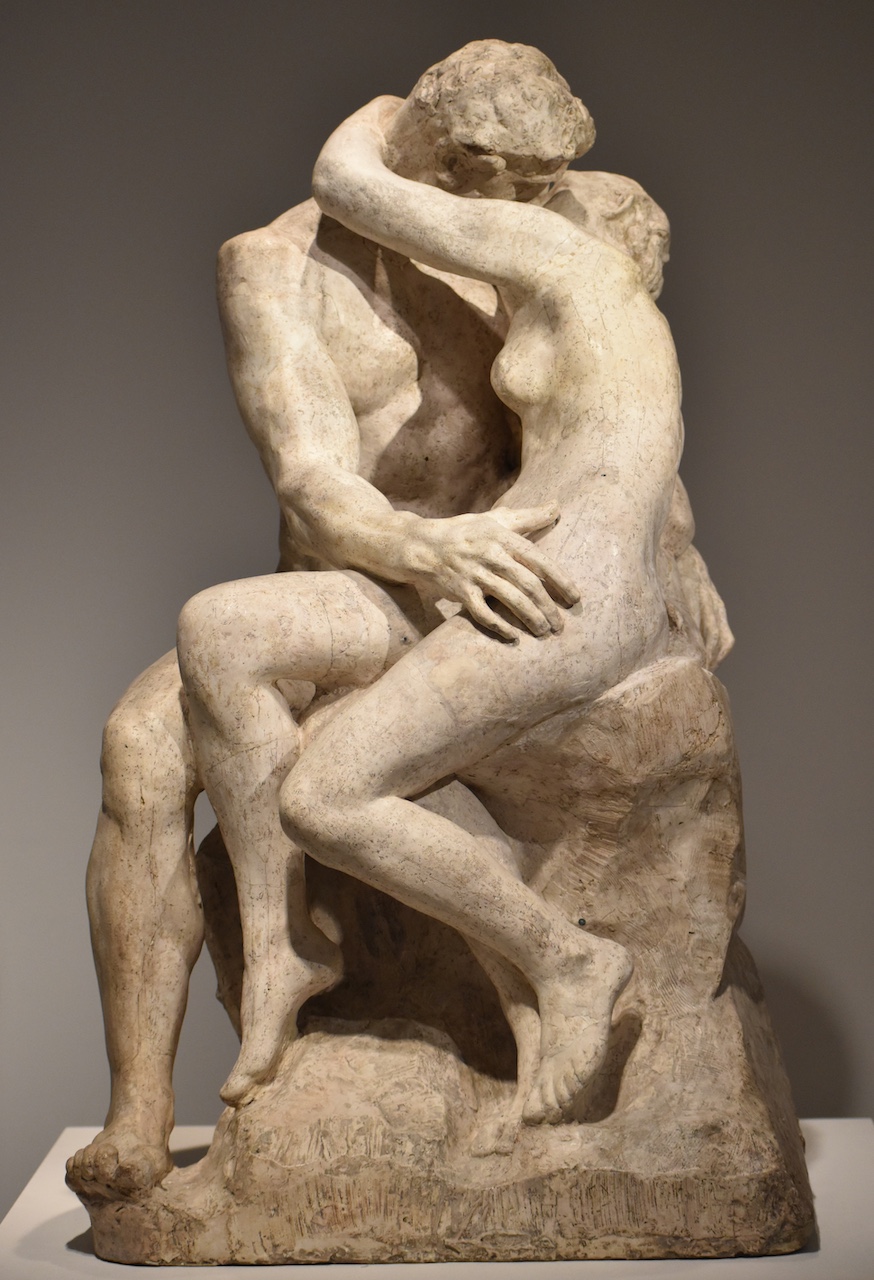
The Thinker is not the only reference to The Divine Comedy in the exhibition. The centerpiece in the next section is The Kiss, devoted to the tragic love of Paolo Malatesta and Francesca da Rimini, the lovers from the second circle of Dante’s Hell. Yes, they will be cursed and will end up in Hell, but that still lies ahead. Rodin captured the moment of their blissful immersion in one another, described by Rilke in these words: “The magic of the great group of the girl and the man known as The Kiss lies in this wise and just distribution of life; one has the feeling that from every point of contact waves stream into the bodies, a shiver of beauty, longing, and power. Thus it comes about that the bliss of this kiss seems visible everywhere upon these forms; it is like a rising sun, and its radiance lies over all.”
It is curious that Rodin and Tchaikovsky turned to this subject only nine years apart. Rodin created The Kiss as an episode from The Gates of Hell in 1885, while Tchaikovsky wrote his symphonic fantasy Francesca da Rimini in 1876. Both artists drew directly on Canto V of Dante’s Inferno, but approached it very differently: Rodin captures the lovers at the very moment they surrender to one another, whereas Tchaikovsky gives us the inexorable whirlwind of fate that destroys their love. Sergei Rachmaninoff, too, was captivated by the lovers’ tragic story, and in 1906 wrote his one-act opera Francesca da Rimini, to a libretto by Modest Tchaikovsky, Pyotr Ilyich’s brother. The score is extraordinarily powerful, but the opera is rarely staged. So, looking ahead, I can tell you that next season you will be able to hear it at the Zurich Opera House.
The most captivating thing about Rodin’s sculptures is, of course, the languid, relaxed, incredibly sensual bodies of men and women, often shown in complex poses: bent over or reaching upwards, the silhouettes traced in smooth, sinuous lines. The Toilet of Venus alone is enough to make your head spin!
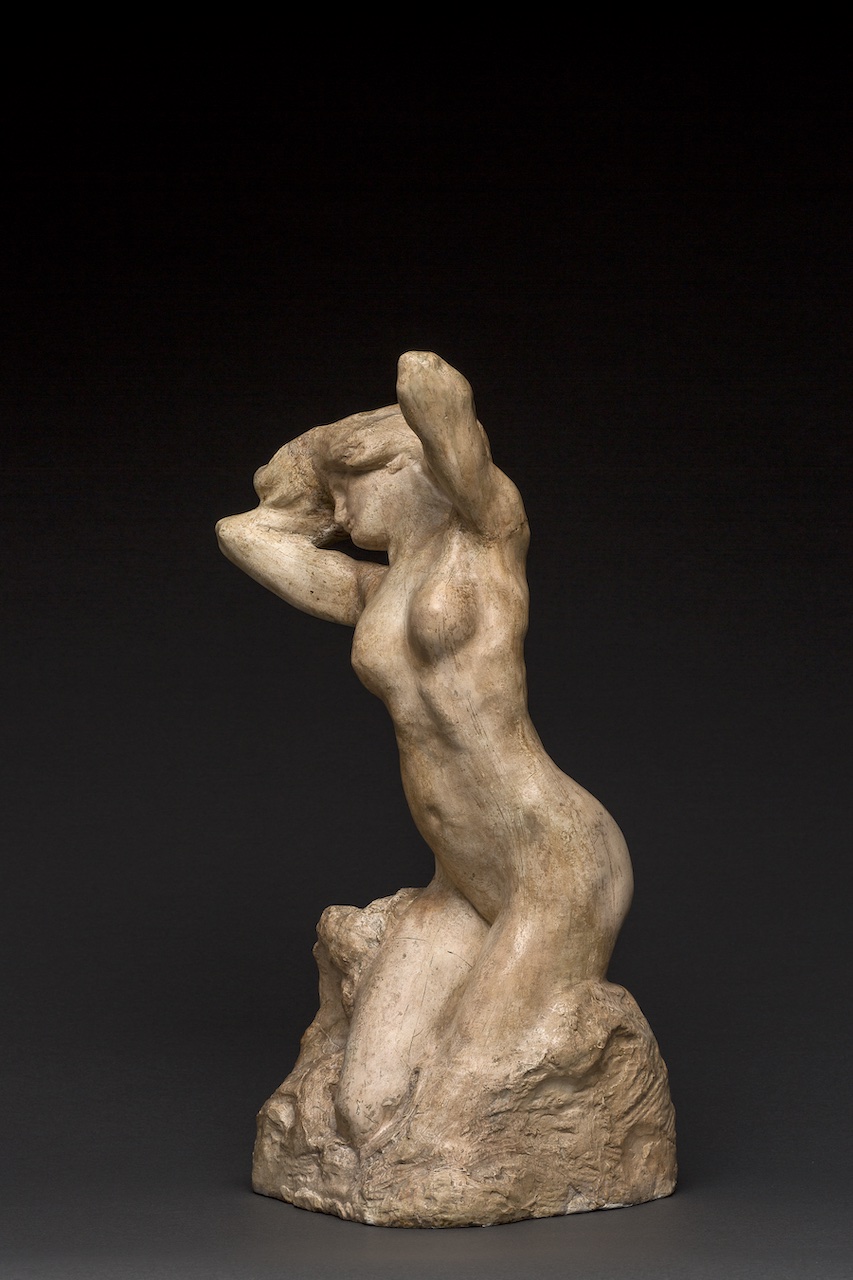
It is impossible to pass by Rodin's sculpture Je suis belle, whose title is taken from the opening line of Charles Baudelaire's poem Beauty (La Beauté) from The Flowers of Evil: «Je suis belle, ô mortels, comme un rêve de pierre...» ("I'm fair, O mortals, as a dream of stone...", in Roy Campbell's 1952 translation). That line is engraved on the base of some of the bronze casts. The image of a “dream of stone” seems to capture Rodin’s sculpture with extraordinary precision. Incidentally, do take a look at the display case nearby. It contains the 1918 Paris edition of Twenty-Seven Poems from The Flowers of Evil, illustrated by Auguste Rodin.
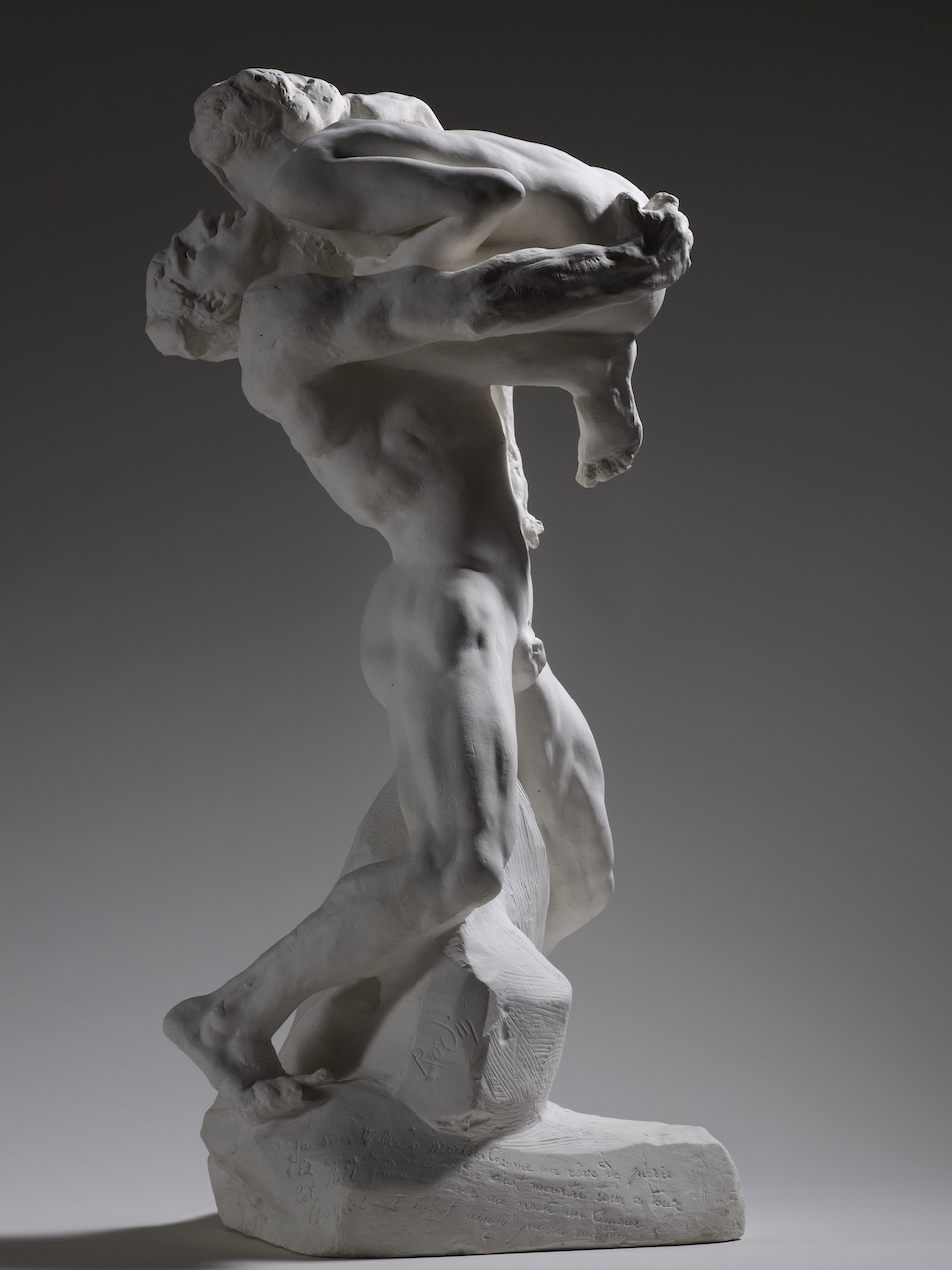
I was very touched by the elegant, delicate little foot in The Death of Athens, a foot that had clearly never known a foot file. The nude female figure, stretched out on a fragment of an antique column, represents not a particular person, but Athens itself, and the mortality of even the greatest civilisations. The Death of Athens was created by Rodin in plaster in 1902. A few years later, commissioned by the German industrialist August Thyssen, he made a marble version, now held in the Carmen Thyssen Collection and exhibited at the Thyssen-Bornemisza National Museum in Madrid. The plaster model, La Mort d’Athènes, is in the Musée Rodin in Paris, and it was this version that Rilke saw, since he was writing his monograph and later texts when the plaster already existed. “The city of Athens once lived like a beautiful woman. The fame of her beauty drew the admiring gaze of the world. Now she exists no more. Her body, which once stood upright and towered like the Acropolis, is now, as it lies, become a mountain range whose contours, played upon by light, sway in mournful, lamenting lines. Thus she sleeps deeply…”, he wrote. A sleeping beauty. Ancient Athens is gone, but the little foot remains. I photographed it for you in close-up.
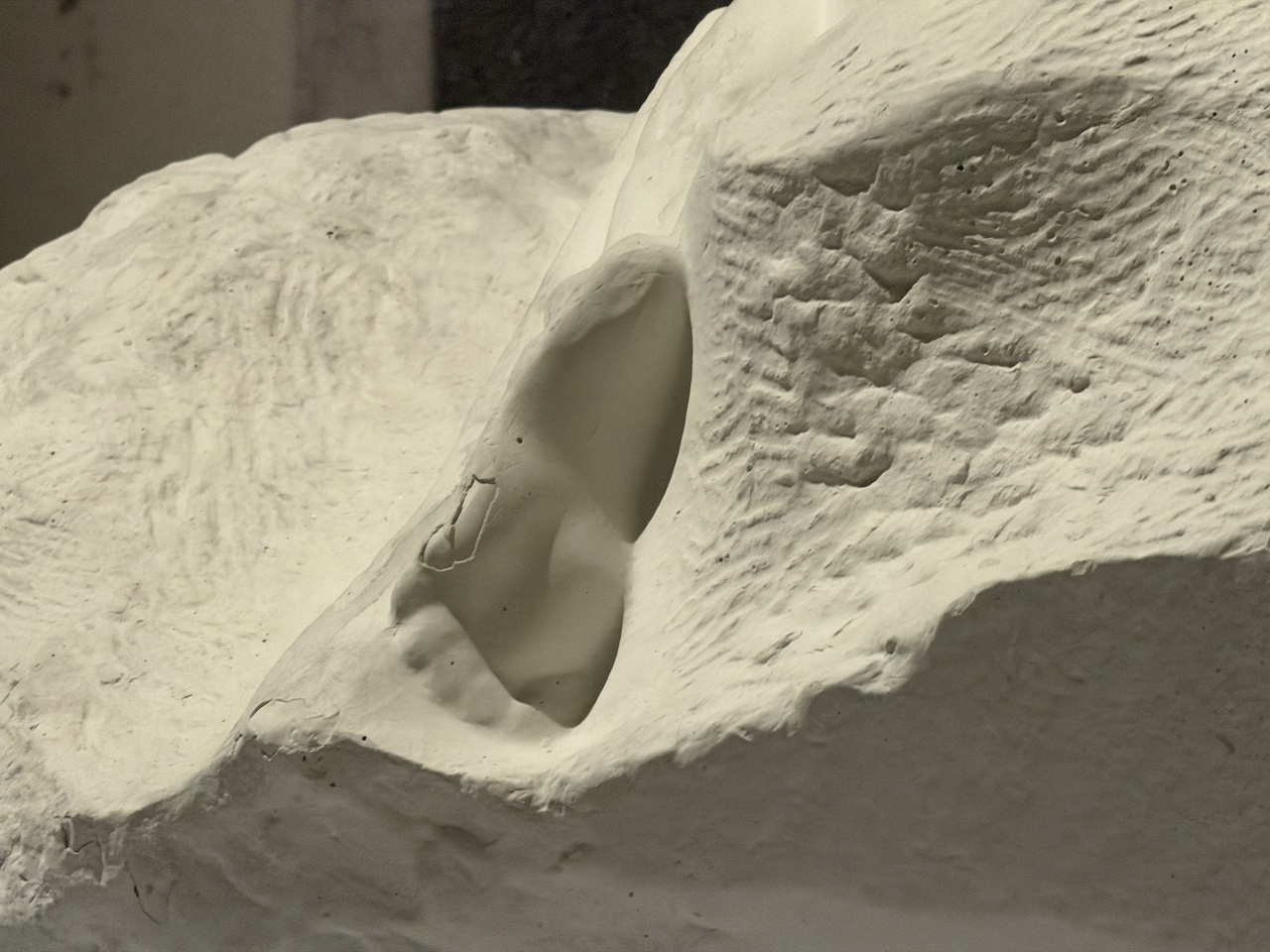
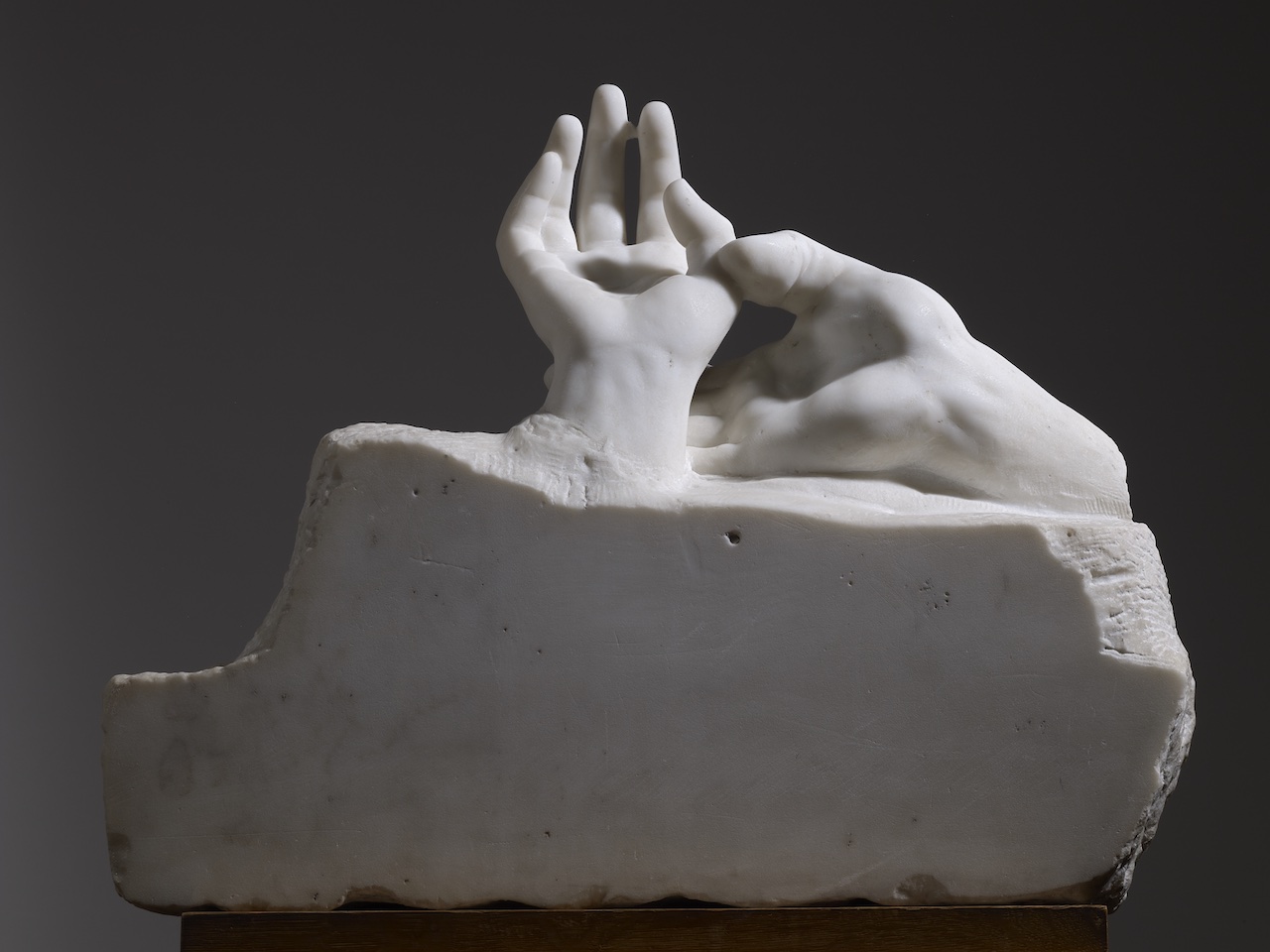
Hands form a separate theme in Rodin's work. At the Fondation Pierre Gianadda, an entire room is devoted to them, and they inspired Rilke to write these lines: “There are hands in Rodin’s work that are autonomous, small hands which, without belonging to any body, are alive. Hands that rise, irritated and wicked…” Yes, every image of hands in Rodin is charged with astonishingly strong emotion, and each seems to possess a character of its own. Here are the tenderly intertwined hands of lovers; here, the slender, nervous hand of a pianist; and here, a large hand clenched in spasm. What suffering lay behind it?
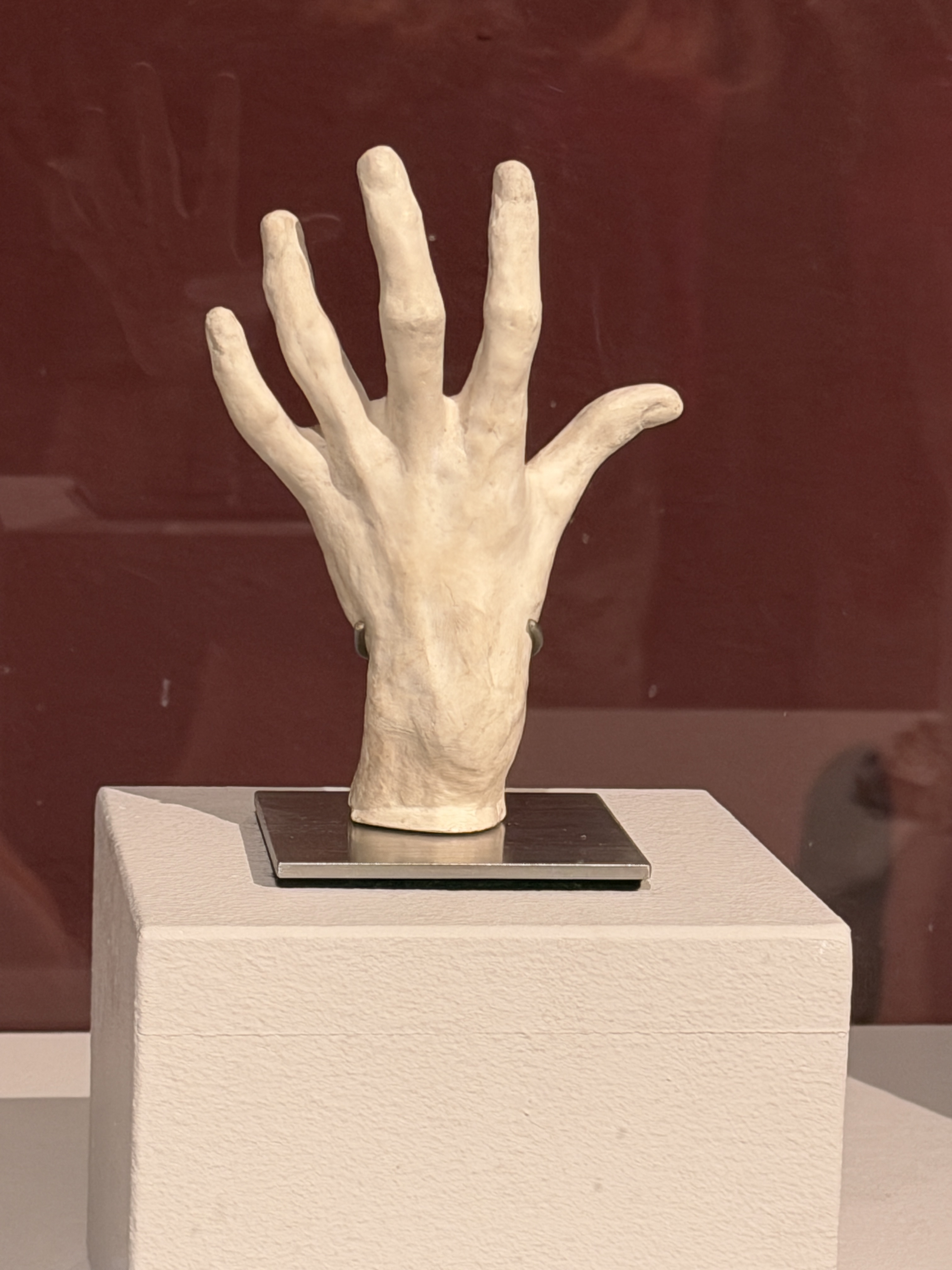
Friends, the exhibition is open daily until 22 November. Incidentally, the Fondation Pierre Gianadda has Rodins of its own in its collection, so be sure to look out for them, ending your visit with a walk through the Sculpture Garden. Perhaps, as once happened to me, you too will want to come back here not for a particular exhibition, but simply for a rendezvous with Rodin.


Philippe Lüscher July 01, 2026
Sikorsky July 01, 2026
BERTRAND MONROZIER July 03, 2026
Sikorsky July 03, 2026