
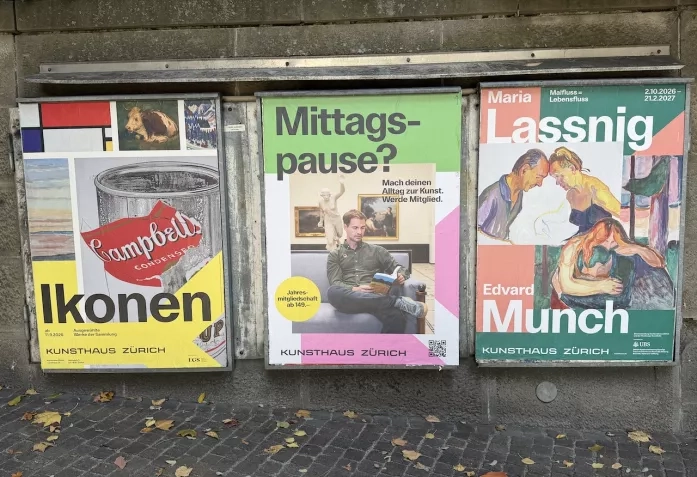
We all have paintings we want to return to. Sometimes they are the very reason we go to a museum, already looking forward to seeing them again. But what if a familiar painting has moved and finds itself among new neighbours? Will we discover something in it that we had never noticed before? Kunsthaus Zürich offers just such an encounter in Evergreens. Selected Works from the Collection. The ‘icons’ in question are, of course, the defining masterpieces of the museum’s collection rather than religious images. As the exhibition opened on my birthday, I immodestly choose to regard it as a personal gift, and thank my favourite museum for thinking of me 😊.
The word ‘evergreens’ in the exhibition’s title is one we more readily associate with plants: fir trees, for instance. It turns out to suit paintings too: to visitors’ delight, familiar favourites that have long come to define the collection share a space with less well-known works still waiting to become someone’s personal discovery.
The span of centuries is impressive: from the Dutch masters of the seventeenth century to Kokoschka and Warhol, and on to the end of the twentieth. The earliest work dates from 1622, the latest from 1998. Portraits, landscapes, still lifes, religious and mythological subjects, abstraction, photography, mechanical sculpture: a few steps take you between periods, genres and artistic languages. There is no prescribed route: you can follow the chronology, walk clockwise or trust your intuition, zigzagging across the galleries if you like.
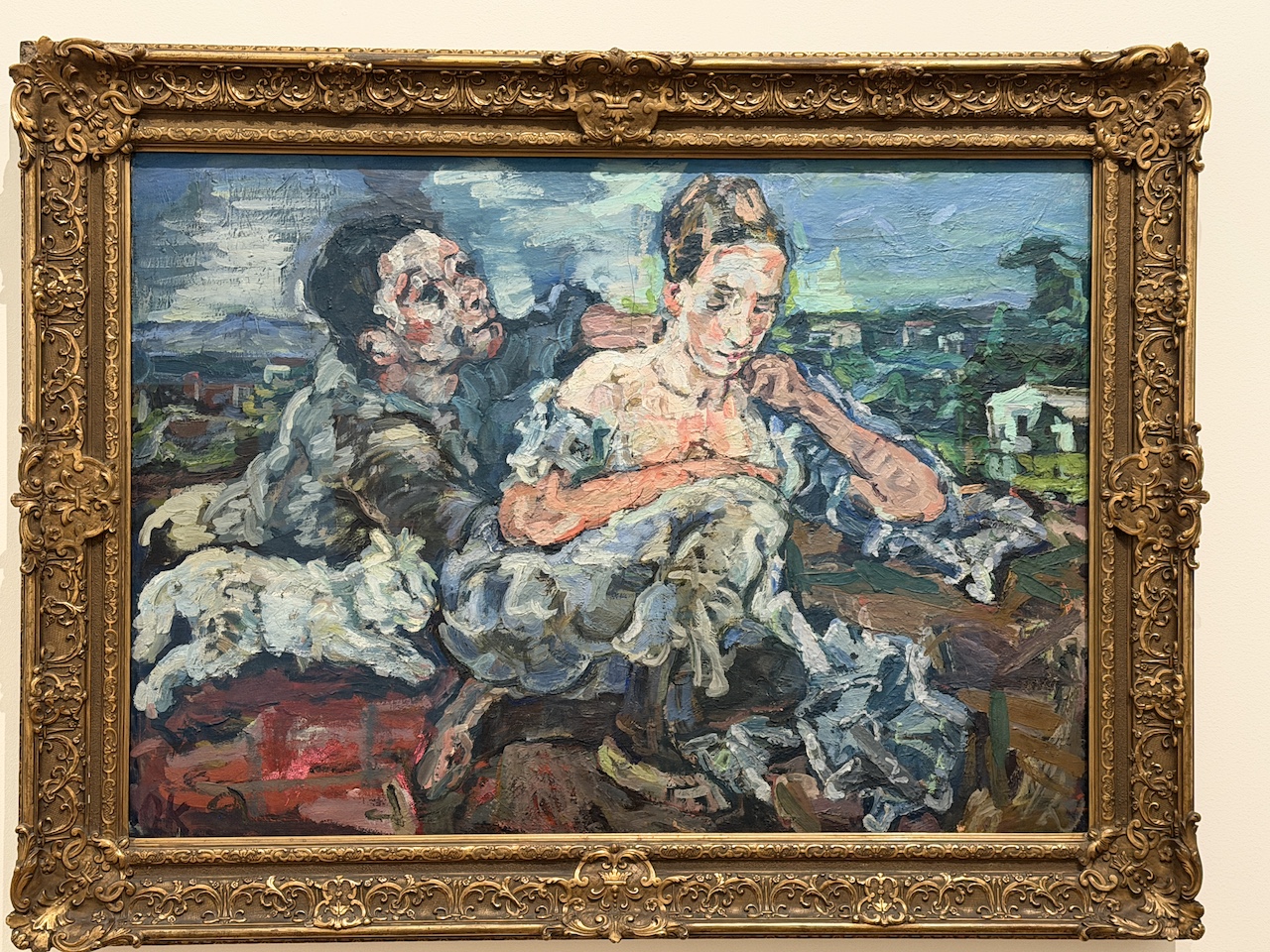
Kunsthaus Zürich. Acquired in 1933. Photo © N. Sikorsky
I liked the fact that the conversation about the paintings had been opened up to people who were not necessarily art specialists. Zurich residents, some well known to the public and others less so, together with members of the Kunsthaus staff, chose works that meant something to them and explained their choices. Alongside the usual information about the artist, date and medium, there are now personal reflections, memories and doubts, making a visit to the exhibition an even more personal experience.
The young Zurich artist Andriu Deplazes (b. 1993), for example, looks at Oskar Kokoschka’s Lovers with Cat (1917) and reflects on how difficult it is to sustain love and live together. Beneath the couple’s apparent intimacy, he detects loneliness; in their poses, awkwardness. Only the cat gives us something to smile about.
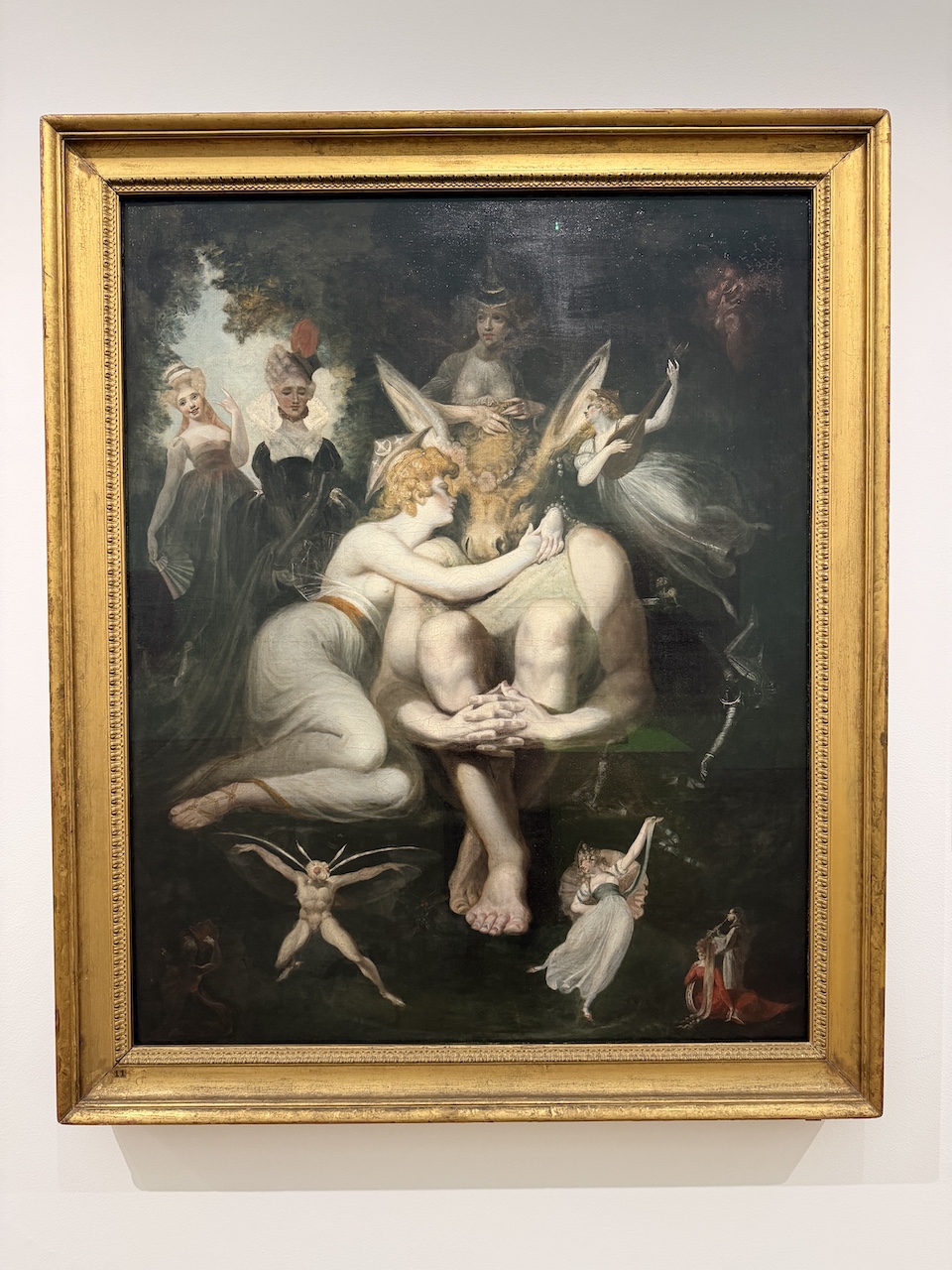
Kunsthaus Zürich, Vereinigung Zürcher Kunstfreunde, 1941. Photo © N. Sikorsky
The museum’s director, Ann Demeester, chooses a late eighteenth-century painting by the Swiss artist Johann Heinrich Füssli. Her own experience of theatre gives her a way into it: Füssli’s Titania caresses the donkey-headed Bottom, while a fantastical Shakespearean dream unfolds around them. I too spent a long time in front of this painting, remembering how, in 2017, I brought the Moscow Pyotr Fomenko Workshop Theatre’s production of A Midsummer Night’s Dream to Geneva. And I am sure that more than one generation of art lovers has pondered Demeester’s question: why is one of the young women in the background making a sign to the devil?
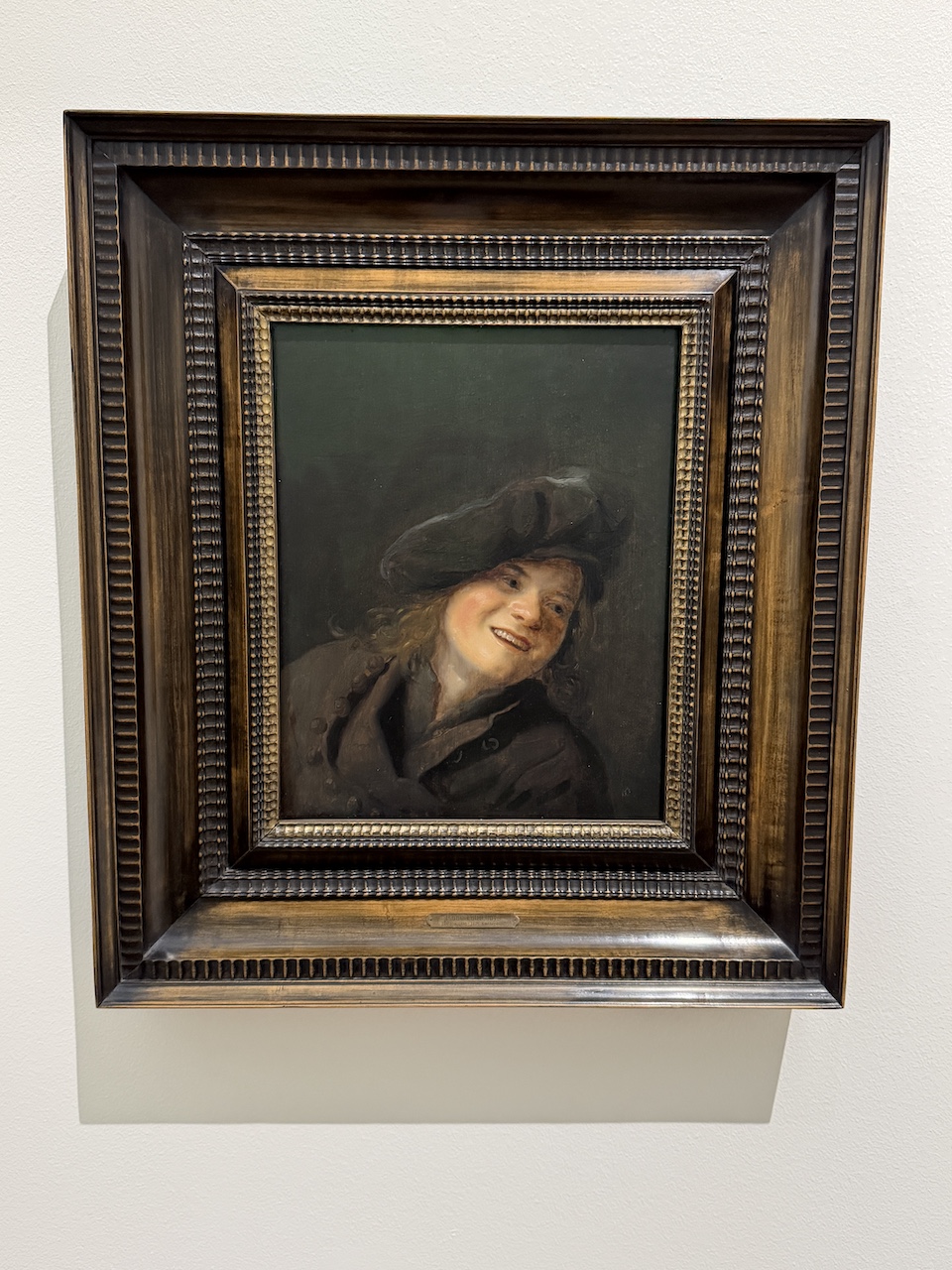
Kunsthaus Zürich. Long-term loan from a Swiss private collection, 2016. Photo © N. Sikorsky
At this exhibition, I found myself particularly drawn to faces. It is impossible not to smile back at Laughing Boy, painted in 1648 by the Dutch Golden Age master Isaack Luttichuys: almost four centuries have passed, yet his laughter is as infectious as ever!
Kunsthaus Zürich. Acquired with funds from the Hugo Peter bequest, 2000. Photo © N. Sikorsky
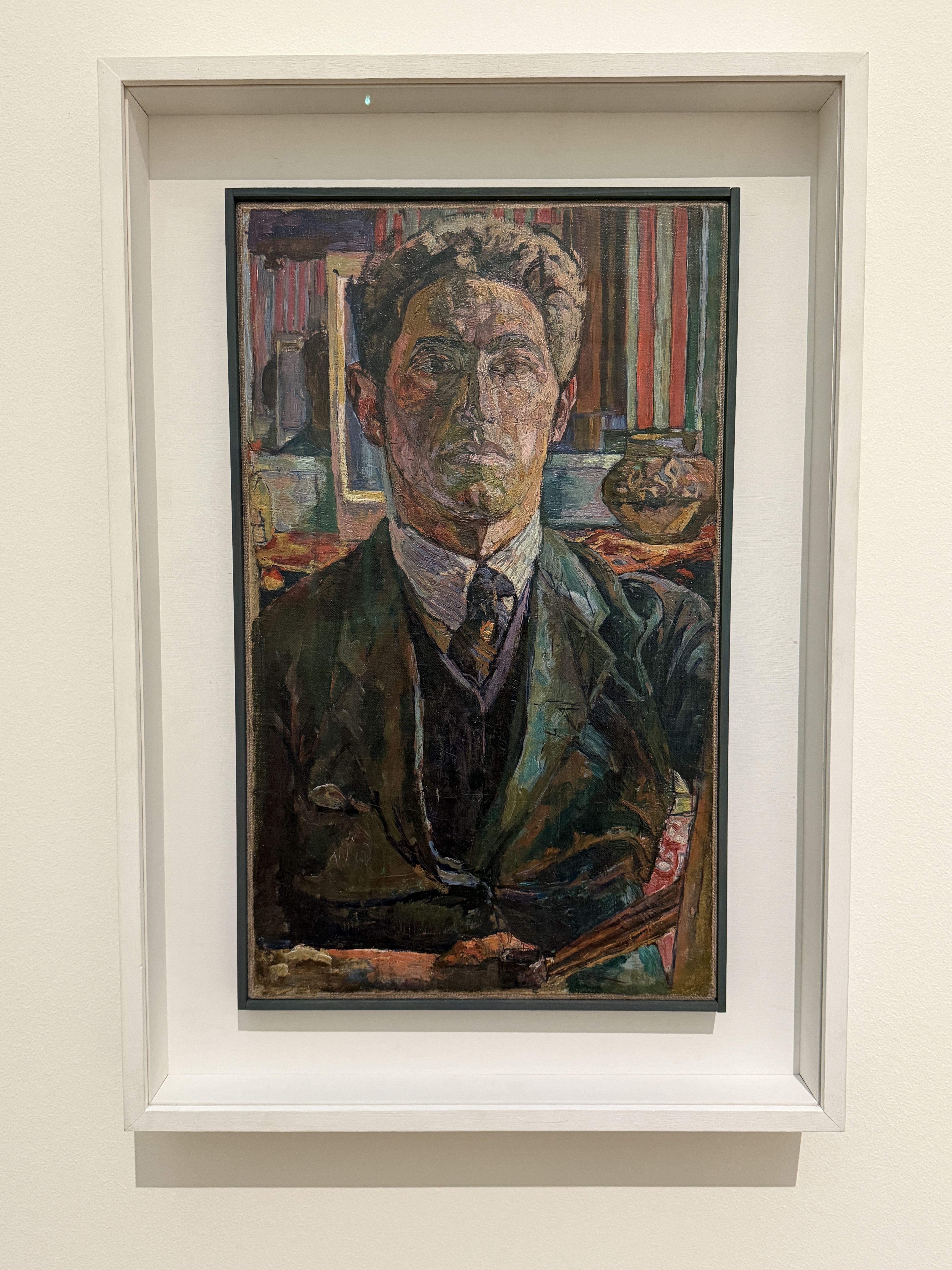
Looking at the young Alberto Giacometti’s self-portrait, painted around 1923, shortly after his arrival in Paris, it is easy to forget the elongated bronze figures he would later create. Here the artist is still quite different: a young man gazing intently at himself and at us, with books and other belongings behind him.
Kunsthaus Zürich, Vereinigung Zürcher Kunstfreunde, 1982.
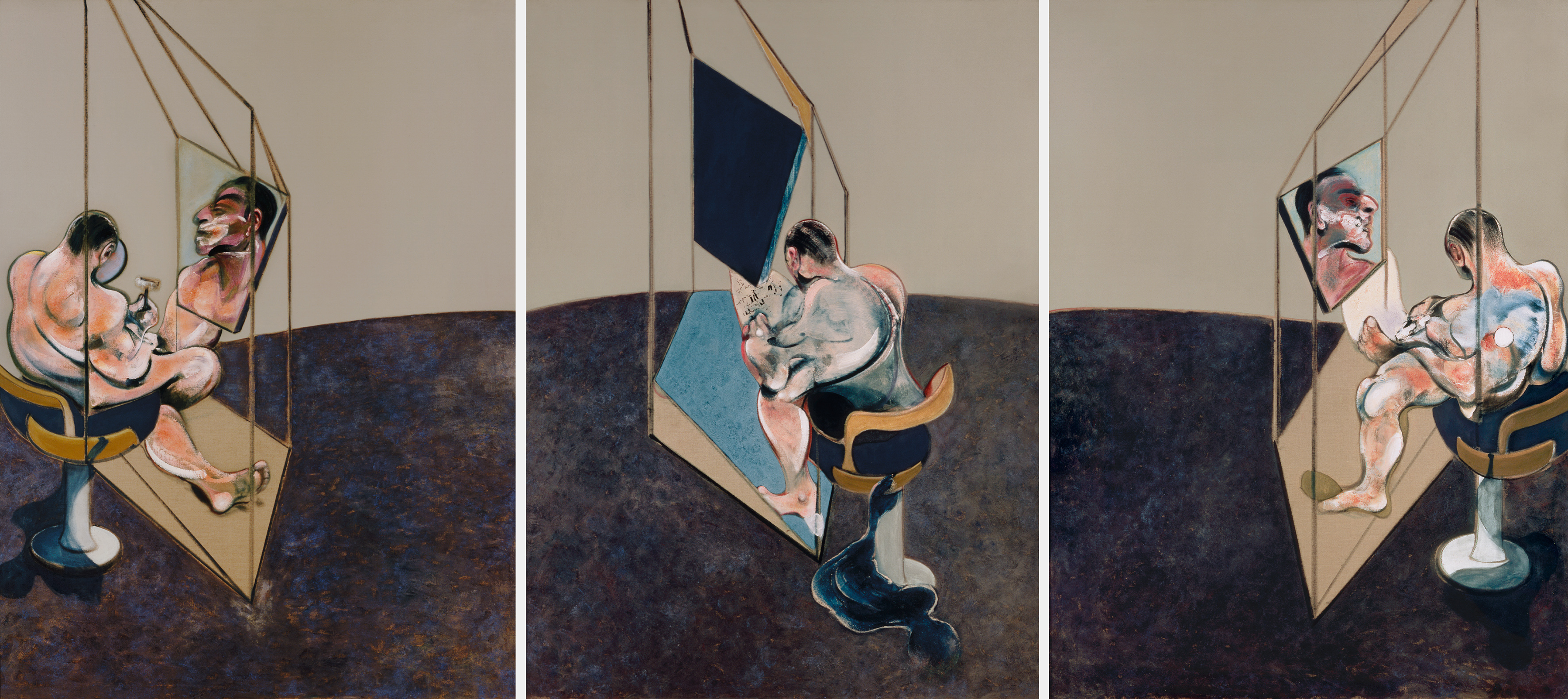
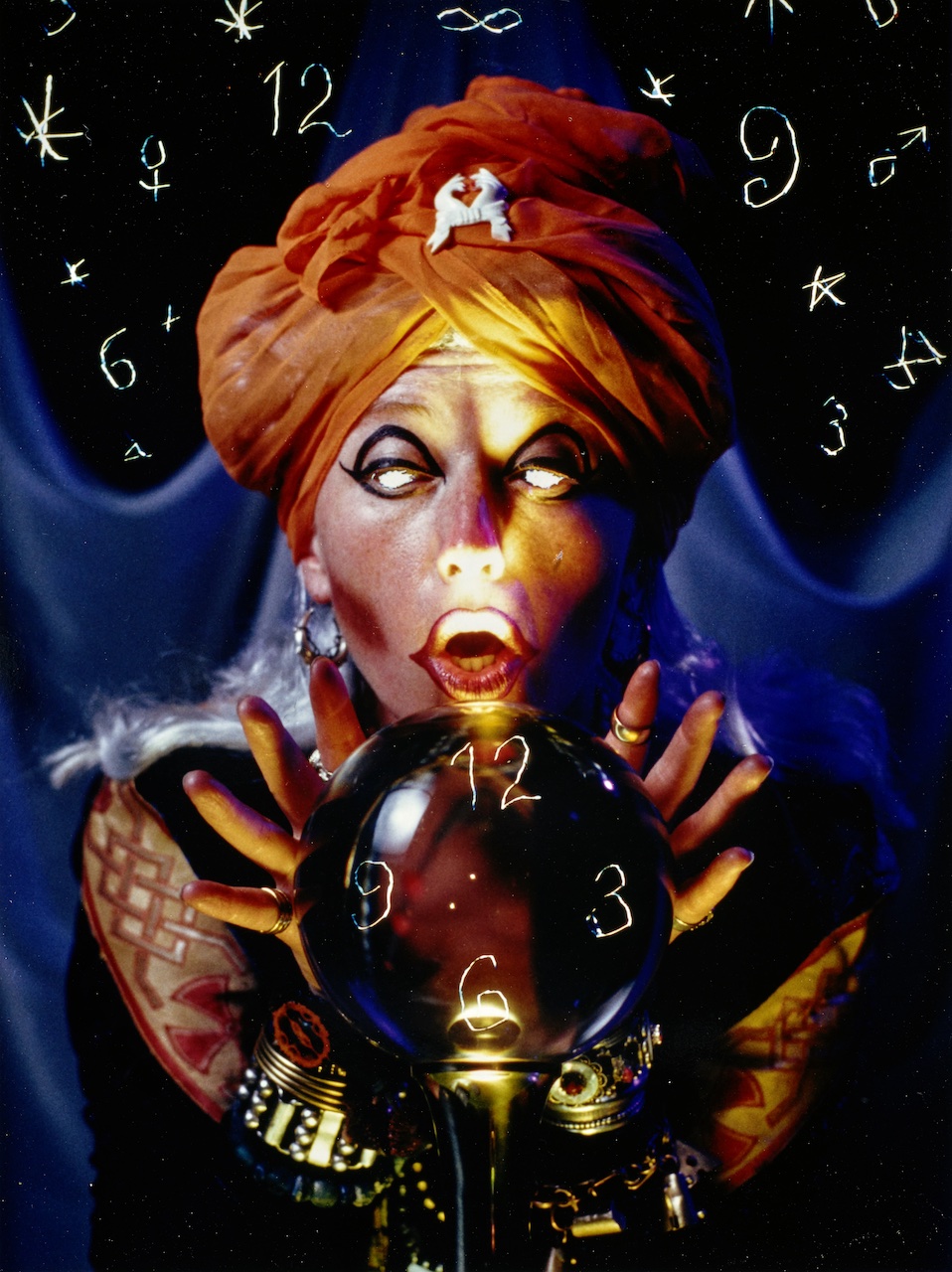
In Francis Bacon’s monumental triptych Three Studies of the Male Back (1970), the man has his back to us, and we must look for his face in the mirror. Yet even the reflection offers none of the certainty we expect: features shift, the body seems to twist, and the very act of looking becomes unsettling. And Cindy Sherman turns the very idea of a self-portrait into an act of dressing up: a turban, a ball, eyes rolled upwards, something close to a theatrical mask. How many different ways there are to portray a person, and how much one can say by depicting oneself.
Kunsthaus Zürich, Photography Collection. Gift of Beatrice von Buchwaldt-Ernst, 2020.
© 2026 Cindy Sherman / ProLitteris, Zurich. Courtesy of the artist and Hauser & Wirth.
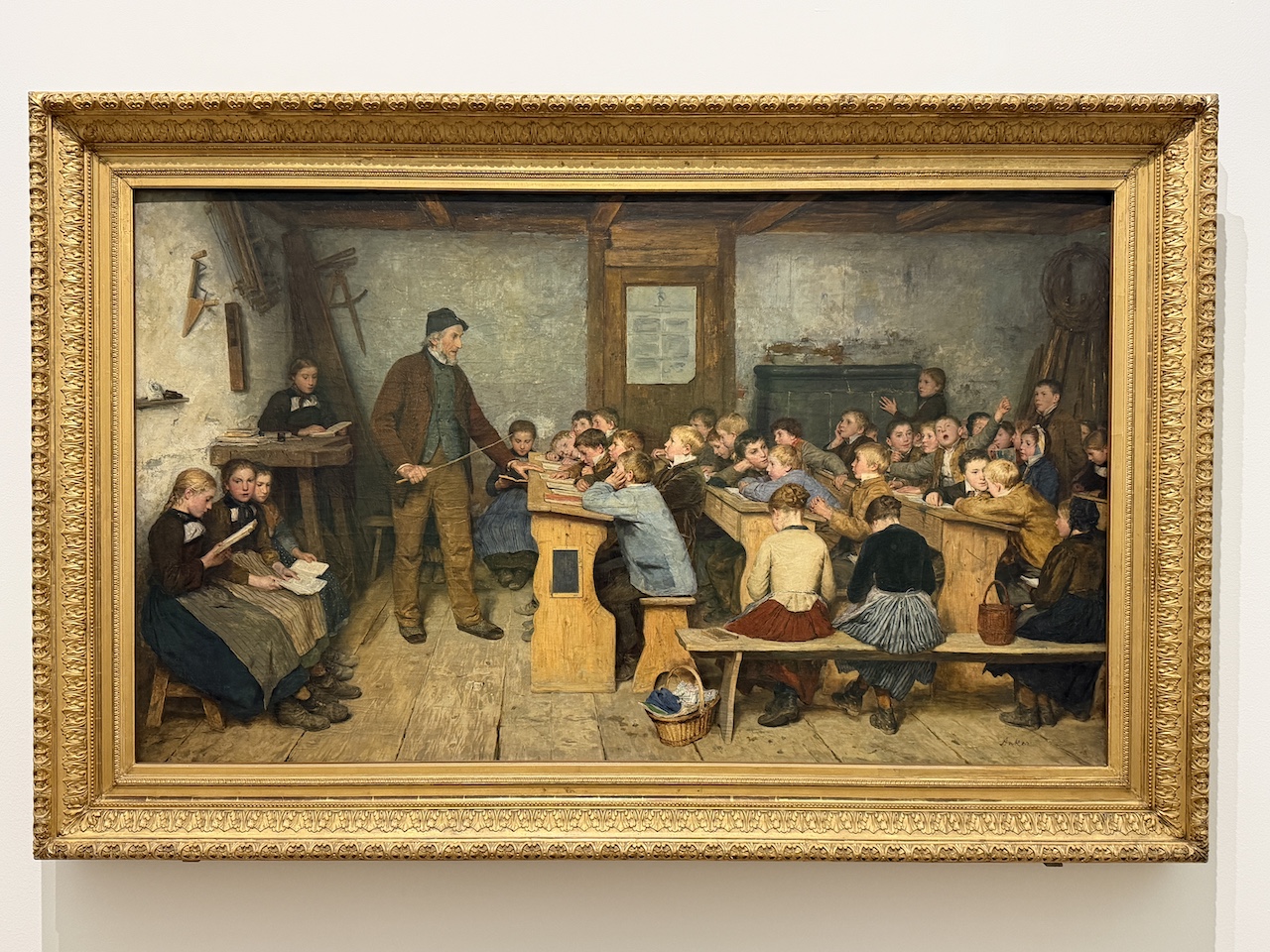
Albert Anker’s The Village School in 1848 deserves a pause. The painting dates from 1895–1896, so even then the artist was looking back. How did he see that past from a distance of almost half a century? And how do we look at these children’s bright, attentive faces now? You do not often see their like in today’s classrooms. The artist and publisher Esther Eppstein, who chose this work, rightly draws attention to each child’s individuality. Together they make up a class, yet none is lost in the crowd.
Kunsthaus Zürich. Acquired by the Vereinigung Zürcher Kunstfreunde and the Zürcher Kunstgesellschaft in 2026. Photo © N. Sikorsky
This finds an unexpected echo in the commentary on a very different ‘icon’: Andy Warhol’s famous soup can with its torn label, which any visitor will recognise from a distance without even reading the label. The teacher Cristina Malfer recounts how her sixth-grade pupils greeted the painting with giggles, while one girl was outraged at the artist’s audacity in suggesting that this should count as art. A debate followed; then the children wanted to try for themselves, and a few days later their own works appeared in the classroom. So curiosity has not disappeared after all. Sometimes it just needs the right can of soup.
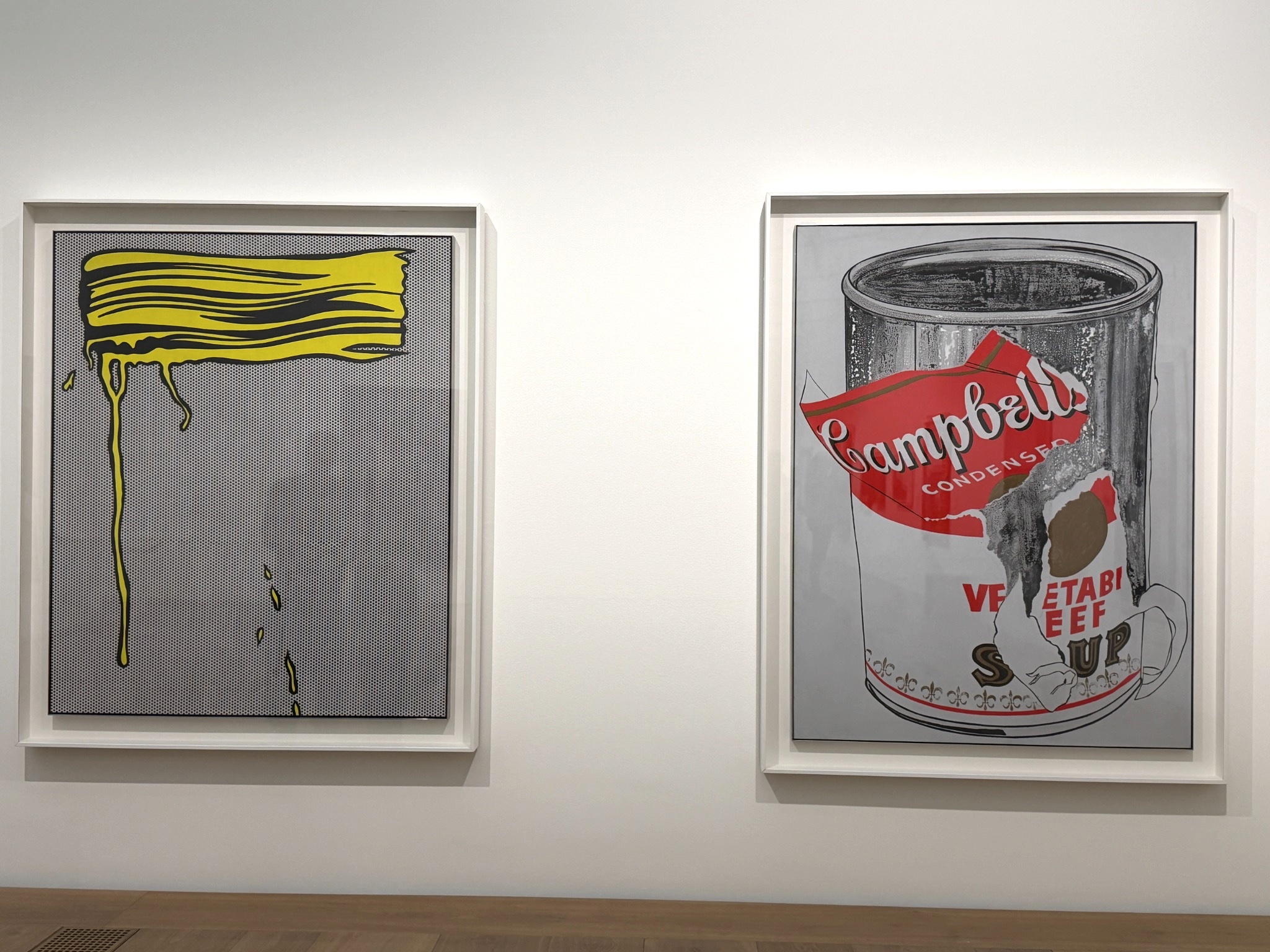
© Estate of Roy Lichtenstein / 2026, ProLitteris, Zurich.
Right: Andy Warhol. Big Torn Campbell’s Soup Can (Vegetable Beef), 1962. Kunsthaus Zürich, 1975.
© The Andy Warhol Foundation for the Visual Arts, Inc. / 2026, ProLitteris, Zurich. Photo © N. Sikorsky
There is another painting whose author you can identify without going any closer: there is no mistaking Van Gogh! His The House of Père Pilon (1890) makes you want to linger over its yellow walls, lush greenery and blue sky, across which a tremor seems to pass. ‘A French summer’ is how the business consultant Nirmala Bähr, who chose the painting, describes its mood: the landscape gives her a sense of light and peace. I think any visitor to Kunsthaus Zürich would welcome those feelings.
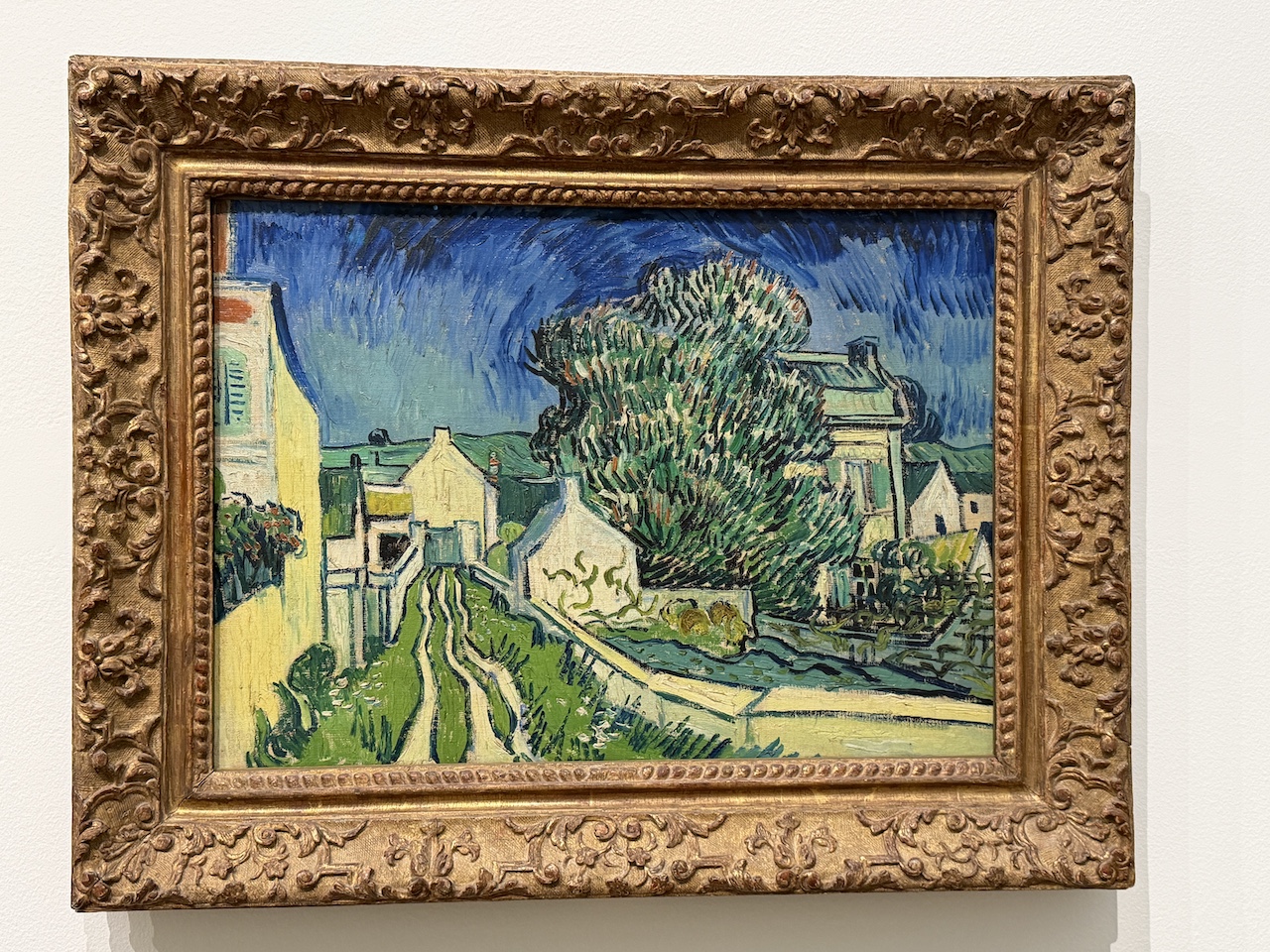
Kunsthaus Zürich. Private collection. Photo © N. Sikorsky
And how delighted I was to find a ‘Russian accent’ among this gathering of the very best! Two works by Marc Chagall have joined the museum’s ‘icons’, bringing together tenderness, an abundance of flowers and tragedy. Lovers in Grey (1956–1960) deserves a pause both for the painting itself and for the response of Matthias Schulz, director of Zurich Opera, whom I interviewed at the beginning of his first Zurich season. Where Deplazes finds loneliness and awkwardness in Kokoschka’s couple, the lovers painted by the genius from Vitebsk speak to Schulz of their need for one another, of closeness and warmth that cannot fully be explained. The painting, incidentally, was a gift to the museum from Vava Chagall in 1973.
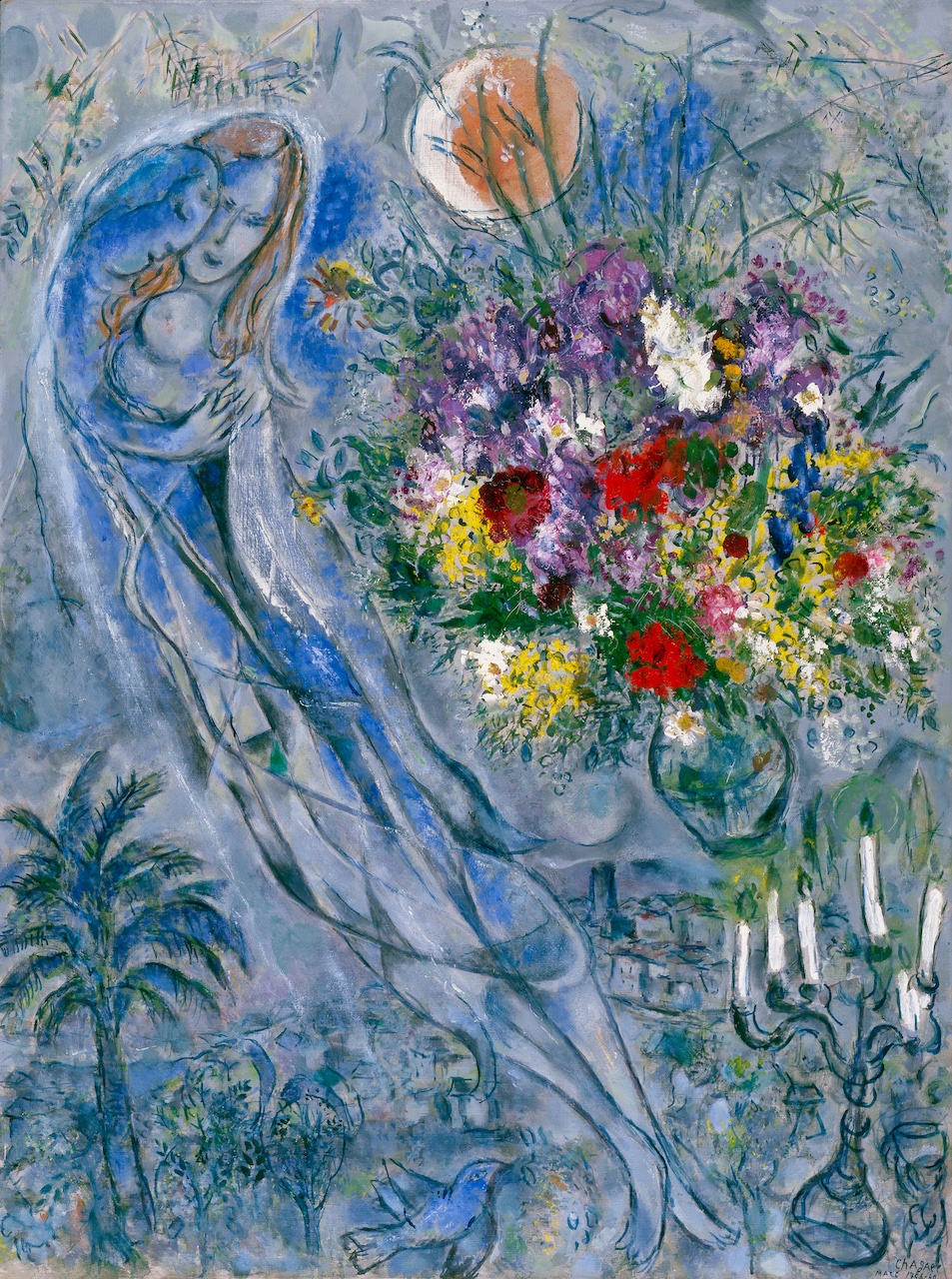
Kunsthaus Zürich. Gift of Vava Chagall, 1973. © 2026, ProLitteris, Zurich.
A very different Chagall emerges in The Martyr of 1940: a bound man, burning houses, a violinist, a mother and child… Familiar motifs from Chagall’s world come together in a single image of suffering. Does the subtext of a painting created at the very beginning of the Second World War need explaining? Here, what has already been endured meets a premonition of an even more terrible future, imagined and depicted by an artist with a prophet’s vision.
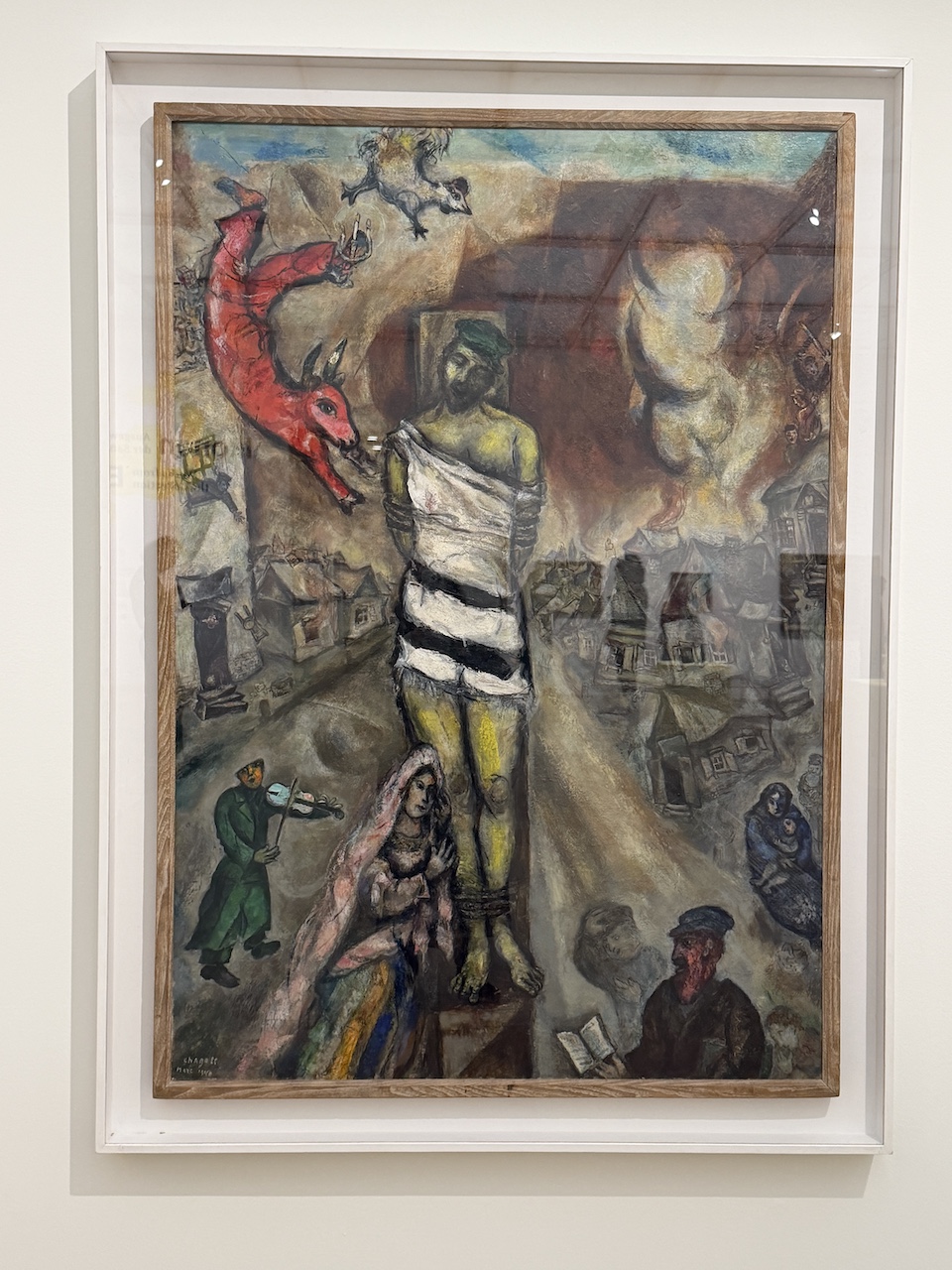
Kunsthaus Zürich. Gift of Elektro-Watt AG, 1973. Photo © N. Sikorsky
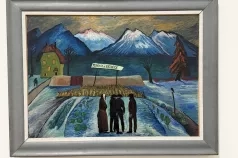
The painting by Marianne von Werefkin, many of whose works you have surely seen at the Municipal Museum of Modern Art in Ascona, has a thoroughly prosaic title: Land for Sale (1916). A sign in French stands among the vegetable beds, with a crooked little house and a crooked fir tree nearby, straight out of Korney Chukovsky’s Russian adaptation of the English nursery rhyme ‘There Was a Crooked Man’. Yet the mountains rising above them are so blue, the house’s yellow windows glow so brightly, the four dark figures in the foreground are so striking in their stillness, and a fifth hurries so inexorably towards them that this everyday scene becomes mysterious, even slightly sinister: from a children’s rhyme, the mind turns to Agatha Christie’s novel Crooked House and its 2017 film adaptation. Note, too, that the work came to the museum through a bequest from Marianne von Werefkin herself, who surely could never have imagined how much this modest plot of land in the Swiss Alpes would rise in value over the next hundred years!
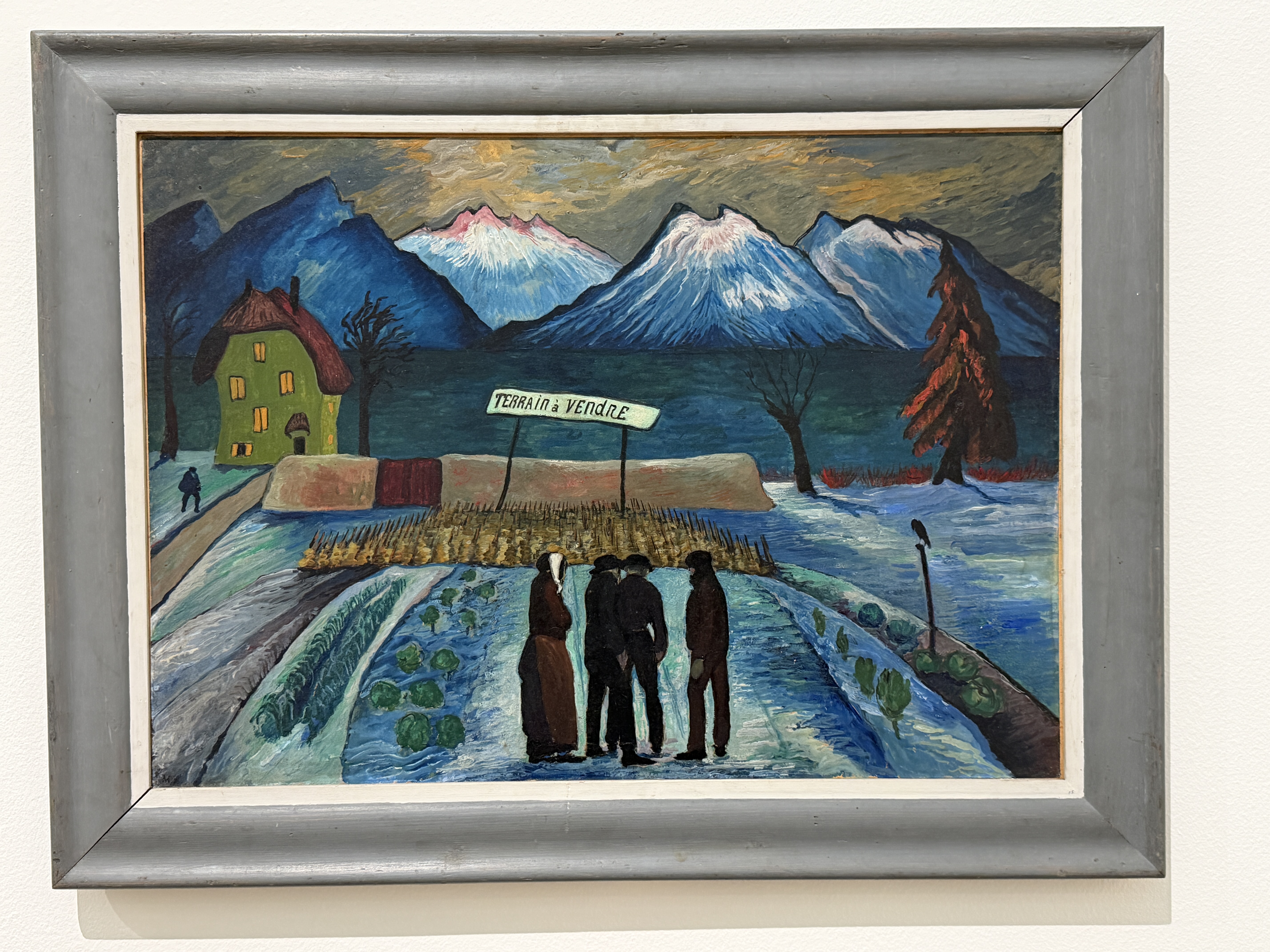
Kunsthaus Zürich. Bequest of the artist, 1939. Photo © N. Sikorsky
From here you can move on to Kirchner’s snow-covered valley, Picasso’s guitar, de Chirico’s unsettling muses, or Tinguely’s construction, placed beside Giger’s dark world… The exhibition leaves room for such freedom of movement, and for a choice of your own: which of these ‘icons’ will become yours?



Federica Brunelli November 20, 2026
Sikorsky November 20, 2026