The Siberia Job in its original version is the fourth novel overall and the second thriller of American Josh Haven. It was published very recently, in 2023, and one should congratulate Éditions Buchet/Chastel for having it quickly translated into French and published under the surprisingly English title: Wild Wild Siberia. Before becoming a writer, Josh Haven was an art critic for various American and European magazines – from the Wall Street Journal to the Jerusalem Post, in addition to being an astro-geophysicist. When nature is generous with someone, it doesn't count its gifts.
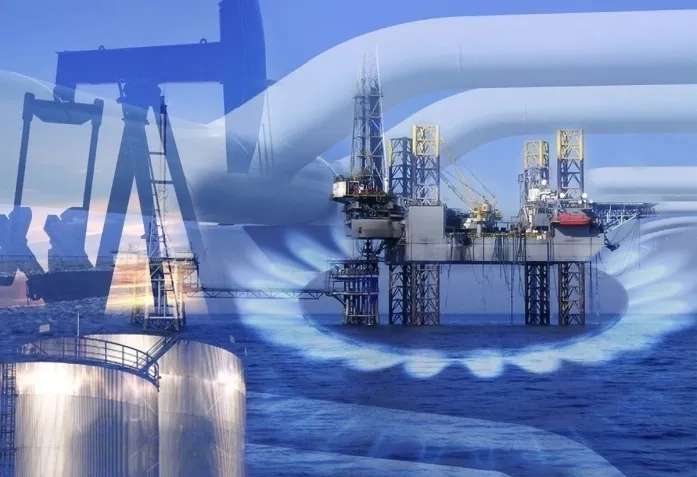
The novel's action covers a long period – from 1994 to 2022, but with a twenty-five-year intermission. In the preface, the author admits that "it is a dubious luxury for a novel based on real events to have those events continue to unfold as the book makes its way into print." He also specifies that the idea for the novel was suggested to him by a businessman friend who, at his Bahamas residence, told him his own story while emphasizing that he is the last living witness to the events in question: his ex-partner's helicopter, on a skiing trip to Alaska, crashed under suspicious circumstances. This premature death was one in a series of disappearances of major entrepreneurs linked, in one way or another, to the privatization of Gazprom – one of the largest publicly traded energy companies. In the first version of the book, the Russian giant appeared under its real name, but the particularly delicate nature of the subject led the author to replace it with "Gasneft" – less direct but perfectly identifiable.

"Russian energy exports help finance Russia's invasion of Ukraine, which means that while helping Ukraine repel Russia, Europe is also helping Russia finance this war. Consequently, the rest of the world wonders: who controls what? Who controls whom? An unprecedented series of sanctions has hit Russia. Switzerland violated its own neutrality to join the dance. And yet, apart from the loss of a few yachts, Russian oligarchs seem to be weathering the storm rather well," according to Josh Haven, who thus clearly announces his colors.
I'm sure these few words are enough to arouse the interest of Russian-speaking readers, some of whom remember those troubled years only too well and may have even participated in the events described in the book. The rest of the readers will devour this thriller like any other, marveling at how the incredibly rich country was stripped, and perhaps even regretting not having participated...
The back cover of the French edition presents this novel as "the crazy story of two men who wanted to buy Russia." Obviously, this is advertising that tends to exaggerate things, however the story is truly incredible, and although Gazprom is not all of Russia, it is a very large piece of it. These two men are John, an American, and Petr, a Czech. The plan of these companions who met in a London bar is brilliant in its simplicity: take advantage of the partial privatization of Gazprom/Gazneft announced by Boris Yeltsin and the total chaos reigning in Russia in the 1990s to buy up the maximum number of shares sold in "regional sales" and become billionaires.

The style of this book strangely reminds me of Armando Iannucci's film The Death of Stalin: it's a true Russian tragicomedy; you laugh until you cry. It has all the elements of a good thriller: the description of Moscow in 1994 that resembles London in 1938; the characters' discovery of the fake cigarette market and other counterfeits; omnipresent corruption; scenes of a kidnapping in broad daylight and the massacre of dogs that were really not at fault; confrontations with the mafia and the KGB who are often represented by the same people uttering maxims like: "If Russians could trust their government, we'd be the richest country in the world."
There are very funny episodes in this novel. How can you not laugh reading the description of a 1967 ZAZ Zaporozhets, bought by Petr in Magadan for two hundred dollars and equipped with a trapdoor in the floor to be able to fish on ice without having to leave the car? Or the perfectly absurd dialogue John has with the driver of a tank blocking his road to Kysyl-Syr, in Yakutia, where a share sale is planned: it turns out the driver is in love with a Playboy top model and is a fan of John le Carré, whose novels he finds "very relativistic on a moral level."
There are many such moments in the book. But some seemingly funny scenes also make us think: the military parade in Moscow in 1947 with Russian Tu-4s copied from American B-29s; the hypocrisy involved in creating the Jewish Autonomous Republic; the professional qualities of KGB agents and others who are duped by the two foreigners.
Despite its serious side and tragic ending, this book is an easy read, ideal for the vacation period: the Siberian wind will refresh you during the heat wave.