
In recent years, dialogue has become one of the most popular curatorial approaches museums use to broaden their audiences and introduce them to the treasures of their collections. Geneva's Musée Barbier-Mueller, for example, has paired anonymous masters of past centuries with leading contemporary artists such as Miguel Barceló and John Armleder. Likewise, the exhibition currently on view at the Fondation Pierre Gianadda has revealed to many visitors an unexpected friendship: even Martigny's discerning public was not always aware of the close bond that united Auguste Rodin and Rainer Maria Rilke.
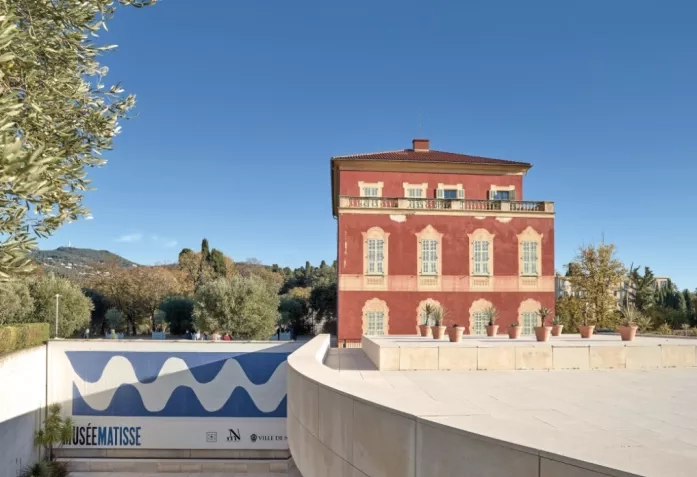
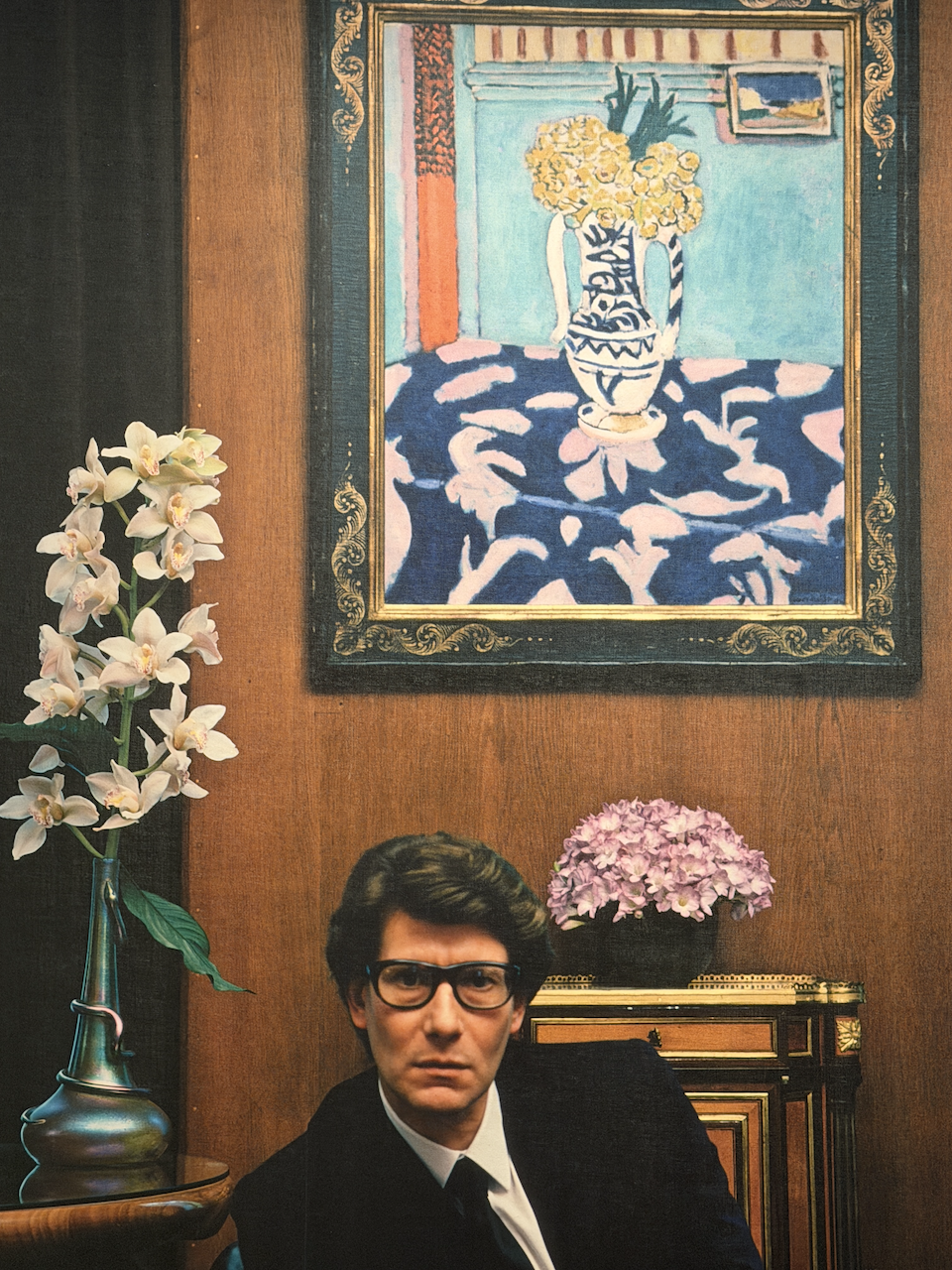
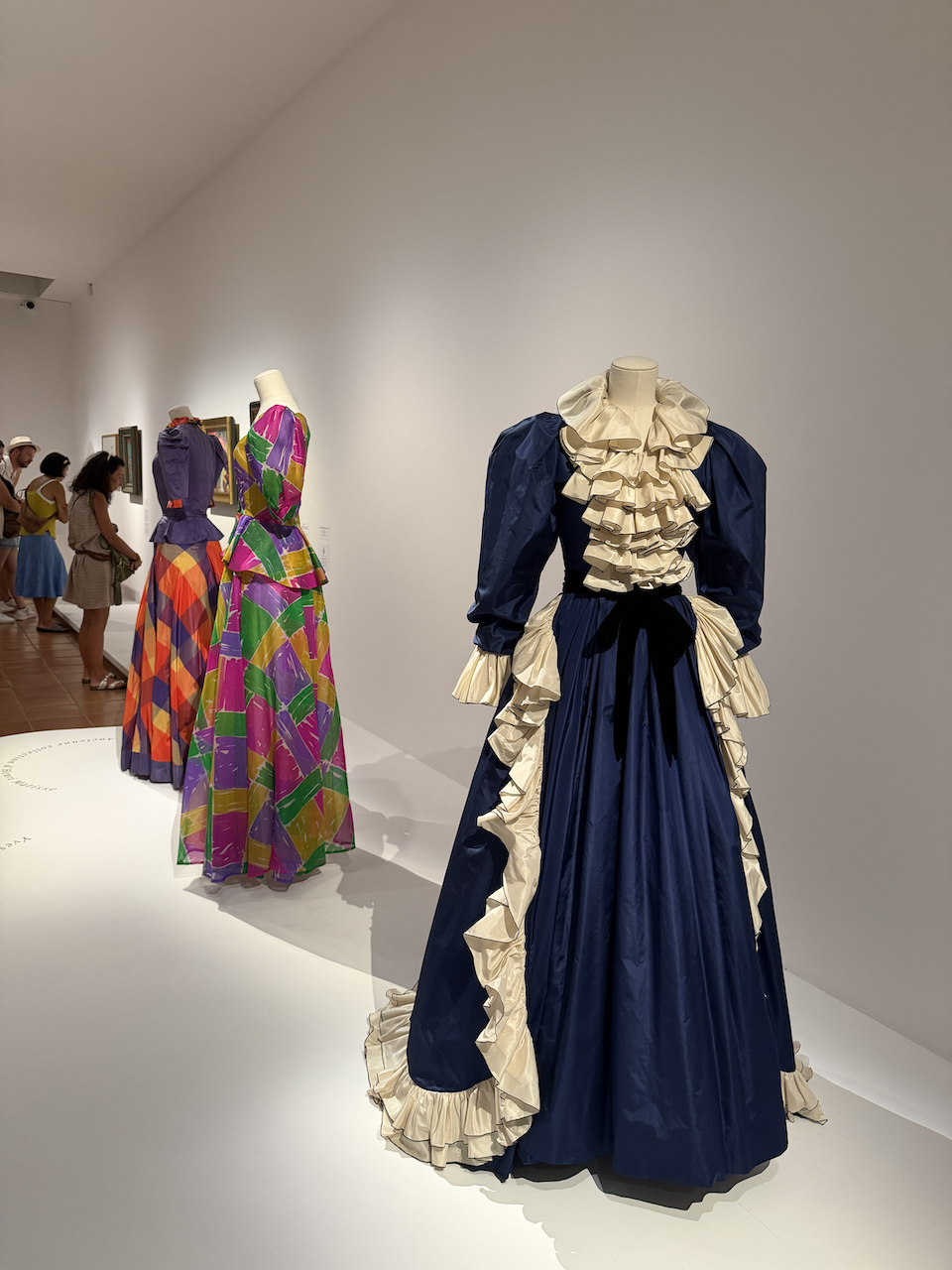
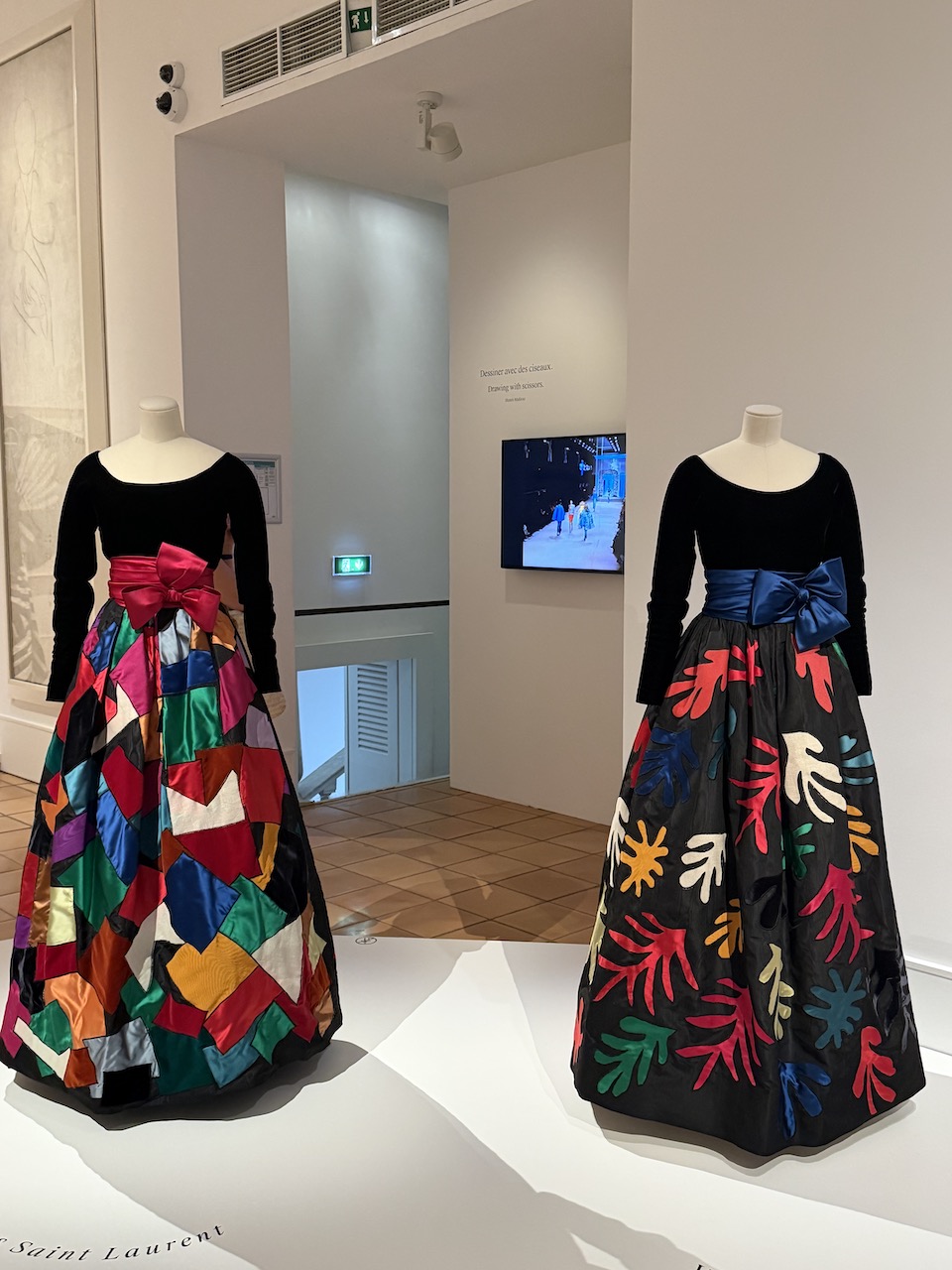
The Musée Matisse in Nice takes this idea one step further. Its exhibition, Beauty, Fashion and Happiness, brings together two of France's greatest creative minds: the painter Henri Matisse (1869–1954) and the couturier Yves Saint Laurent (1936–2008).
Their lives briefly overlapped, but, as far as I have been able to establish, they never actually met. Henri Matisse died on 3 November 1954, when Yves Saint Laurent was only eighteen. Having recently arrived in Paris from his native Oran, he was studying at the Chambre Syndicale de la Couture Parisienne, cutting paper fashion figures from his mother's magazines and dreaming of opening his own couture house on Place Vendôme. The following year changed everything. In 1955, Christian Dior hired him as his assistant. One cannot help wondering whether this was one of those invisible moments when a creative torch quietly passes from one generation to the next.
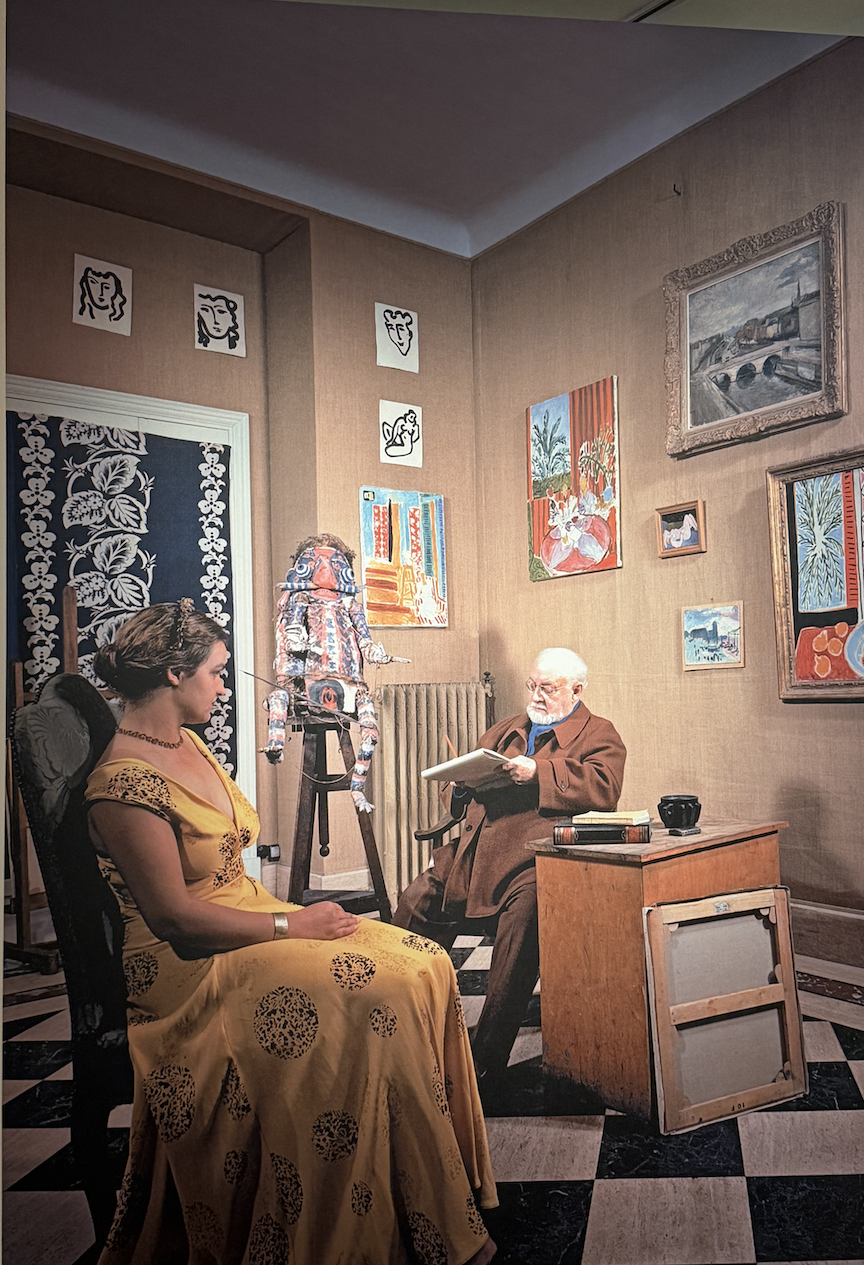
Today's museum visitor is unlikely to be surprised by an exhibition exploring the relationship between art and fashion. That relationship has long since become a given, and the careers of both Matisse and Saint Laurent testify to it. Painting was central to Saint Laurent's imagination, while Matisse's artistic universe was deeply rooted in decoration and the applied arts. Both explored the human body, textiles, colour, light and ornament, treating drawing as an inexhaustible source of creative invention.
The originality of the Nice exhibition lies elsewhere. Rather than simply demonstrating these affinities, its curators invite visitors to discover them through some 160 exhibits. The result is a remarkably subtle portrait of two artists who shared not only aesthetic sensibilities but also artistic principles and remarkably similar creative methods.
The exhibition unfolds across nine galleries, followed by an "Epilogue", giving the whole display an almost literary structure. Visitors move from one chapter to the next: Inner Laboratories, Painting and Haute Couture, Metamorphoses of the Romanian Blouse, A Shared Fascination with the East, Around the Stage, The Accessory: A Meeting Point, and Cutting Out the World.
If you know even a little about Matisse and Saint Laurent — and I suspect your knowledge extends well beyond "a little" — there is no need for me to guide you through every room. Instead, as I so often do, I shall follow the thread that interests me most: the Russian dimension of this exhibition.
It is not especially prominent. Russian connections are hardly fashionable these days. Yet both men had them, albeit in entirely different ways.
For Henri Matisse, Russia was part of lived experience. The Moscow collectors Sergei Shchukin and Ivan Morozov were among the first to recognise the originality of his work and went on to become two of his greatest patrons. It was for Shchukin's mansion that Matisse painted the monumental panels Dance and Music, and in 1911 he travelled to Moscow to see them installed. He later remarked that nowhere had his paintings been understood as profoundly as they were in Russia.
Following the 1917 Revolution and the nationalisation of private collections, these works entered the State Hermitage Museum in St Petersburg, alongside The Red Room, The Conversation, the Moroccan Triptych and other masterpieces. They remain among the highlights of the Hermitage's Matisse collection, still the largest outside France.
More than a century after Shchukin and Morozov introduced French modern art to Russia, their collections briefly returned to Paris. Two landmark exhibitions at the Fondation Louis Vuitton, organised in partnership with the Hermitage, the Pushkin State Museum of Fine Arts and the Tretyakov Gallery as part of the Icons of Modern Art project, ranked among the most significant museum events of recent years. They also reminded French audiences of the decisive role Russian collectors played in establishing Matisse's renown.
The exhibition in Nice says nothing about this chapter of his life. Yet Russia is present nonetheless, through Lydia Delectorskaya — Matisse's assistant, model and muse.
After the death of her parents, twenty-two-year-old Lydia made her way from her native Tomsk in Siberia to sunny Nice by a circuitous route through Harbin. (Do you remember Nabokov's "Omsk, Tomsk, Bombsk"?) She arrived with a Nansen passport, only a rudimentary knowledge of French and not a penny to her name. Like countless refugee women before and after her, she seemed destined for one of three familiar occupations: waitress, nanny or carer. Then fate intervened in the form of a handwritten notice at a bus stop: "Artist seeks help in the studio". You can guess what happened next.
Of all the roles Lydia came to play in Matisse's life, perhaps the most important was that of his closest and most devoted friend. He was sixty-three when they met. Remarkably, his wife Amélie, whose jealousy was well known, trusted Lydia from the very beginning and welcomed her into the family home on the hill of Cimiez, which today houses the museum.
Matisse died in her arms. Lydia later donated almost all the works he had given her to Russia, together with a complete set of his prints and two unique handmade books that she herself created in tribute to the artist. One is preserved at the Hermitage in St Petersburg, the other at the Pushkin Museum in Moscow. Yet when she applied to have her Soviet citizenship restored, her request was rejected: what if she turned out to be a spy?
It was thanks to Lydia Delectorskaya that much of the artist's legacy was given a second life: she preserved his archive, organised his papers, wrote her memoirs and remained for decades the principal witness to his final years.
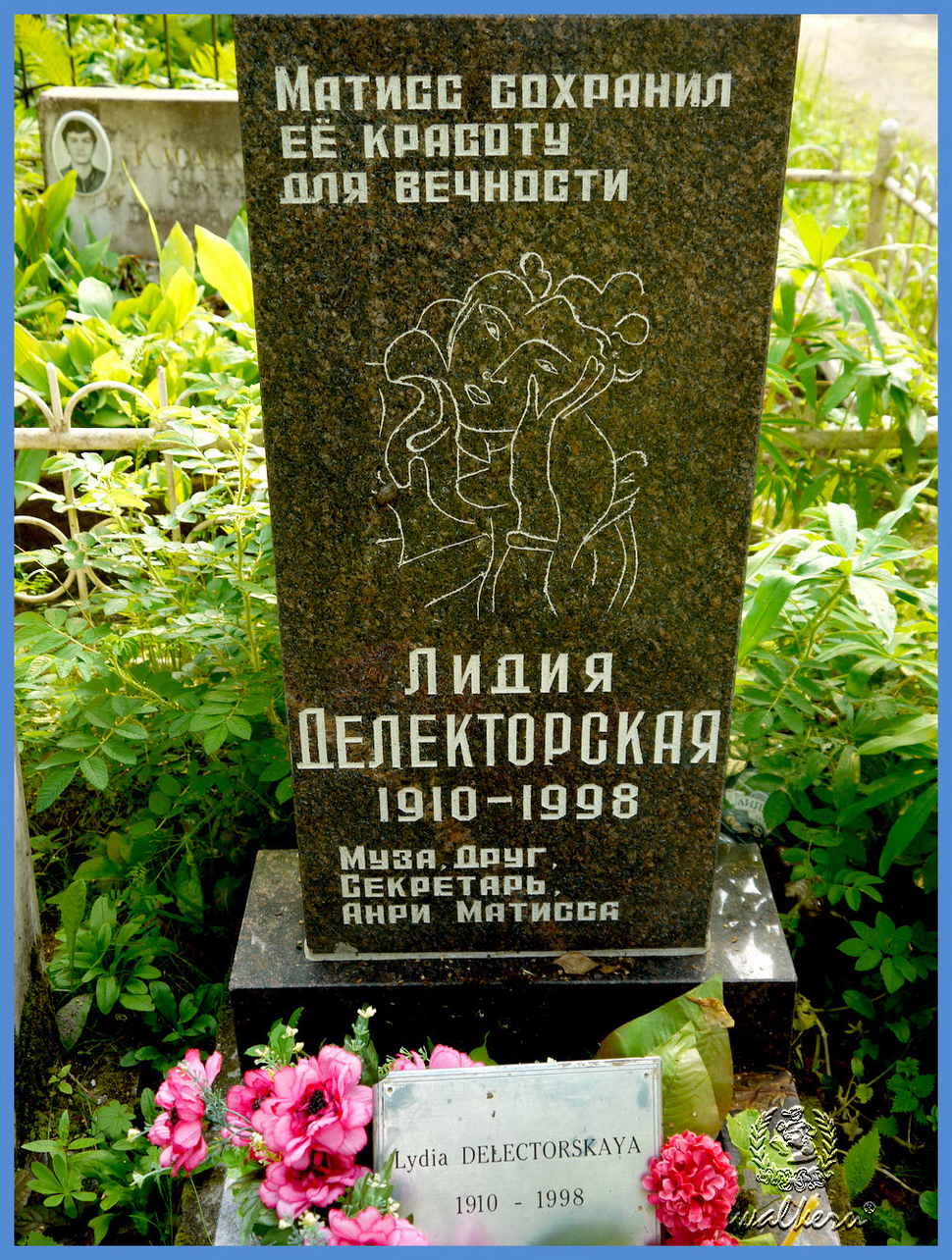
For the remaining forty years of her life, Lydia lived alone in her Paris apartment, which she had sold under an arrangement that allowed her to remain there until her death. She had also arranged in advance for a burial plot at the Russian cemetery of Sainte-Geneviève-des-Bois, but it was never used. On 16 March 1998, she took her own life. In accordance with her wishes, her ashes were transferred to Pavlovsk, near St Petersburg. Her gravestone bears Picasso's words: "Matisse preserved her beauty for eternity," together with the simple inscription that perhaps best defines her place in his life: "Muse. Friend. Secretary to Henri Matisse."
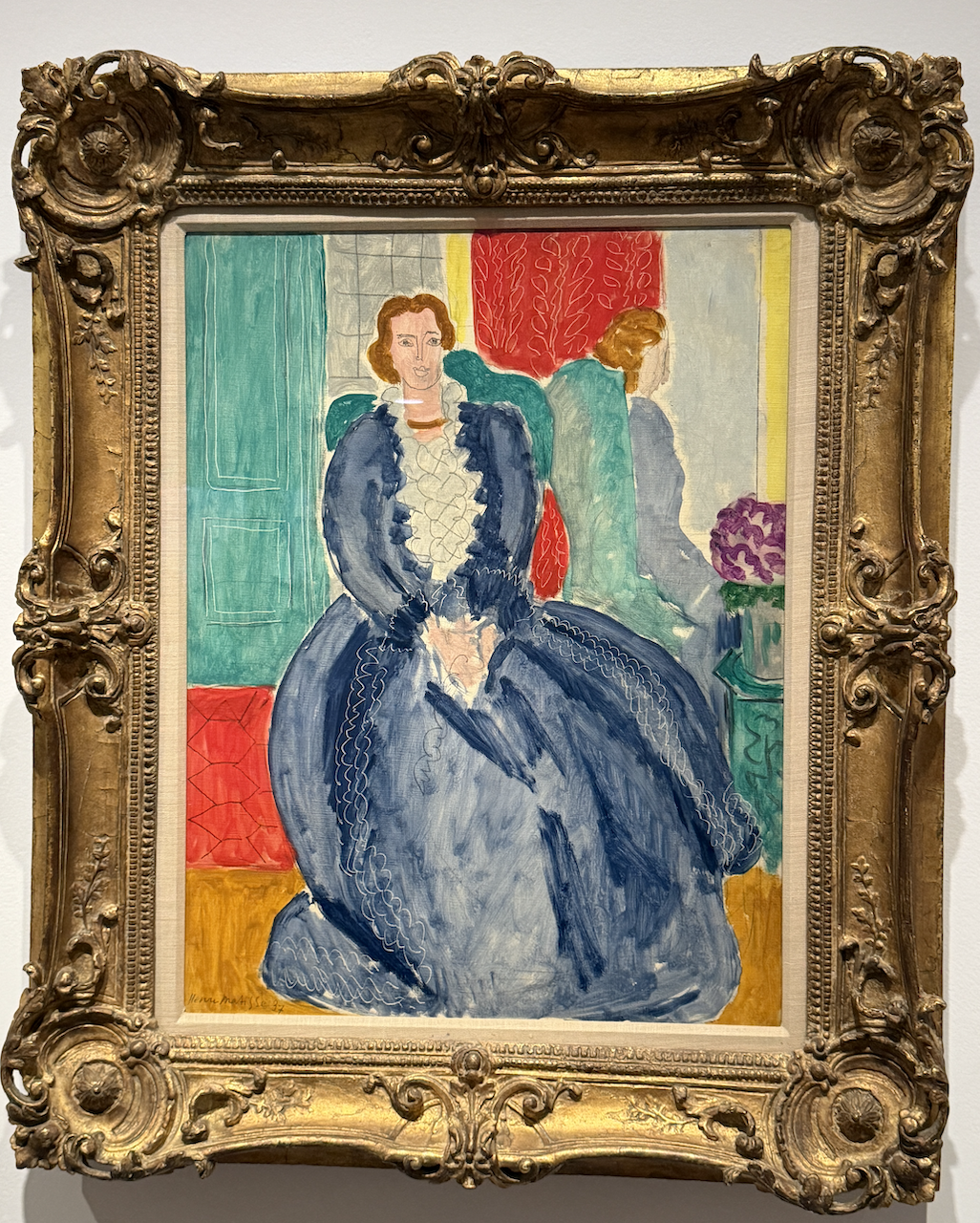
Matisse drew and painted Lydia Delectorskaya many times. I would like to draw your attention to three works included in the present exhibition and selected in keeping with its central theme.
The first, The Blue Dress Reflected in the Mirror, dates from 1937. According to the exhibition text, in this work Matisse continued the exploration he had begun in the early 1930s with Lydia Delectorskaya, whose presence is doubled here by the reflection in the mirror. The outfit she is wearing – a blue skirt with white flounces, a blouse and a jabot – was sewn by Lydia herself from taffeta chosen by the artist.
"The dress here is not merely an item of clothing," the curators emphasise. "Through its arabesques and colour contrasts, it structures the pictorial space, taking part in what Louis Aragon called the 'comedy of the model', in which the human figure is gradually transformed into a decorative motif."
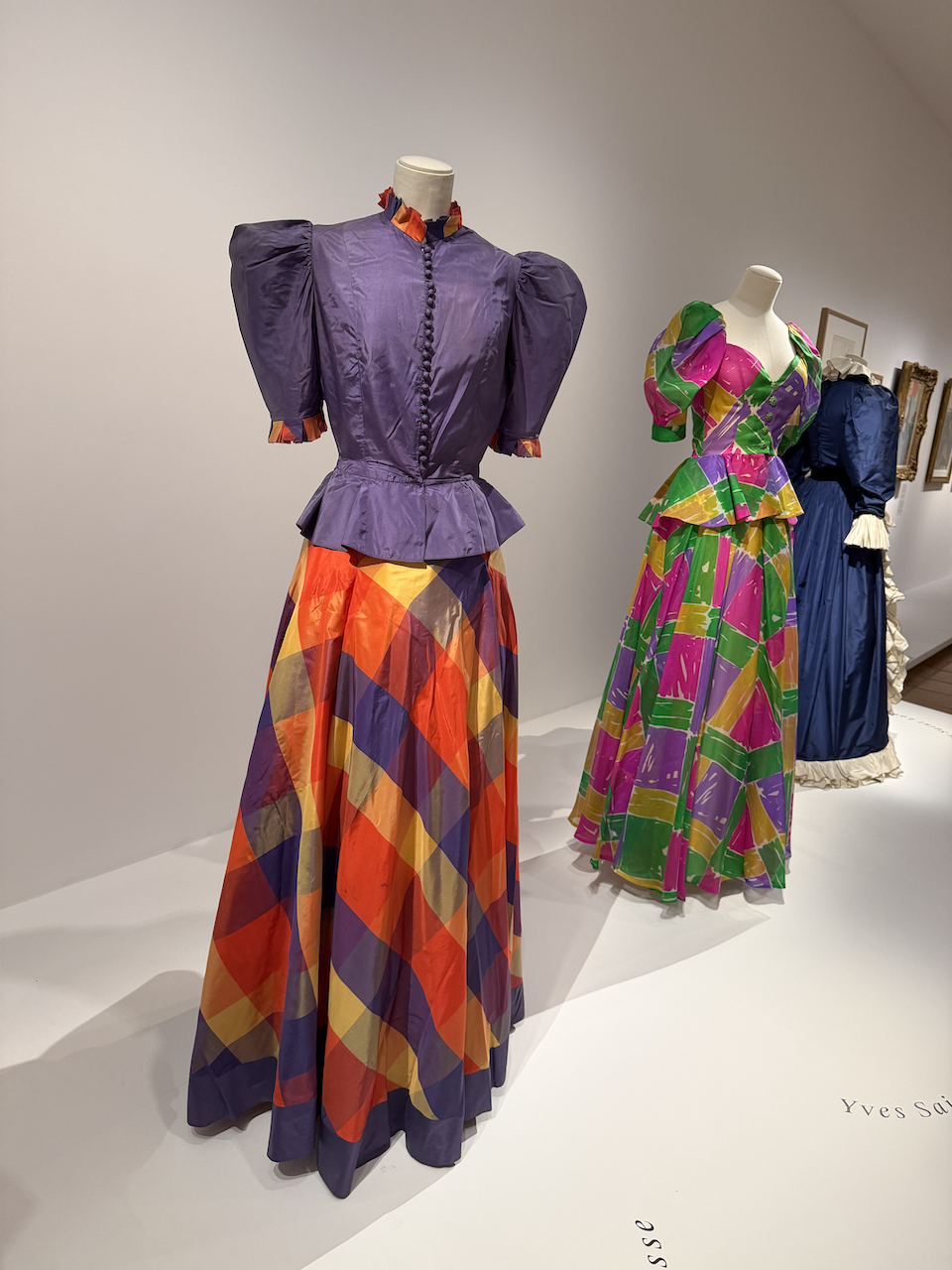
Next to the painting is an evening dress created by Yves Saint Laurent for his autumn-winter 1981 haute couture collection, in direct dialogue with this artistic legacy. Made from blue and white silk taffeta produced by the Taroni manufacture, it echoes the colour contrast and cascading flounces of the blue dress in Matisse's painting.
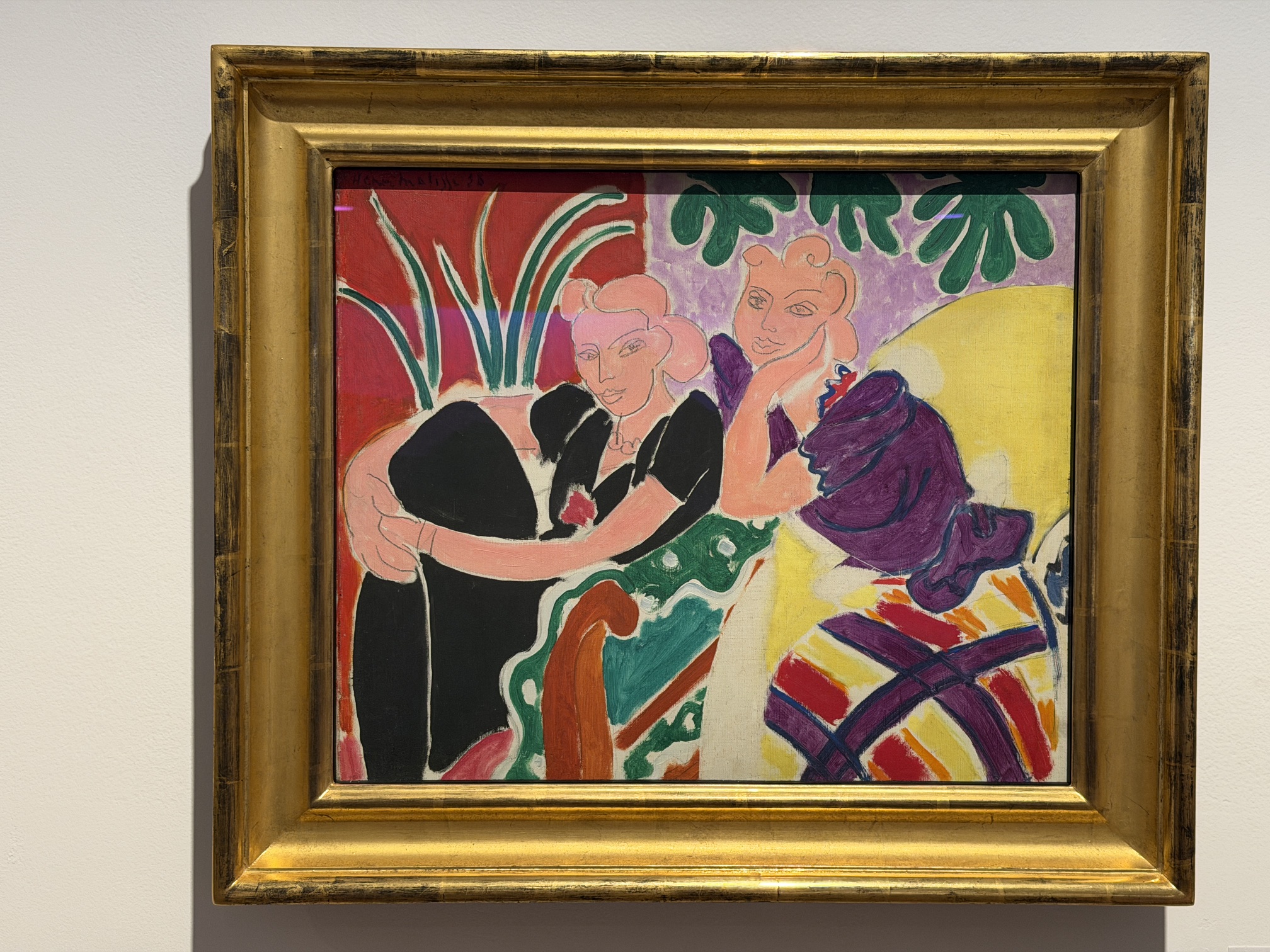
The second painting, The Conversation, was made in 1938. In this intimate composition, Matisse depicts Lydia Delectorskaya and Hélène Galitzine, with clothing playing a central role. Two friends, two Russian émigrées, pose in haute couture dresses chosen from the extensive collection of costumes and accessories assembled by the artist. Both embody femininity and elegance.
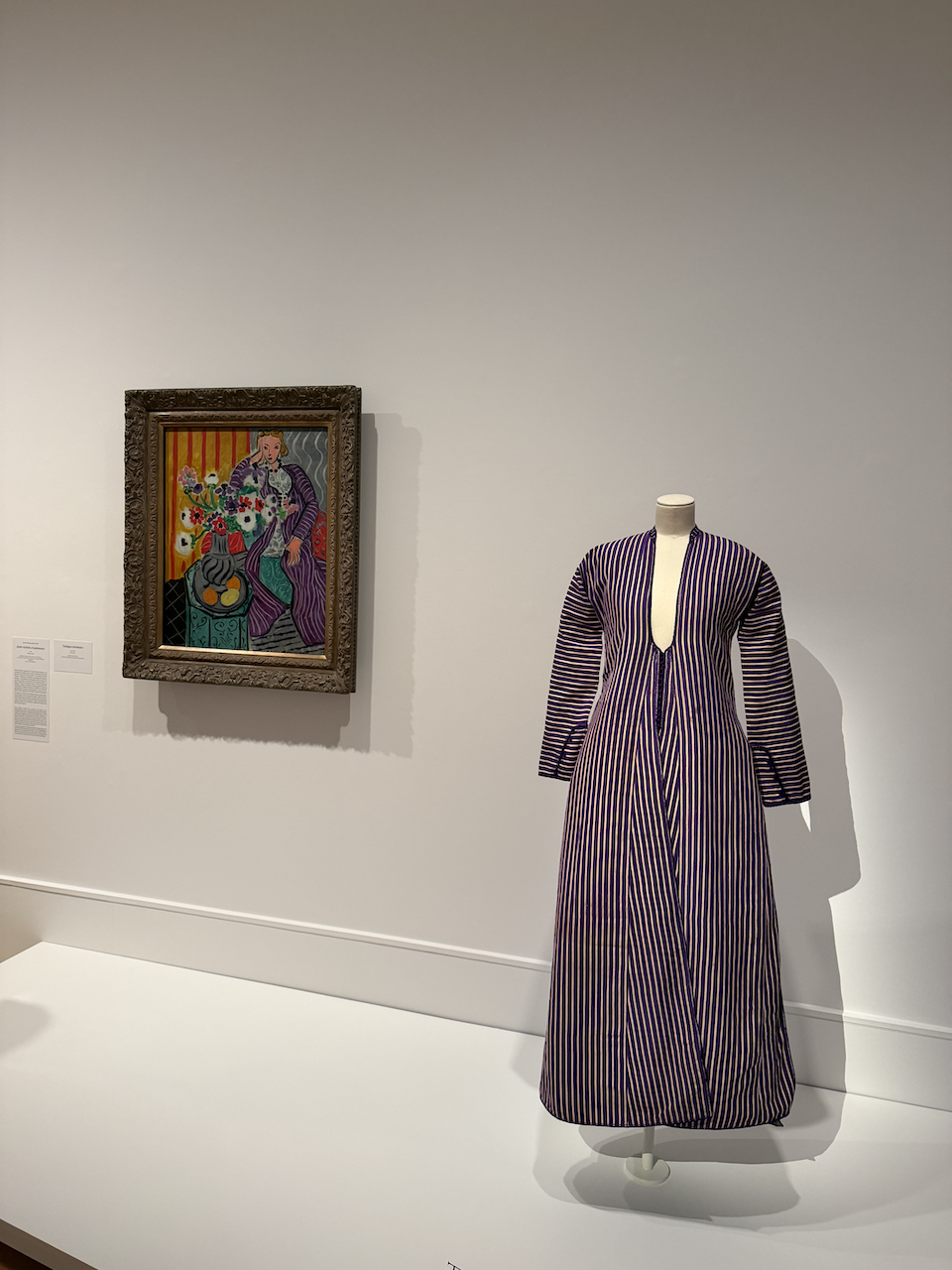
In the third painting, Purple Robe and Anemones (1937), Matisse portrays Lydia Delectorskaya in a space built entirely through the interplay of ornament and colour. Everything echoes everything else: the stripes of the purple dress, the arabesques on the wall, the pattern of the tablecloth and the outline of the vase in the foreground.
The painting is displayed alongside an Ottoman tunic from Matisse's personal collection, underscoring the exhibition's central concern with fashion. Clothing appears here at once as an object of everyday life, a source of inspiration and an element of artistic language.
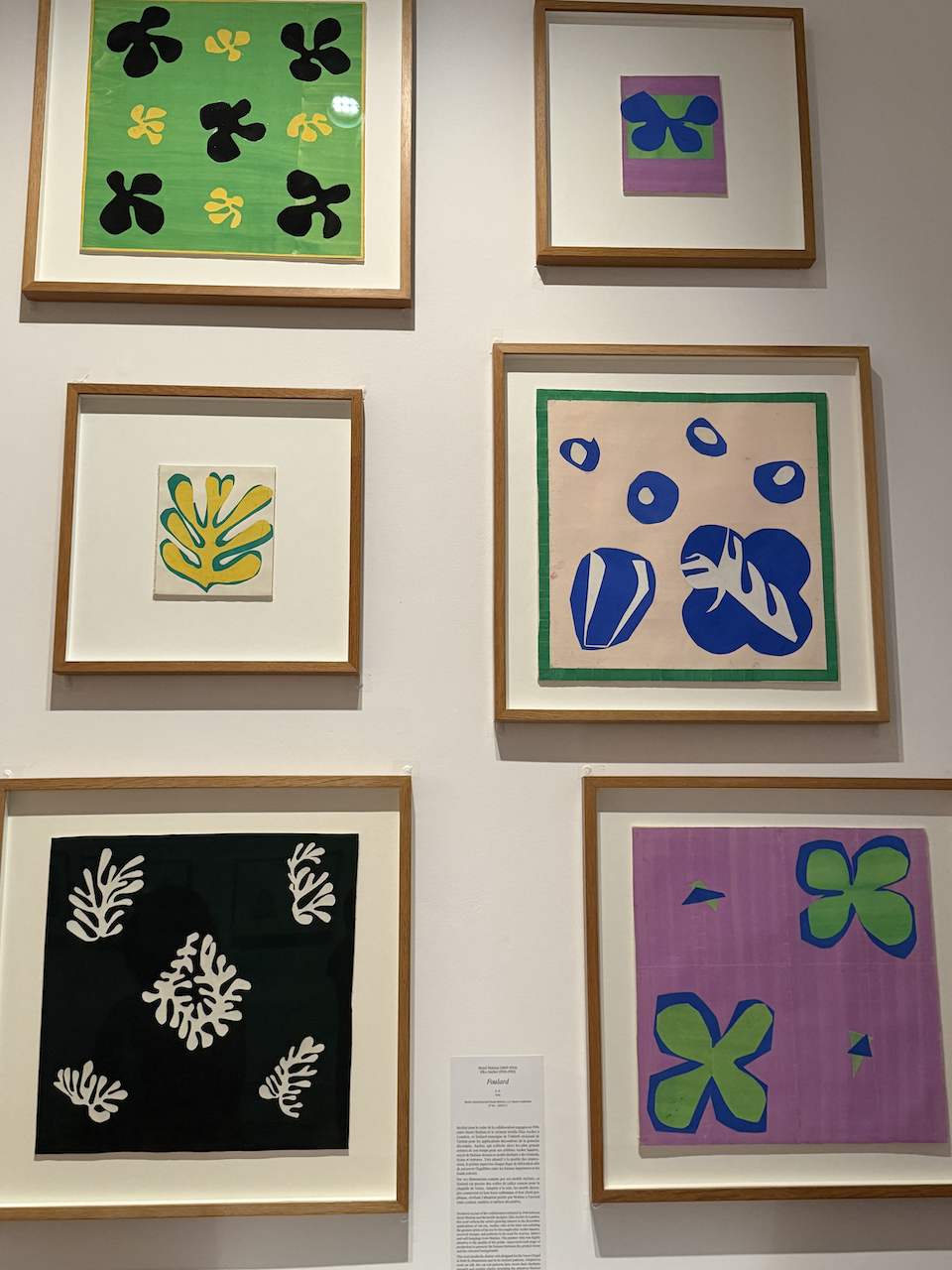
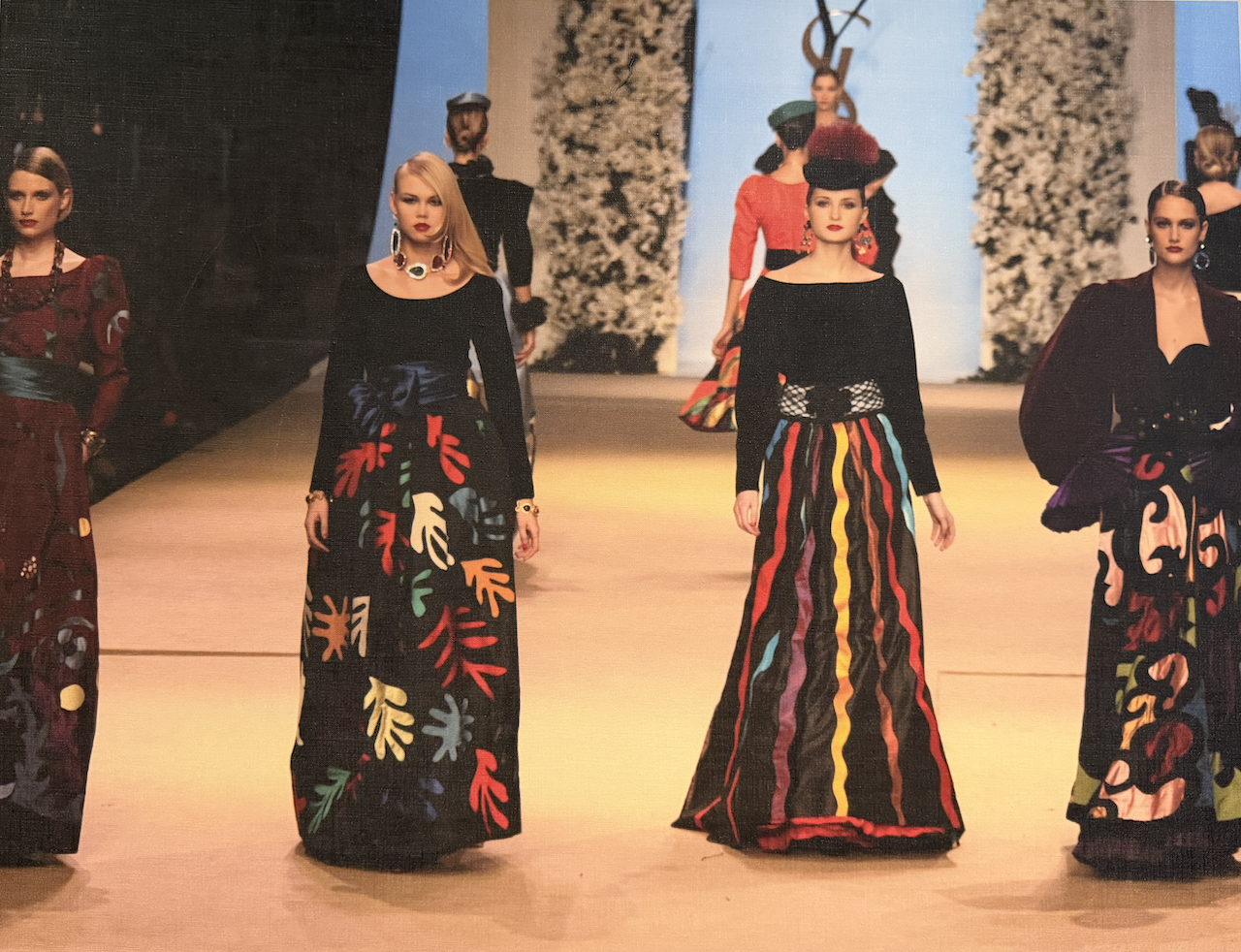
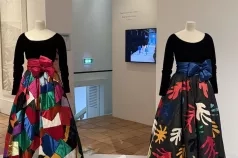
There is another, less obvious, presence of Lydia Delectorskaya in the exhibition. In the final years of his life, when Matisse was often ill but continued to work, particularly on his cut-outs, it was Lydia who assisted him: first painting sheets of paper in the colours he indicated, then cutting out the forms he had devised. These, too, can be seen in the museum, both on paper and transposed into the dresses of Yves Saint Laurent.
As for the great couturier's relationship with Russia, for many years it existed largely in his imagination. Perhaps Matisse played a part in it, but its true sources were Sergei Diaghilev's Ballets Russes, Léon Bakst's sets and costumes, Tolstoy's novels and the rich imagery of Russian folklore.
There is another charming detail. Every French bulldog Saint Laurent owned bore the same name: Moujik. When one died, the next inherited it — Moujik II, Moujik III, Moujik IV… Perhaps he first came across the word in Russian literature; perhaps he had admired Fabergé's famous Dancing Moujik.
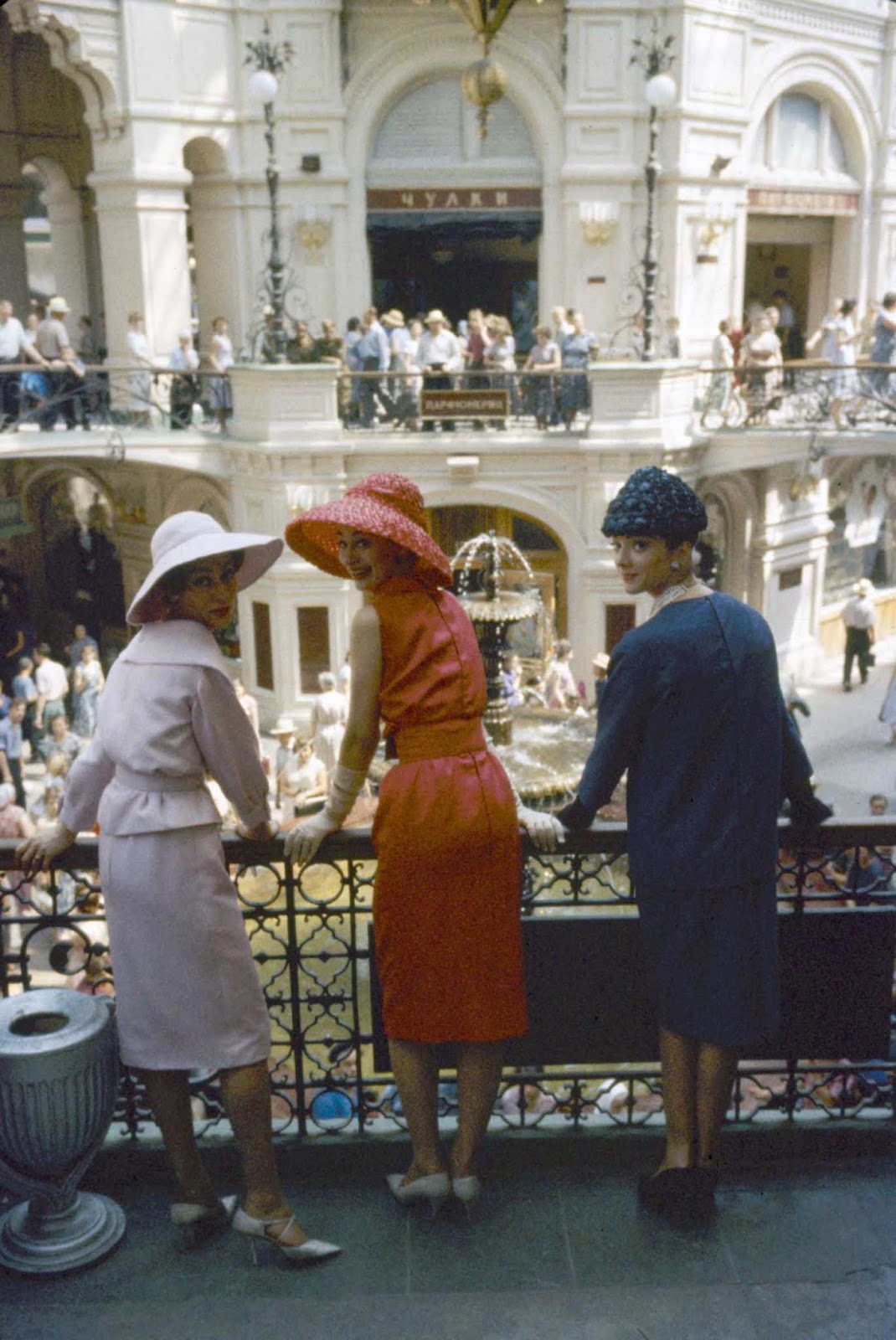
Russia finally acquired a tangible reality for him in June 1959. At the age of twenty-two, already artistic director of the House of Dior following Christian Dior's sudden death, Saint Laurent travelled to Moscow with twelve models. The French couture house presented a series of fashion shows that became one of the defining cultural images of Khrushchev's Thaw. Photographs of Dior models posing on Red Square and inside GUM travelled around the world, transforming what might have been a fashion event into a memorable episode of Cold War cultural diplomacy.
Let me draw your attention to one final exhibit.
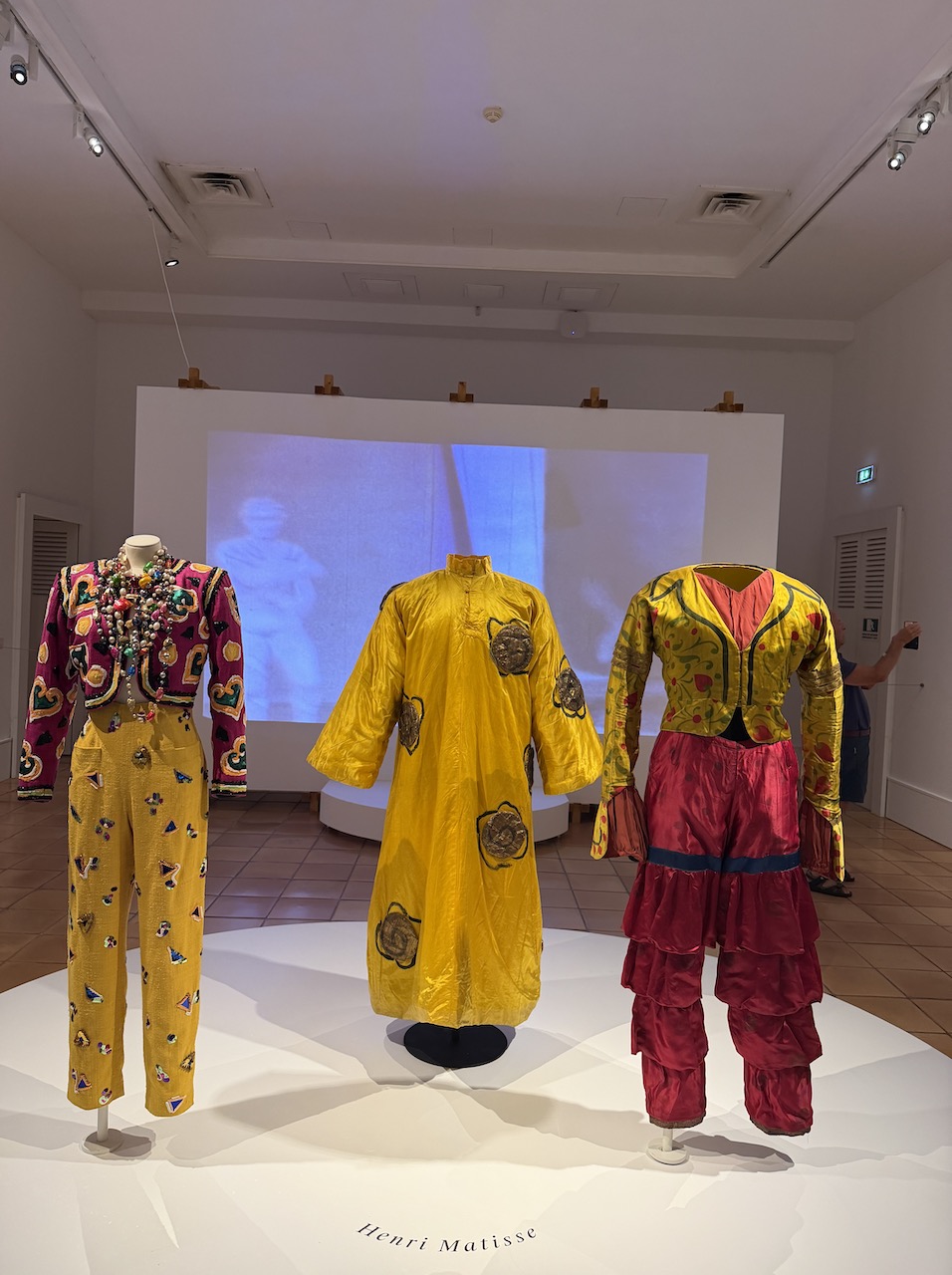
In 1919, Sergei Diaghilev, the driving force behind the Ballets Russes, invited Matisse to design the sets and costumes for Le Chant du rossignol (The Song of the Nightingale). To familiarise the painter with the demands of theatrical costume, he showed him one of Léon Bakst's costume designs for Scheherazade. Matisse was struck by its boldness. The commission became his first major venture beyond the canvas into the world of stage design. Conceived as paintings brought to life, his costumes transformed colour itself into movement.
Nearly twenty years later, Matisse returned to the theatre when he designed the sets and costumes for Le Rouge et le Noir, also known as L'Étrange Farandole. And imagine – one of the galleries includes a rare archival film. Shot in 1939 by the American dance historian Ann Barzel during the Ballet Russe de Monte Carlo's engagement at Chicago's Auditorium Theatre, it captures excerpts from Le Rouge et le Noir, which had premiered in Monte Carlo on 11 May that year. Choreographed by Léonide Massine – whom I mentioned in my article on Rudolf Nureyev – to Dmitri Shostakovich's First Symphony, with sets and costumes by Matisse. The film is one of the very few surviving records of Matisse's work for the theatre.
Curious, I turned to The New York Times archive and found John Martin's review of the American première at the Metropolitan Opera, published on 29 October 1939. After warmly praising the ballerina Alicia Markova, he turned to Matisse's designs:
"The greatest handicap under which the composition labors, however, is its setting, which is designed by no less a personage than Henri Matisse and proves more eloquently than any number of words could do how remote from each other the fields of the painter and the stage designer can be."
Matisse was not recognised as a classic overnight. But who remembers John Martin today?
… I have deliberately focused on only one strand of this rich exhibition: the one that leads back to Russia. The remaining chapters of this absorbing dialogue are yours to discover. The exhibition runs until 28 September.
My story ends here, but the encounter with the exhibition does not. To follow what comes next – photographs, details and small discoveries that did not fit into the article – keep an eye on rusaccent.ch on Facebook and Instagram. I would be delighted to see you among our followers.






Federica Brunelli July 22, 2026
Sikorsky July 22, 2026