Bookshelf

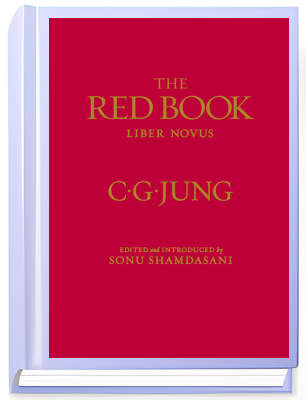
Carl Jung: "The Red Book", W.W.Norton, New York, 2009

This year is marked by the 50th anniversary of death of the great Swiss psychiatrist Carl Jung.

In short, this is a volume that will be treasured by the confirmed Jungian or by admirers of beautifully made books or by those with a taste for philosophical allegory. (Michael Dirda - Washington Post )

The most influential unpublished work in the history of psychology. When Carl Jung embarked on an extended self-exploration he called his “confrontation with the unconscious,” the heart of it was The Red Book, a large, illuminated volume he created between 1914 and 1930. Here he developed his principle theories—of the archetypes, the collective unconscious, and the process of individuation—that transformed psychotherapy from a practice concerned with treatment of the sick into a means for higher development of the personality.

While Jung considered The Red Book to be his most important work, only a handful of people have ever seen it. Now, in a complete facsimile and translation, it is available to scholars and the general public. It is an astonishing example of calligraphy and art on a par with The Book of Kells and the illuminated manuscripts of William Blake. This publication of The Red Book is a watershed that will cast new light on the making of modern psychology. 212 color illustrations.

Please see this review in the New York Times.

Please see the review in Nasha Gazeta.ch.

Pour nos lecteurs francophones :
L'ouvrage disponible en allemand et anglais est annoncé dans une traduction française pour une sortie début 2011.
Sous l'impulsion de la Fondation Philemon, dirigée par l'analyste jungien Stephen Martin, et avec l'accord des héritiers de Jung, l'historien Sonu Shamdasani, co-fondateur de la Fondation, a été chargé de superviser la traduction de l'ouvrage en langue anglaise, d'en rédiger l'introduction et d'ajouter les notes de pied de page.
L'éditeur W.W. Norton propose un ouvrage composé de deux parties : le fac-similé de l'original (205 pages peintes et calligraphiées en langue allemande par Jung) auquel s'ajoute la traduction anglaise, soit 404 pages au total.
Dans le courant du 1er trimestre 2011 cet ouvrage devrait être disponible en français (sa traduction est en cours, il sera publié aux éditions Albin Michel).


About the author

Nadia Sikorsky

Nadia Sikorsky was born and raised in Moscow. She graduated from the Faculty of Journalism at Moscow State University and went on to complete her postgraduate studies there, earning a PhD in History. She spent 13 years at UNESCO, first in Paris and then in Geneva. After serving as Director of Communications at Green Cross International, founded by Mikhail Gorbachev, she launched NashaGazeta.ch in 2007, Switzerland’s first Russian-language online daily newspaper.

In 2022, Nadia Sikorsky was named to Le Temps’ Forum des 100, which brings together individuals who, in the newspaper’s view, have “significantly contributed to the success of French-speaking Switzerland”, from across public life, business, politics, science and culture.

After 18 years at the helm of NashaGazeta.ch, Nadia Sikorsky decided to devote herself to what had always held a special place in her work as a journalist: culture in all its diversity. This led to the creation of Russian Accent, a trilingual cultural blog in Russian, French and English, born in the heart of Europe, in Switzerland, which has become her second home and whose multiculturalism and multilingualism have helped shape the character of this new project.

At the heart of the project is the perspective of a European of Russian origin, drawing on more than 35 years of professional experience and a deep knowledge of both cultural traditions. Nadia Sikorsky sees her role as that of a cultural mediator between the two. The title of the blog, Russian Accent, reflects this idea: the accent is neither a linguistic barrier nor a political position, but a distinctive cultural imprint within a European context.

Events
Most read

A new book by the Geneva-based Slavist Jean-Philippe Jaccard and his Russian colleague Andrei Ustinov, now living in San Francisco, has been published by the European University at St Petersburg: Vzir Zaumi. Daniil Harms and the Literary Avant-Garde of the 1920s. In the authors' own words, the volume offers a kind of X-ray of Leningrad's "left-wing " circles and their evolution during the period between Harms's poetic debut and the creation of OBERIU, as well as the dynamics that shaped those circles.

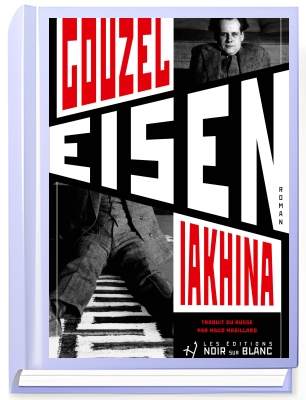
A few days ago, the Lausanne-based publisher Éditions Noir sur Blanc brought out Guzel Yakhina’s novel about the celebrated Soviet film director Sergei Eisenstein. French readers will be able to read it in Maud Mabillard’s translation and, importantly, in full, including the ninth chapter omitted from the Russian edition.