Bookshelf

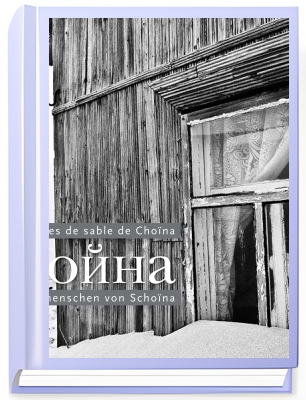
Dominique de Rivaz et Dmitri Leltschuk : Les hommes de sable de Choïna, Editions Noir sur Blanc, 2013

Collection  « beau livre ». Ouvrage de photographies bilingue français-allemand. Traductions de Chantal Le Brun et Marie Catherine Theiler.

Dominique de Rivaz décide de partir à Choïna, un hameau de 300 habitants dans le Grand Nord russe, en découvrant les photographies de Dmitri Leltschuk. Ce village sur les rives de la mer Blanche, qui était l’un des plus importants ports de pêche de l’Union soviétique, est aujourd’hui envahi par le sable. La pêche intensive a détruit les fonds marins, qui constituaient une barrière naturelle. Les habitants tentent de sauver leur village, en déblayant quotidiennement le dépôt de la mer et du vent.

Les deux photographes, fascinés par ces lieux reculés, oubliés du monde, y ont passé de longues périodes. Leurs images se font écho au fil de l’ouvrage. La lumière particulière du Nord baigne leurs photographies d’enfants ou de vieillards, d’épaves rouillées sur les plages, de l’avion hebdomadaire qui les relie à la Russie, du phare fermé depuis peu par décret officiel. Des textes sur le passé de Choïna et sur la vie quotidienne de ses habitants viennent compléter le dialogue entre les deux photographes. Pour Dominique de Rivaz, Choïna se révèle comme un lieu métaphorique de son espace intérieur, propice au deuil et à la mémoire, un lieu où explorer les confins de la vie.

Écrivain, cinéaste et photographe née en 1953, Dominique de Rivaz vit entre Berne et Berlin. Assistante de réalisation d’Alain Tanner notamment, elle a collaboré pendant dix ans au Festival international de films de Fribourg. Son film Mein Name ist Bach a reçu le prix du Cinéma suisse pour le meilleur long métrage de fiction en 2004 ; Luftbusiness, le prix du Cinéma suisse 2009 pour la meilleure interprétation masculine. Elle a écrit trois romans : Douchinka (L’Aire, Prix Schiller Découverte 2009) ; La Poussette (Buchet/Chastel, 2010) et Rose Envy (Zoé, 2012), nominé pour le prix Wepler. Elle est aussi l’auteur d’un livre de photographies sur le mur de Berlin : Sans début ni fin – Le chemin du mur de Berlin (Noir sur Blanc, 2010).
Dmitri Leltschuk, photographe biélorusse, vit aujourd’hui en Allemagne. Il est l’auteur de nombreuses expositions.

Интервью с авторами можно прочитать здесь.

About the author

Nadia Sikorsky

Nadia Sikorsky was born and raised in Moscow. She graduated from the Faculty of Journalism at Moscow State University and went on to complete her postgraduate studies there, earning a PhD in History. She spent 13 years at UNESCO, first in Paris and then in Geneva. After serving as Director of Communications at Green Cross International, founded by Mikhail Gorbachev, she launched NashaGazeta.ch in 2007, Switzerland’s first Russian-language online daily newspaper.

In 2022, Nadia Sikorsky was named to Le Temps’ Forum des 100, which brings together individuals who, in the newspaper’s view, have “significantly contributed to the success of French-speaking Switzerland”, from across public life, business, politics, science and culture.

After 18 years at the helm of NashaGazeta.ch, Nadia Sikorsky decided to devote herself to what had always held a special place in her work as a journalist: culture in all its diversity. This led to the creation of Russian Accent, a trilingual cultural blog in Russian, French and English, born in the heart of Europe, in Switzerland, which has become her second home and whose multiculturalism and multilingualism have helped shape the character of this new project.

At the heart of the project is the perspective of a European of Russian origin, drawing on more than 35 years of professional experience and a deep knowledge of both cultural traditions. Nadia Sikorsky sees her role as that of a cultural mediator between the two. The title of the blog, Russian Accent, reflects this idea: the accent is neither a linguistic barrier nor a political position, but a distinctive cultural imprint within a European context.

Events
Most read

A new book by the Geneva-based Slavist Jean-Philippe Jaccard and his Russian colleague Andrei Ustinov, now living in San Francisco, has been published by the European University at St Petersburg: Vzir Zaumi. Daniil Harms and the Literary Avant-Garde of the 1920s. In the authors' own words, the volume offers a kind of X-ray of Leningrad's "left-wing " circles and their evolution during the period between Harms's poetic debut and the creation of OBERIU, as well as the dynamics that shaped those circles.

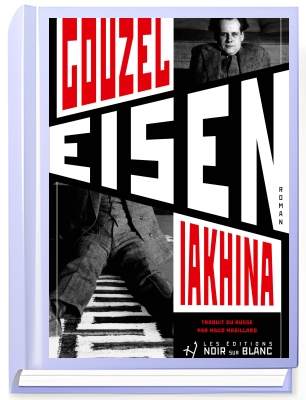
A few days ago, the Lausanne-based publisher Éditions Noir sur Blanc brought out Guzel Yakhina’s novel about the celebrated Soviet film director Sergei Eisenstein. French readers will be able to read it in Maud Mabillard’s translation and, importantly, in full, including the ninth chapter omitted from the Russian edition.