Bookshelf

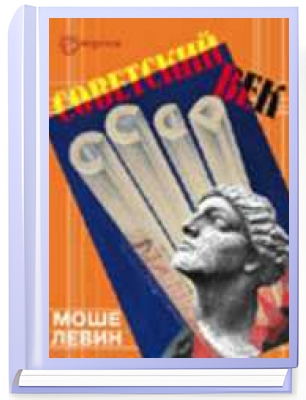
Издательство «Европа», 2008. – 680 с.

Книга американского историка М. Левина «Советский век» была выско оценена читателями в США. А всего через два года после своего первого издания по-английски, она была переведена на русский язык.

Моше Левин родился в 1921 году в Вильно, в 1939 г. отошедшем к СССР. Ощущая себя гражданином нового Отечества, в 1941 году он ушел на фронт, где и сражался в рядах Красной Армии вплоть до конца войны в 1945 г. В том же, 1945 г., он эмигрировал в только что основанное государство Израиль, где провел еще полтора десятка лет, обучаясь, а затем и преподавая в Тель-Авивском университете. В 1964 М. Левин защитил диссертацию в Сорбонне, а потом, в конце 70-х гг., перебрался в США, где живет и работает до сих пор. В сферу научных интересов М. Левина входит, прежде всего, история советского периода, начиная с Октябрьской революции 1917 года и заканчивая падением СССР в 1991. При этом его взгляд на советскую историю ощутимо отличается от представлений большинства американских и европейских исследователей, сложившихся в годы «холодной войны».

В своём повествовании М. Левин отходит от строгой хронологии событий. Первая часть книги («Режим и его душа», С.21 - 261) посвящена рассмотрению правления Сталина, анализу феномена сталинизма, специфических характеристик этого периода, сильных и слабых сторон сталинского режима. Во второй части книги, озаглавленной «1960-е и далее: от новой модели к новому тупику» (С. 263 - 425) автор говоря его же собственными словами, «описывает постсталинский период (от Хрущева до Андропова), иную модель советского строя, которая на определенное время привнесла в систему новые силы, прежде чем сменилась эпохой застоя » (С. 18).

Наконец, в третьей и последней части («Советский век: Россия в историческом контексте», С. 427 - 607) автор возвращается к самому началу советской истории и пытается широкими мазками дать общую ее картину, от Ленина до перестройки конца 80-х годов, говоря о том, что «очень важно составить представление о специфике измерения и оценки этой эпохи, в том числе для того, чтобы иметь возможность осмыслить Россию после Горбачева...» (С. 19).

Информация с сайта http://www.worldhist.ru/books/new/Levin.htm

About the author

Nadia Sikorsky

Nadia Sikorsky was born and raised in Moscow. She graduated from the Faculty of Journalism at Moscow State University and went on to complete her postgraduate studies there, earning a PhD in History. She spent 13 years at UNESCO, first in Paris and then in Geneva. After serving as Director of Communications at Green Cross International, founded by Mikhail Gorbachev, she launched NashaGazeta.ch in 2007, Switzerland’s first Russian-language online daily newspaper.

In 2022, Nadia Sikorsky was named to Le Temps’ Forum des 100, which brings together individuals who, in the newspaper’s view, have “significantly contributed to the success of French-speaking Switzerland”, from across public life, business, politics, science and culture.

After 18 years at the helm of NashaGazeta.ch, Nadia Sikorsky decided to devote herself to what had always held a special place in her work as a journalist: culture in all its diversity. This led to the creation of Russian Accent, a trilingual cultural blog in Russian, French and English, born in the heart of Europe, in Switzerland, which has become her second home and whose multiculturalism and multilingualism have helped shape the character of this new project.

At the heart of the project is the perspective of a European of Russian origin, drawing on more than 35 years of professional experience and a deep knowledge of both cultural traditions. Nadia Sikorsky sees her role as that of a cultural mediator between the two. The title of the blog, Russian Accent, reflects this idea: the accent is neither a linguistic barrier nor a political position, but a distinctive cultural imprint within a European context.

Events
Most read

A new book by the Geneva-based Slavist Jean-Philippe Jaccard and his Russian colleague Andrei Ustinov, now living in San Francisco, has been published by the European University at St Petersburg: Vzir Zaumi. Daniil Harms and the Literary Avant-Garde of the 1920s. In the authors' own words, the volume offers a kind of X-ray of Leningrad's "left-wing " circles and their evolution during the period between Harms's poetic debut and the creation of OBERIU, as well as the dynamics that shaped those circles.

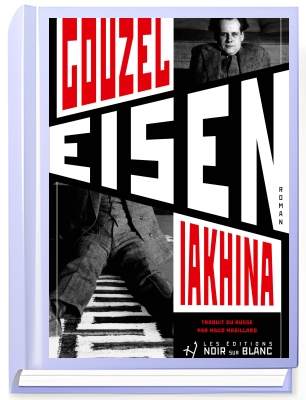
A few days ago, the Lausanne-based publisher Éditions Noir sur Blanc brought out Guzel Yakhina’s novel about the celebrated Soviet film director Sergei Eisenstein. French readers will be able to read it in Maud Mabillard’s translation and, importantly, in full, including the ninth chapter omitted from the Russian edition.