

The orchestra has titled its upcoming programme Elements, immediately evoking the four natural elements, or the four fundamental principles of the world identified by ancient philosophers as the primary sources of energy: earth, water, fire and air. This is one of those rare cases where a programme is not merely “well put together” but conceived as a coherent, almost philosophical statement. It is structured as a movement from the elements to the human being and back to myth, with a constant interplay between the external world and inner experience.
Frank Martin (1890–1974) was born in Geneva into the family of a Calvinist pastor, in a large wooden house at 67 route de Malagnou, then still a suburban area, and went on to become one of the first Swiss composers to gain recognition beyond his homeland. It is no coincidence that the final period of his creative life, shaped by his deeply religious background, represents the culmination of a spiritual quest aimed at grasping the true nature of the universe, one that affirms universal values: truth, love, justice, wisdom and morality. These aspirations found expression in Les Quatre Éléments (1963) for large symphony orchestra, Martin’s only purely instrumental work conceived on a programmatic conception, with each of its four movements named after a natural element. Although inspired by the majestic landscapes of Iceland and the Great North, nature here is not rendered descriptively but in an almost abstract, “energetic” sense. The Orchestre de la Suisse Romande has a particular connection to the work: it was dedicated to its founder Ernest Ansermet on his eightieth birthday and premiered by him in Lausanne and Geneva in October 1964. On Igor Stravinsky’s recommendation, this outstanding Swiss conductor became chief conductor of Sergei Diaghilev’s Ballets Russes and later collaborated actively with the Leningrad Philharmonic Orchestra in the 1920s and 30s.
A similar refusal of direct illustration characterises Claude Debussy in his celebrated La Mer. Composed between 1903 and 1905, the work was described by its author as “three symphonic sketches”, yet it became his most substantial orchestral composition. The titles of the three movements are telling: “From Dawn to Noon on the Sea”, “Play of the Waves” and “Dialogue of the Wind and the Sea”. The distinguished pianist and pedagogue Marguerite Long recalled how in 1917 Debussy, already gravely ill, once took her to the seashore and, standing on a rock, said: “Listen, do you hear the sea? The sea is everything that is most musical...” One might do well to listen in the same way to this music of the sea, at once ever-changing and constant, in perpetual motion.
Frédéric Chopin’s Piano Concerto No. 2 (1830) shifts the focus sharply from a cosmic scale to the individual voice. That voice, embodied in the piano, enters into dialogue with the orchestra, which here acts an element, yet a subtle one, attentive to its partner and capable of falling silent at the right moment; one need only recall the solo in the first movement.
As is customary, the programme concludes with a symphonic work, the Second Suite from Daphnis et Chloé by Maurice Ravel, a ballet inspired by Greek mythology, in which nature and humanity appear in inseparable unity. Here the elements are no longer abstract, as in Martin, nor dissolved, as in Debussy, but animated and shaped into a dramatic whole. The ballet premiered under the auspices of Diaghilev’s Ballets Russes at the Théâtre du Châtelet in Paris on 8 June 1912, with choreography by Mikhail Fokine, sets by Léon Bakst, and Tamara Karsavina and Vaslav Nijinsky in the leading roles. Those who, decades later, saw Mikhail Baryshnikov in the role of Daphnis are unlikely to forget the experience. Ravel’s concerns, expressed in a letter of spring 1910, “Who knows what those Russians will do with it!”, proved unfounded; “those Russian” did everything exactly as required. The composer himself described Daphnis et Chloé as a choreographic symphony, while musicologists have often pointed to its distinctive colour, notably the wordless chorus.
A few words about the performers. Mirga Gražinytė-Tyla and Georgijs Osokins have already performed Chopin’s Second Concerto together with the Monte-Carlo Philharmonic Orchestra, and critics were generous in their praise, some even drawing comparisons between Osokins and Vladimir Horowitz.
Some listeners in Switzerland may already have heard Georgijs Osokins. In 2022 he appeared with Gidon Kremer and the Kremerata Lithuanica youth orchestra at the Sommets Musicaux de Gstaad, and in March 2025 in La Chaux-de-Fonds in a trio with Kremer and Lithuanian cellist Giedrė Dirvanauskaitė. For those encountering him for the first time, it is worth recalling that he began his musical training under his father, the Latvian musician and pedagogue Sergei Osokin, a graduate of the Moscow Conservatory. He later studied with, among others, Sergei Babayan, Mikhail Voskresensky and G. F. Schenck, as indicated on the St Petersburg Philharmonic’s website. Chopin holds a special place for him: he first attracted international attention at the age of nineteen when he took part in the 17th International Chopin Piano Competition in Warsaw, quickly becoming a favourite with audiences. Since then, his international career has developed steadily, leading in 2025 to his becoming the first Baltic pianist to sign an exclusive multi-album agreement with Deutsche Grammophon.

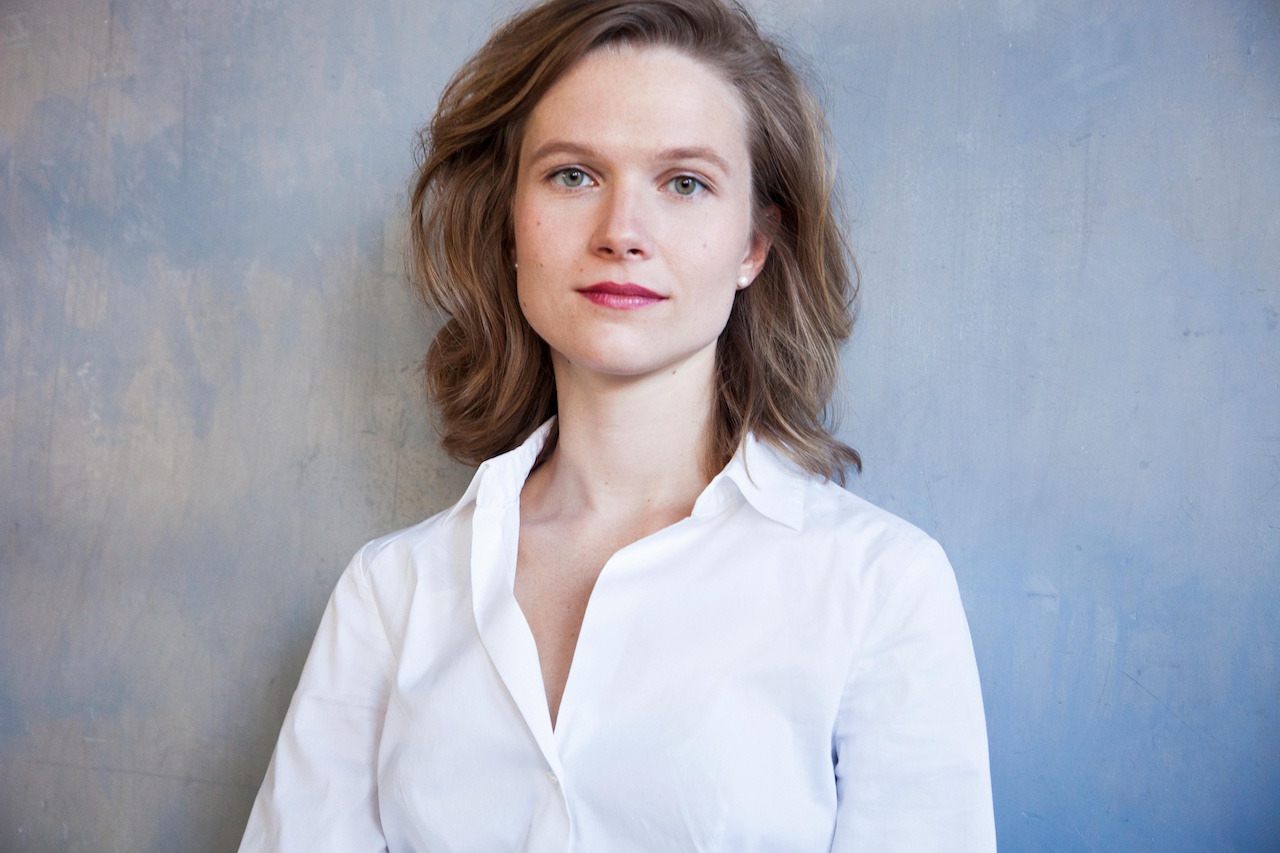
I have already noted the Orchestre de la Suisse Romande’s efforts to promote women in music, composers, soloists and conductors alike. I am therefore particularly glad to see Mirga Gražinytė-Tyla at the podium for the first time. This summer, she will celebrate her 40th birthday. Born in Vilnius and representing the third generation of a family of musicians, she studied, among other places, at the Zurich University of the Arts and has achieved a great deal. Among her most recent achievements is her nomination as principal guest conductor of the Orchestre Philharmonique de Radio France, the first woman to hold this position, announced in November last year. Six years earlier, she became the first female conductor in the history of Deutsche Grammophon to sign an exclusive long-term recording contract with the label. She has more than justified that trust. Her first recording for DG, released in 2019, featured symphonies by Mieczysław Weinberg, who fled his native Poland for the Soviet Union in 1939, and was made with the City of Birmingham Symphony Orchestra. It received the “Album of the Year” award at the annual Gramophone Awards in October 2020.
I look forward to hearing these musicians live and would encourage you not to miss these performances. Few tickets are still available here.







Federica Brunelli May 12, 2026
Sikorsky May 12, 2026