Pour Boris Akounine et son double, les morts peuplent autant les villes que les vivants, par leur nombre comme par leur présence silencieuse. C’est particulièrement vrai pour les villes anciennes, Rome ou Jérusalem… Dans les cimetières, le temps devient palpable, le passé est à portée de main, l’imagination s’envole lorsque le promeneur déchiffre les épitaphes des monuments funéraires.
Avec beaucoup d’humour et un plaisir évident, Boris Akounine nous emmène en promenade dans six nécropoles anciennes, de Moscou (cimetière Donskoï) à Paris (Père-Lachaise), de Londres (Highgate) à New York (Green-Wood), en passant par Jérusalem (mont des Oliviers) et Yokohama (Cimetière étranger).
Dans chaque cimetière, Grigori Tchkhartichvili décrit les lieux et en relève les curiosités, tandis que Boris Akounine nous épouvante délicieusement avec des histoires de fantômes, de trésors cachés et de mystères inavouables, s’incarnant dans des figures historiques telles que la cruelle Saltytchikha, qui n’avait rien à envier au marquis de Sade, un Karl Marx transformé en vampire ou l’écrivain Oscar Wilde.
Ce beau livre illustré de photographies et dessins a été écrit par une seule personne, mais il a deux auteurs : l’essayiste Grigori Tchkhartichvili et son alter ego, le romancier Boris Akounine. Le premier présente six nécropoles anciennes; le second nous entraîne avec délices dans des histoires de cimetières mettant en scène la cruelle dame Saltytchikha, le vampire Karl Marx, Oscar Wilde et le détective Éraste Fandorine, le personnage préféré du romancier Akounine.
Boris Akounine, de son vrai nom Grigori Tchkhartichvili, né d’un père géorgien, vit et travaille à Moscou. Son pseudonyme vient du mot japonais akunin, qui signifie bandit, ou mauvais garçon. Après des études d’orientaliste, Akounine devient traducteur littéraire, notamment du japonais, essayiste (L’Écrivain et le Suicide, paru en 1999), et romancier. Il a dirigé la prestigieuse revue littéraire Innostrannaïa literatoura de 1993 à 2000, date à laquelle le succès de ses romans le pousse à quitter la revue.
Grande star de la littérature policière, auteur des séries « Éraste Fandorine » et « Sœur Pélagie », récompensé par d’innombrables prix, lu dans le monde entier, Boris Akounine est également une des figures de proue de l’opposition à Poutine.
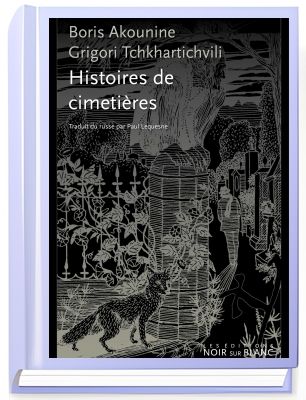
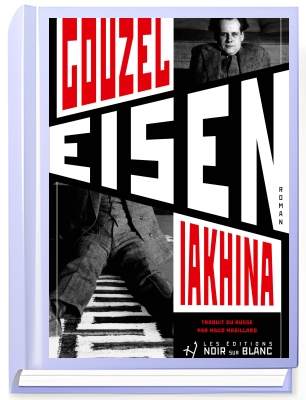
Boris Akounine et Grigori Tchkhartichvili: "Histoires de cimetières" (1999-2004), Editions Noir sur Blanc, 2013
About the author
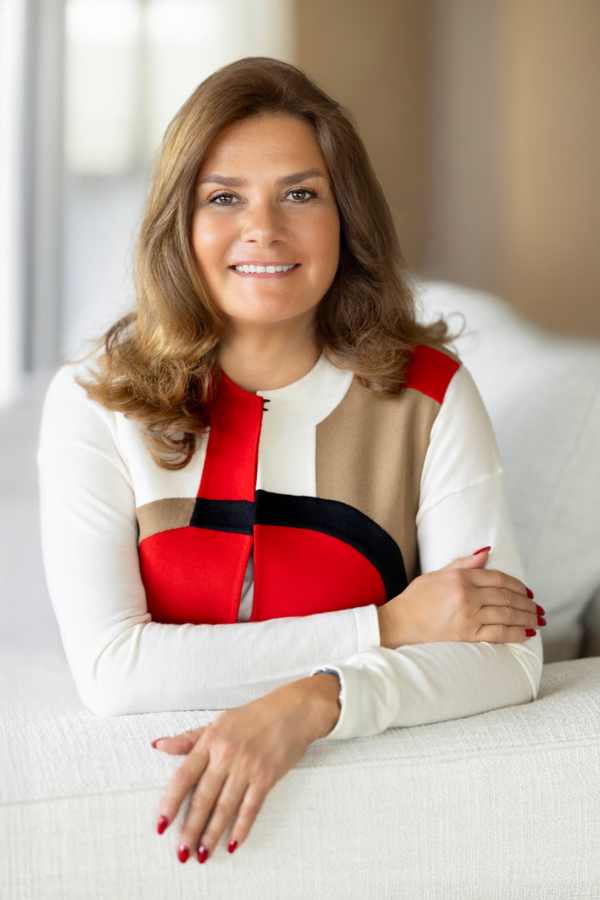
Nadia Sikorsky was born and raised in Moscow. She graduated from the Faculty of Journalism at Moscow State University and went on to complete her postgraduate studies there, earning a PhD in History. She spent 13 years at UNESCO, first in Paris and then in Geneva. After serving as Director of Communications at Green Cross International, founded by Mikhail Gorbachev, she launched NashaGazeta.ch in 2007, Switzerland’s first Russian-language online daily newspaper.
In 2022, Nadia Sikorsky was named to Le Temps’ Forum des 100, which brings together individuals who, in the newspaper’s view, have “significantly contributed to the success of French-speaking Switzerland”, from across public life, business, politics, science and culture.
After 18 years at the helm of NashaGazeta.ch, Nadia Sikorsky decided to devote herself to what had always held a special place in her work as a journalist: culture in all its diversity. This led to the creation of Russian Accent, a trilingual cultural blog in Russian, French and English, born in the heart of Europe, in Switzerland, which has become her second home and whose multiculturalism and multilingualism have helped shape the character of this new project.
At the heart of the project is the perspective of a European of Russian origin, drawing on more than 35 years of professional experience and a deep knowledge of both cultural traditions. Nadia Sikorsky sees her role as that of a cultural mediator between the two. The title of the blog, Russian Accent, reflects this idea: the accent is neither a linguistic barrier nor a political position, but a distinctive cultural imprint within a European context.