Zinziver, le roman de Victor Slipentchouk paru à Moscou en 2000 puis en 2001, fait revivre les tumultes et les contradictions de la «perestroïka», la période qui a précédé l’effondrement de l’Union soviétique et la naissance de la Nouvelle Russie, lorsque tout semblait possible. Il raccorde les maillons entre le déclin de l’Empire et des lendemains qui ne chantent plus. Et, en s’appuyant sur sa riche expérience de la vie soviétique, il restitue toute la saveur fantastique et grotesque d’une réalité enfouie sous les décombres de l’histoire. Roman d’apprentissage, roman d’amour fou, Zinziver passionnera surtout le lecteur en lui donnant à voir et à sentir le climat d’opéra-bouffe de ces années folles où le parfum de la décadence se mêlait aux espoirs de renouveau.
Poète, romancier, essayiste, Victor Slipentchouk est né le 22 septembre 1941 dans le village de Tchernigovka, dans la région de Primorie. Après avoir été successivement géologue, ouvrier, zoo-technicien, marin, pisciculteur, constructeur et journaliste, il entre en 1982 à l’Union des écrivains soviétiques et se consacre dès lors exclusivement à la création littéraire. Les traductions de plusieurs de ses romans, de ses récits et de ses poèmes lui ont valu une notoriété internationale. Son roman Zinziver a été édité en Russie deux fois avec succès et traduit en ukrainien et en chinois. En Chine, il est au programme des études supérieures de russe. Au Théâtre des Nations de Moscou, on a créé une pièce d’après les motifs de Zinziver sous le titre d’Un roman sans didascalies et elle n’a pas quitté l’affiche de 2006 à 2009.
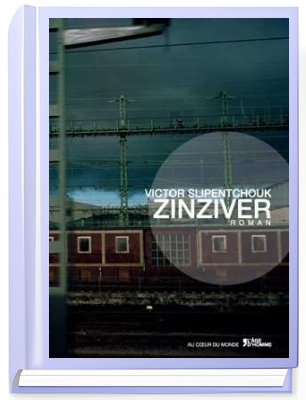
Slipentchouk Victor : Zinziver. L’Age d’Homme, Paris, 2012.
About the author

Nadia Sikorsky was born and raised in Moscow. She graduated from the Faculty of Journalism at Moscow State University and went on to complete her postgraduate studies there, earning a PhD in History. She spent 13 years at UNESCO, first in Paris and then in Geneva. After serving as Director of Communications at Green Cross International, founded by Mikhail Gorbachev, she launched NashaGazeta.ch in 2007, Switzerland’s first Russian-language online daily newspaper.
In 2022, Nadia Sikorsky was named to Le Temps’ Forum des 100, which brings together individuals who, in the newspaper’s view, have “significantly contributed to the success of French-speaking Switzerland”, from across public life, business, politics, science and culture.
After 18 years at the helm of NashaGazeta.ch, Nadia Sikorsky decided to devote herself to what had always held a special place in her work as a journalist: culture in all its diversity. This led to the creation of Russian Accent, a trilingual cultural blog in Russian, French and English, born in the heart of Europe, in Switzerland, which has become her second home and whose multiculturalism and multilingualism have helped shape the character of this new project.
At the heart of the project is the perspective of a European of Russian origin, drawing on more than 35 years of professional experience and a deep knowledge of both cultural traditions. Nadia Sikorsky sees her role as that of a cultural mediator between the two. The title of the blog, Russian Accent, reflects this idea: the accent is neither a linguistic barrier nor a political position, but a distinctive cultural imprint within a European context.