Au matin du 24 juin 1859, la France et l'Autriche s'affrontent en un combat sanglant aux portes de Solferino. Témoin de la bataille et des souffrances qui lui font cortège, un commerçant genevois, Henry Dunant, est frappé de voir des milliers de soldats mourants, livrés à leur sort, de part et d'autre du front. Hanté par cette vision d'horreur, Dunant n'a de cesse de faire accepter par les chancelleries son idée d'aide humanitaire, neutre et bénévole en temps de guerre. Et cette oeuvre novatrice, pour laquelle il réclame " un haut degré de dévouement ", va progressivement s'immiscer dans les consciences et s'étendre à tous les Etats du monde, après la signature de la Convention de Genève en 1864. Aussi, en 1901, pour le premier Prix Nobel de la paix, le nom de Henry Dunant (1828-1910) est-il sur toutes les lèvres... même si le fondateur de la Croix-Rouge ne fait pas l'unanimité parmi les pacifistes. Au-delà de la biographie, ce livre offre une réflexion sur la naissance du pacifisme et les difficultés de l'engagement humanitaire.
Docteur ès Lettres, historien et essayiste, Gérard A. Jaeger vit entre la Suisse et la France. Biographe de Forbin (Glénat, 1994), Rodin (L'Aire, 2001) et Landru (L'Archipel, 2005), il est notamment l'auteur d'un essai, Prises d'otages (L'Archipel, 2009). Médecin et essayiste, Jean-François Mattei, ancien ministre de la Santé, préside la Croix-Rouge française depuis 2004.
Bookshelf
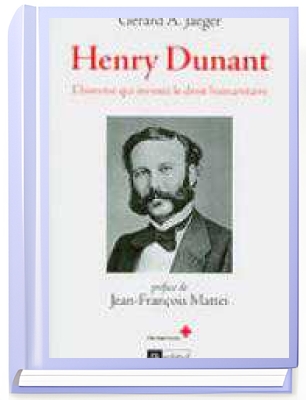
Gérard A. Jaeger: "Henry Dunant: L'homme qui inventa le droit humanitaire". Editions L'Archipel, 2009
About the author

Nadia Sikorsky was born and raised in Moscow. She graduated from the Faculty of Journalism at Moscow State University and went on to complete her postgraduate studies there, earning a PhD in History. She spent 13 years at UNESCO, first in Paris and then in Geneva. After serving as Director of Communications at Green Cross International, founded by Mikhail Gorbachev, she launched NashaGazeta.ch in 2007, Switzerland’s first Russian-language online daily newspaper.
In 2022, Nadia Sikorsky was named to Le Temps’ Forum des 100, which brings together individuals who, in the newspaper’s view, have “significantly contributed to the success of French-speaking Switzerland”, from across public life, business, politics, science and culture.
After 18 years at the helm of NashaGazeta.ch, Nadia Sikorsky decided to devote herself to what had always held a special place in her work as a journalist: culture in all its diversity. This led to the creation of Russian Accent, a trilingual cultural blog in Russian, French and English, born in the heart of Europe, in Switzerland, which has become her second home and whose multiculturalism and multilingualism have helped shape the character of this new project.
At the heart of the project is the perspective of a European of Russian origin, drawing on more than 35 years of professional experience and a deep knowledge of both cultural traditions. Nadia Sikorsky sees her role as that of a cultural mediator between the two. The title of the blog, Russian Accent, reflects this idea: the accent is neither a linguistic barrier nor a political position, but a distinctive cultural imprint within a European context.
Events