Автор настоящей книги рассказов - современная швейцарская писательница Элен Ришар-Фавр, лингвист по образованию, преподававшая в Женевском университете. Ее герои - почти всегда - люди, попавшие в беду в какой-то момент жизни, чаще всего - старики, никому не нужные и неспособные сами что-то изменить в своей судьбе. На чтение каждой новеллы достаточно пяти-десяти минут; однако, прочитав их все, вдруг понимаешь, что общая картина, которая складывается, как мозаика, близка к жизни - только к той, о которой сегодня пишут нечасто.
Книга продолжает сборник новелл "Истории ни о ком" (2-е изд. М.: URSS, 2010).
Эта книга, быть может, заставит ваc задуматься о новом подходе - и к жизни, и к литературе, а также понять, что у нас мало времени для чтения, но достаточно для размышлений о прочитанном.
Richard-Favre Helene. Nouvelles de rien: Bilingue francais-russe.
Helene Richard-Favre a mene des travaux de recherche en linguiste a l’Universite de Geneve et a enseigne le francais. Dans ses nouvelles apparaissent des personnages ordinaires, femmes, hommes jeunes ou vieillards, unis ou separes par des destins qui, le plus souvent, basculent de facon inattendue et parfois irreversible. Certains tentent de les surmonter par leur fantaisie tandis que d’autres, au contraire, assistent impuissants au spectacle de leur vie. Cinq a dix minutes suffisent pour lire une nouvelle. Et une fois la lecture du recueil achevee, c’est l’image d’une mosaique de vies qui s’impose à l’esprit. Mais de vies au sujet desquelles on n’ecrit pas souvent aujourd’hui.
Ce livre s’inscrit à la suite du recueil "Nouvelles de Personne" (2e ed. M.: URSS, 2010).
Ces nouvelles obligent sans doute a envisager la vie et la litterature sous un autre angle et a prendre conscience que si l’on a peu le temps de lire, on a au moins celui de mediter ce que l’on vient de lire.
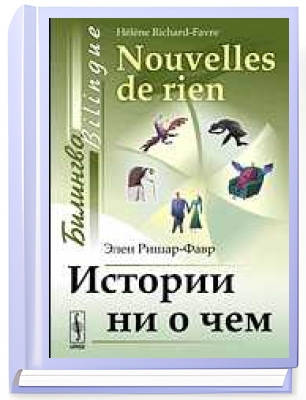
Hélène Richard-Favre: "Nouvelles de rien" - Элен Ришар-Фавр: "Истории ни о чем", Издательство URSS, Москва, 2010
About the author
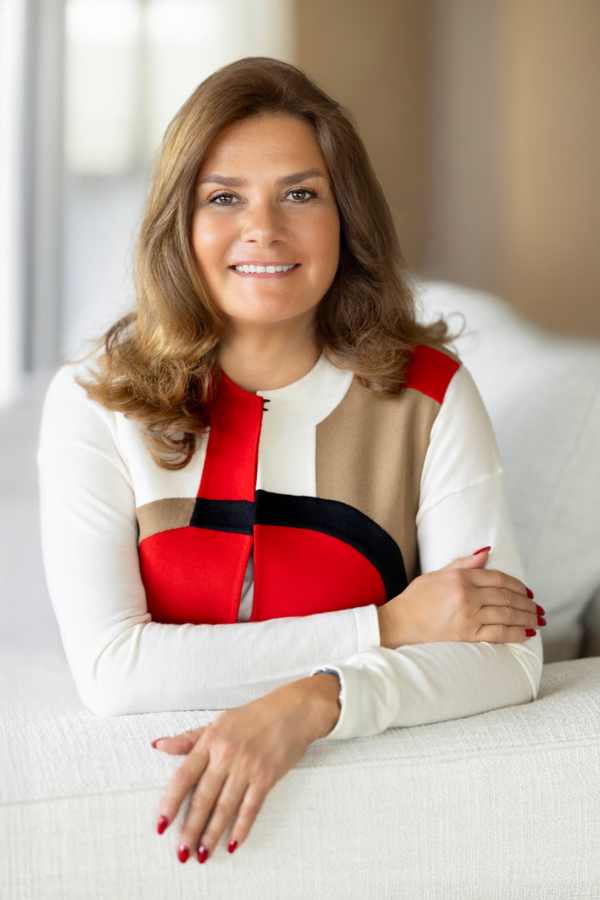
Nadia Sikorsky was born and raised in Moscow. She graduated from the Faculty of Journalism at Moscow State University and went on to complete her postgraduate studies there, earning a PhD in History. She spent 13 years at UNESCO, first in Paris and then in Geneva. After serving as Director of Communications at Green Cross International, founded by Mikhail Gorbachev, she launched NashaGazeta.ch in 2007, Switzerland’s first Russian-language online daily newspaper.
In 2022, Nadia Sikorsky was named to Le Temps’ Forum des 100, which brings together individuals who, in the newspaper’s view, have “significantly contributed to the success of French-speaking Switzerland”, from across public life, business, politics, science and culture.
After 18 years at the helm of NashaGazeta.ch, Nadia Sikorsky decided to devote herself to what had always held a special place in her work as a journalist: culture in all its diversity. This led to the creation of Russian Accent, a trilingual cultural blog in Russian, French and English, born in the heart of Europe, in Switzerland, which has become her second home and whose multiculturalism and multilingualism have helped shape the character of this new project.
At the heart of the project is the perspective of a European of Russian origin, drawing on more than 35 years of professional experience and a deep knowledge of both cultural traditions. Nadia Sikorsky sees her role as that of a cultural mediator between the two. The title of the blog, Russian Accent, reflects this idea: the accent is neither a linguistic barrier nor a political position, but a distinctive cultural imprint within a European context.