De l'Âge d'or à l'Âge de fer, en passant par l'Âge d'argent, la Russie a parcouru à pas de géant, de Pouchkine à Soljénitsyne, les trois âges mythiques de l'humanité selon Hésiode. Elle s'est inventée dans l’œuvre d’un poète aux cheveux crépus (hérités de son ancêtre africain), Alexandre Pouchkine. En lui elle a combiné soif de liberté et fierté de l'empire. Cet Âge d'or culmina avec Tolstoï, dont Guerre et paix donne une image idyllique de l'harmonie peuple-aristocratie.
Mais Tolstoï devint le premier dissident européen et prépara la chute de l'empire. L'Âge d'argent, né avec Tchékhov et accompagné par le terrorisme naquit de la modernisation rapide de la Russie et cultiva le sombre pressentiment d'une apocalypse en gestation, la Russie du Châtiment d'Alexandre Blok, celle du « poème de la terreur », Pétersbourg, de Biély.
Quand l'Utopie tant rêvée arrive au pouvoir, elle est accompagnée de gredins « au cœur de chien » selon la métaphore de Boulgakov, et il s'ensuit un terrible Âge de fer. Son nom sera « Goulag » et il donne naissance à une nouvelle dissidence, secrète avec Pasternak, frontale avec Soljénitsyne. Et à une magnifique littérature où, une fois de plus, le ressort littéraire est le primat éthique.
Georges Nivat s'emploie ici à relire les textes et les mythes de cette Russie des trois Âges pour recomposer un parcours de l’immense culture russe.
Professeur honoraire à l'université de Genève, Georges Nivat est slaviste, historien des idées et traducteur. Il est l'auteur de nombreux ouvrages aux éditions Fayard, dont le Phénomène Soljénitsyne. Il y a codirigé la monumentale Histoire de la littérature russe en 6 volumes, et est le maître d’oeuvre des Sites de la mémoire russe.
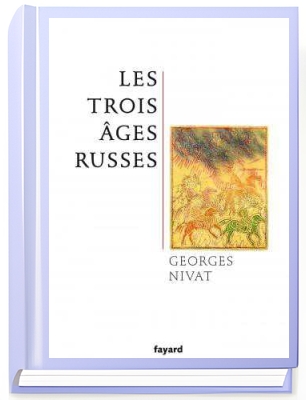
Georges Nivat: Les trois âges russes
About the author
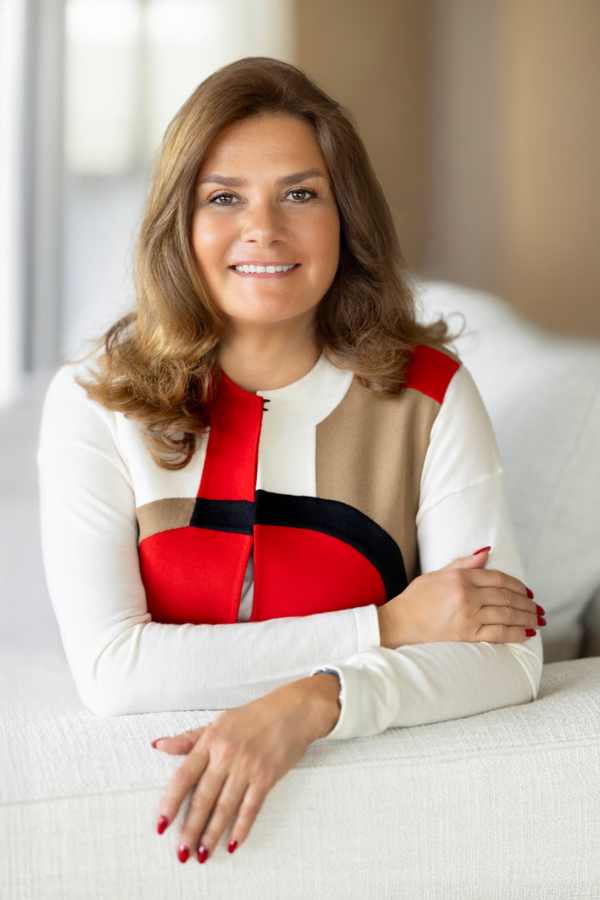
Nadia Sikorsky was born and raised in Moscow. She graduated from the Faculty of Journalism at Moscow State University and went on to complete her postgraduate studies there, earning a PhD in History. She spent 13 years at UNESCO, first in Paris and then in Geneva. After serving as Director of Communications at Green Cross International, founded by Mikhail Gorbachev, she launched NashaGazeta.ch in 2007, Switzerland’s first Russian-language online daily newspaper.
In 2022, Nadia Sikorsky was named to Le Temps’ Forum des 100, which brings together individuals who, in the newspaper’s view, have “significantly contributed to the success of French-speaking Switzerland”, from across public life, business, politics, science and culture.
After 18 years at the helm of NashaGazeta.ch, Nadia Sikorsky decided to devote herself to what had always held a special place in her work as a journalist: culture in all its diversity. This led to the creation of Russian Accent, a trilingual cultural blog in Russian, French and English, born in the heart of Europe, in Switzerland, which has become her second home and whose multiculturalism and multilingualism have helped shape the character of this new project.
At the heart of the project is the perspective of a European of Russian origin, drawing on more than 35 years of professional experience and a deep knowledge of both cultural traditions. Nadia Sikorsky sees her role as that of a cultural mediator between the two. The title of the blog, Russian Accent, reflects this idea: the accent is neither a linguistic barrier nor a political position, but a distinctive cultural imprint within a European context.