Bien que célébrée à des dates différentes, la fête de Pâques est pour toute Église chrétienne la fête des fêtes, celle sur laquelle se base la foi. Elle est précédée d'une longue préparation : le carême, ou « quarantaine », en souvenir des quarante jours passés par le Christ au désert. C’est le carême le plus important (il y en a quatre) et le plus suivi par les orthodoxes. C’est aussi un moment essentiel dans la vie d’un orthodoxe. Le Grand Carême n'est pas une fin en soi et sa signification ne peut être saisie qu’en regard de sa destination, la fête de Pâques. La littérature orthodoxe en français sur le sujet est pauvre et se trouve souvent dispersée dans une multitude d’ouvrages.
Ce recueil est destiné à accompagner les fidèles pendant cette période et se veut simple et complet. C’est un ouvrage à lire chaque jour tout au long du Carême : il explique succinctement les événements qui ont lieu durant cette période, la structure des offices, et donne accès à des textes que le fidèle ne connaît pas.
Pour chaque jour, ce livre propose des extraits du Triode de Carême suivis d’une homélie des Pères de l’Église ou de saints récents de l’Église orthodoxe. Ces extraits du Triode sont lus trop rapidement à l’église, et les fidèles ne peuvent goûter à leur richesse spirituelle.
Les synaxaires, souvent ignorés des fidèles – ils ne sont pas lus à l’église et sont parfois absents de certaines éditions des livres liturgiques –, font également partie de cette édition. En plus de ces textes fondamentaux, figurent certaines explications de textes ou d’usages liturgiques du Grand Carême émanant de liturgistes reconnus ; des textes de grands saints anciens de l’Église orthodoxe d’Orient et d’Occident, de saints récents ; et de Pères spirituels contemporains, grecs, russes, roumains ou serbes.
Bernard Le Caro est l’auteur de l’ouvrage Saint Jean de Changhaï, L’Âge d’Homme, 2006.
Mathieu Malinine est chef de chœur de l’église orthodoxe russe de Genève.
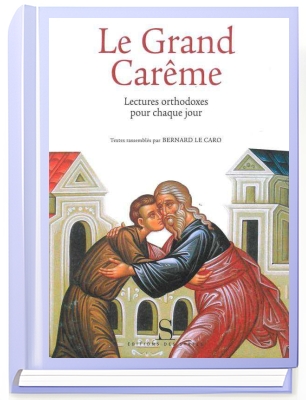
Bernard LE CARO avec la participation de Mathieu MALININE: Le Grand Carême, Lectures orthodoxes pour chaque jour, Editions des Syrtes
About the author
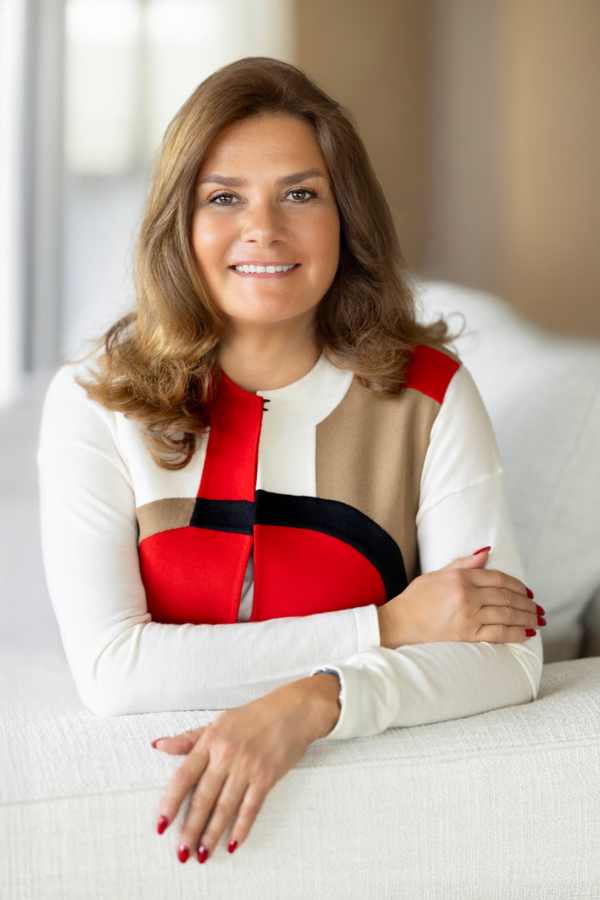
Nadia Sikorsky was born and raised in Moscow. She graduated from the Faculty of Journalism at Moscow State University and went on to complete her postgraduate studies there, earning a PhD in History. She spent 13 years at UNESCO, first in Paris and then in Geneva. After serving as Director of Communications at Green Cross International, founded by Mikhail Gorbachev, she launched NashaGazeta.ch in 2007, Switzerland’s first Russian-language online daily newspaper.
In 2022, Nadia Sikorsky was named to Le Temps’ Forum des 100, which brings together individuals who, in the newspaper’s view, have “significantly contributed to the success of French-speaking Switzerland”, from across public life, business, politics, science and culture.
After 18 years at the helm of NashaGazeta.ch, Nadia Sikorsky decided to devote herself to what had always held a special place in her work as a journalist: culture in all its diversity. This led to the creation of Russian Accent, a trilingual cultural blog in Russian, French and English, born in the heart of Europe, in Switzerland, which has become her second home and whose multiculturalism and multilingualism have helped shape the character of this new project.
At the heart of the project is the perspective of a European of Russian origin, drawing on more than 35 years of professional experience and a deep knowledge of both cultural traditions. Nadia Sikorsky sees her role as that of a cultural mediator between the two. The title of the blog, Russian Accent, reflects this idea: the accent is neither a linguistic barrier nor a political position, but a distinctive cultural imprint within a European context.