Bookshelf

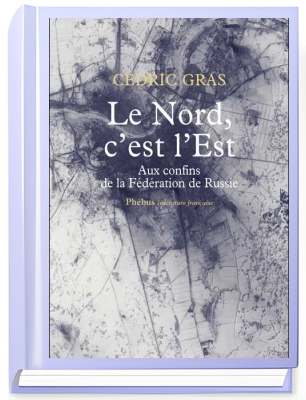
Cédric Gras: Le Nord c’est l’Est. Aux confins de la Fédération de Russie, 2013

Cédric Gras le dit et ne se l’explique pas, il est attiré par les territoires hostiles qui s’ingénient à repousser les rares voyageurs plutôt qu’à les séduire. C’est un fait, et son regard de géographe singulier n’a pas d’équivalent. Plus intrigante encore cette découverte que le Nord russe se trouve en réalité à l’Est et qu’il faudrait faire pivoter la carte du pays pour tenter de le comprendre. De la Carélie au fleuve Amour, de la Crimée à la mer du Japon, des immenses steppes de Mongolie à Magadan, l’auteur a parcouru des milliers de kilomètres pour aller à la rencontre des archipels humains perdus que le pouvoir exploite à coups de décrets depuis l’époque soviétique. Les « territoires du Nord et assimilés » correspondent souvent à ce que fut l’Archipel du Goulag : des zones perdues de steppe, de taïga et de montagnes, improbables contrées, plus que rudes, où l’alcool tient lieu de mode de vie et où se côtoient les mille groupes ethniques composant la Fédération de Russie. Fleuves inconnus, villes condamnées qui deviendront la cible des Mig à l’entraînement, champs de neige et de gel… L’Occidental curieux croit parfois connaître la Russie : il ne pourra qu’être sidéré à la lecture de ces lignes.

Интервью с Седриком Гра можно прочитать здесь.

About the author

Nadia Sikorsky

Nadia Sikorsky grew up in Moscow where she obtained a master's degree in journalism and a doctorate in history from Moscow State University. After 13 years at UNESCO, in Paris and then in Geneva, and having served as director of communications at Green Cross International founded by Mikhail Gorbachev, she developed NashaGazeta.ch, the first online Russian-language daily newspaper, launched in 2007.

In 2022, she found herself among those who, according to Le Temps editorial board, "significantly contributed to the success of French-speaking Switzerland," thus appearing among opinion makers and economic, political, scientific and cultural leaders: the Forum of 100.

After 18 years leading NashaGazeta.ch, Nadia Sikorsky decided to return to her roots and focus on what truly fascinates her: culture in all its diversity. This decision took the form of this trilingual cultural blog (Russian, English, French) born in the heart of Europe – in Switzerland, her adopted country, the country distinguished by its multiculturalism and multilingualism.

Nadia Sikorsky does not present herself as a "Russian voice," but as the voice of a European of Russian origin with the benefit of more than 30 years of professional experience in the cultural world. She positions herself as a cultural mediator between Russian and European traditions; the title of the blog, "The Russian Accent," captures this essence – the accent being not a linguistic barrier, not a political position but a distinctive cultural imprint in the European context.

Events
Most read

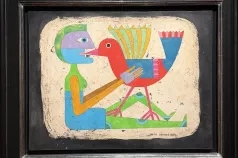
That is how the name of the artist María Sol Escobar (1930-2016) is generally understood today. The first European retrospective of her work is now on view at Switzerland’s largest fine arts museum. The exhibition has been organised in collaboration with Denmark’s Louisiana Museum of Modern Art and the Buffalo AKG Art Museum in the United States.

At the Fondation Pierre Gianadda in Martigny, an excellent exhibition organised by the Musée Rodin in Paris is now on view under the patronage of the President of the Swiss Confederation, Guy Parmelin. Do not miss it.

Very soon, on 16 July, the famous Swiss mountain resort of Gstaad will welcome the opening of the Menuhin Festival. I hope you have already booked tickets for all the concerts that interest you. If not, read on and act quickly. In fact, read on anyway.