Le lac Léman a toujours fasciné les peintres et les écrivains. Mais on ne mesure pas à quel point il a laissé son empreinte dans l’histoire de l’art : il est considéré comme le premier paysage identifiable de l’histoire de l’art occidental (La pêche miraculeuse de Konrad Witz, 1444). Dans Lemancolia, Dominique Radrizzani présente l’aboutissement d’une réflexion sur les représentations du lac et leur portée symbolique.
Au cœur de l’Europe, le Léman offre au voyageur une double perspective : depuis les hauteurs avoisinantes, le mélange mer-montagnes favorise l’impression de « paysage mondial » (Turner, Hodler, Kokoschka). Or ce « miroir du monde » se double d’un « miroir de l’homme ». Dès la Renaissance, et surtout avec le romantisme – La Nouvelle Héloïse de Rousseau, Le Prisonnier de Chillon de Lord Byron, Frankenstein de Mary Shelley, tous nés sur les rives du lac – il devient le miroir physique de l’âme humaine, un gigantesque réservoir de la mélancolie (Corot, Courbet, Doré, Vallotton, Hergé, Godard).
L’ouvrage Lemancolia comprend un texte de Dominique Radrizzani ; l’ensemble des oeuvres présentées au Musée Jenisch pour la grande exposition de juin 2013, qui proviennent de musées importants (Tate Britain de Londres, Musée d’art Moderne et Contemporain de Strasbourg, etc.) ; et un choix d’extraits de textes inspirés par le Léman (Rousseau, Ramuz, Benoziglio…).
Lemancolia est un beau livre rassemblant des œuvres et des textes inspirés par le lac Léman, qui montrent son importance dans l’histoire de l’art. Conçu comme un traité artistique du Léman, l’ouvrage accompagne l’exposition présentée au Musée Jenisch Vevey à partir du 21 juin 2013.
Dominique Radrizzani, spécialiste du dessin, a été directeur du Musée Jenisch Vevey de 2004 à décembre 2012. Auteur de plusieurs ouvrages, notamment aux éditions des Cahiers dessinés, il est commissaire de l’exposition Lemancolia.
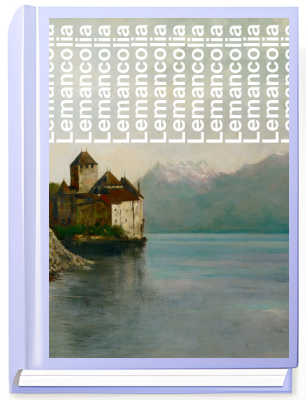
Dominique Radrizzani : Lemancolia. Traité artistique du Léman. Les Editions Noir sur Blanc, en coédition avec le Musée Jenisch Vevey. 256 p., 2013
About the author

Nadia Sikorsky was born and raised in Moscow. She graduated from the Faculty of Journalism at Moscow State University and went on to complete her postgraduate studies there, earning a PhD in History. She spent 13 years at UNESCO, first in Paris and then in Geneva. After serving as Director of Communications at Green Cross International, founded by Mikhail Gorbachev, she launched NashaGazeta.ch in 2007, Switzerland’s first Russian-language online daily newspaper.
In 2022, Nadia Sikorsky was named to Le Temps’ Forum des 100, which brings together individuals who, in the newspaper’s view, have “significantly contributed to the success of French-speaking Switzerland”, from across public life, business, politics, science and culture.
After 18 years at the helm of NashaGazeta.ch, Nadia Sikorsky decided to devote herself to what had always held a special place in her work as a journalist: culture in all its diversity. This led to the creation of Russian Accent, a trilingual cultural blog in Russian, French and English, born in the heart of Europe, in Switzerland, which has become her second home and whose multiculturalism and multilingualism have helped shape the character of this new project.
At the heart of the project is the perspective of a European of Russian origin, drawing on more than 35 years of professional experience and a deep knowledge of both cultural traditions. Nadia Sikorsky sees her role as that of a cultural mediator between the two. The title of the blog, Russian Accent, reflects this idea: the accent is neither a linguistic barrier nor a political position, but a distinctive cultural imprint within a European context.