Bookshelf

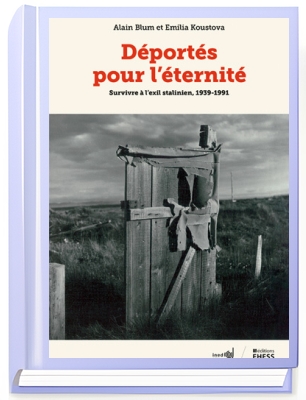
Alain Blum et Emilia Kustova: "Déportés pour l'éternité". Survicre à l'exil stalinien, 1939-1991". Editions EHESS, 2024


Alain Blum et Emilia Koustova saisissent ici une part essentielle mais mal connue de l’histoire soviétique, en s’intéressant à sa dimension impériale et impérialiste, telle qu’elle se manifesta lors de l’annexion de la Lituanie et de l’Ukraine occidentale. En racontant le cheminement des centaines de milliers de déplacés, leur survie en déportation et leurs interactions avec le monde soviétique, ils font découvrir des dynamiques historiques dont les échos se font encore entendre aujourd’hui, à la croisée des histoires de l’exil, de la violence politique et de la construction de l’espace impérial russe.

« Comme un lièvre effarouché » : ce sont les mots qu’un habitant d’un village ukrainien couche sur un papier intercepté par les autorités soviétiques en 1949. En Ukraine occidentale et en Lituanie, comme partout dans les territoires est-européens devenus soviétiques en 1939-1940, puis à partir de 1944-1945, la peur d’être condamné à l’exil rôde depuis leur annexion et ne s’estompera qu’à la mort de Staline. Le bilan sera lourd.

Mêlant histoire par le haut et par le bas, Alain Blum et Emilia Koustova explorent les mécanismes répressifs des déportations de masse et les trajectoires des victimes. Leur vécu oriente l’enquête, leur parole, longtemps ignorée, en est le cœur. Des centaines de lettres découvertes dans les archives et d’entretiens menés auprès des derniers témoins racontent la violence de l’arrachement, les épreuves imposées par la survie dans les confins glacés de la mer des Laptev, la taïga sibérienne et les steppes d’Asie centrale, puis un long, parfois impossible, retour vers les terres d’origine. Ces voix entretiennent une mémoire qui, encore aujourd’hui, imprègne les sociétés post soviétiques, et éclaire peut-être notre présent.


About the author

Nadia Sikorsky

Nadia Sikorsky was born and raised in Moscow. She graduated from the Faculty of Journalism at Moscow State University and went on to complete her postgraduate studies there, earning a PhD in History. She spent 13 years at UNESCO, first in Paris and then in Geneva. After serving as Director of Communications at Green Cross International, founded by Mikhail Gorbachev, she launched NashaGazeta.ch in 2007, Switzerland’s first Russian-language online daily newspaper.

In 2022, Nadia Sikorsky was named to Le Temps’ Forum des 100, which brings together individuals who, in the newspaper’s view, have “significantly contributed to the success of French-speaking Switzerland”, from across public life, business, politics, science and culture.

After 18 years at the helm of NashaGazeta.ch, Nadia Sikorsky decided to devote herself to what had always held a special place in her work as a journalist: culture in all its diversity. This led to the creation of Russian Accent, a trilingual cultural blog in Russian, French and English, born in the heart of Europe, in Switzerland, which has become her second home and whose multiculturalism and multilingualism have helped shape the character of this new project.

At the heart of the project is the perspective of a European of Russian origin, drawing on more than 35 years of professional experience and a deep knowledge of both cultural traditions. Nadia Sikorsky sees her role as that of a cultural mediator between the two. The title of the blog, Russian Accent, reflects this idea: the accent is neither a linguistic barrier nor a political position, but a distinctive cultural imprint within a European context.

Events
Most read

A new book by the Geneva-based Slavist Jean-Philippe Jaccard and his Russian colleague Andrei Ustinov, now living in San Francisco, has been published by the European University at St Petersburg: Vzir Zaumi. Daniil Harms and the Literary Avant-Garde of the 1920s. In the authors' own words, the volume offers a kind of X-ray of Leningrad's "left-wing " circles and their evolution during the period between Harms's poetic debut and the creation of OBERIU, as well as the dynamics that shaped those circles.

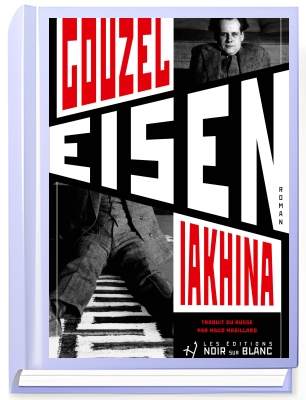
A few days ago, the Lausanne-based publisher Éditions Noir sur Blanc brought out Guzel Yakhina’s novel about the celebrated Soviet film director Sergei Eisenstein. French readers will be able to read it in Maud Mabillard’s translation and, importantly, in full, including the ninth chapter omitted from the Russian edition.