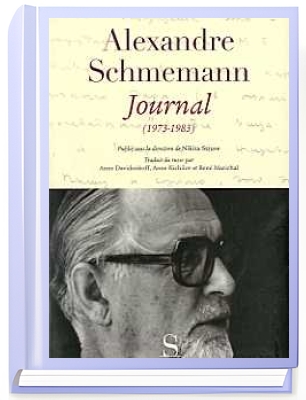
L’existence de ce journal n’a été révélée qu’après la mort du père Alexandre Schmemann, le 13 décembre 1983, lorsqu’on retrouva huit cahiers de notes dans son bureau du séminaire de Saint-Vladimir, à New York, dont il était le doyen.
Ces cahiers ne se bornent pas à enregistrer les activités quotidiennes du père Alexandre, ils prennent en compte son existence toute entière – ses idées, ses découvertes, ses rencontres (avec Soljenitsyne notamment), ses combats et ses frustrations. Ce journal étonne par son ampleur. Le père Alexandre y révèle la multiplicité et la diversité de ses champs d’intérêt, submergeant son lecteur par un nombre prodigieux de notes sur des ouvrages littéraires russes, français et américains. Il y parle également de la politique et des idées sociales du moment.
Ce matériel passionnant a été édité par sa femme en anglais en 2000 puis en Russie en 2005 où il a constitué un important événement culturel. Ce journal est une œuvre majeure pour l’Orthodoxie et pour l’Eucharistie, le lecteur français pourra ainsi découvrir la profonde foi du père Schmemann et sa haute teneur spirituelle. Mais il découvrira également un magnifique journal littéraire, dans la meilleure tradition du genre, digne de Paul Léautaud qu’Alexandre Schmemann admirait profondément.
Figure marquante de l’Orthodoxie dans la deuxième moitié du XXème siècle, le père Alexandre Schmemann (1921-1983) fut un homme d’Église d’une envergure exceptionnelle, à la fois missionnaire, historien, théologien et prédicateur. Formé à l’Institut de théologie orthodoxe Saint-Serge de Paris, il dirigea, à New York, le séminaire Saint-Vladimir. Né dans l’émigration, ayant vécu sa jeunesse en France, de culture russe autant que française, il n’a pas connu son pays d’origine, mais il lui est resté très attaché.
Ces cahiers ne se bornent pas à enregistrer les activités quotidiennes du père Alexandre, ils prennent en compte son existence toute entière – ses idées, ses découvertes, ses rencontres (avec Soljenitsyne notamment), ses combats et ses frustrations. Ce journal étonne par son ampleur. Le père Alexandre y révèle la multiplicité et la diversité de ses champs d’intérêt, submergeant son lecteur par un nombre prodigieux de notes sur des ouvrages littéraires russes, français et américains. Il y parle également de la politique et des idées sociales du moment.
Ce matériel passionnant a été édité par sa femme en anglais en 2000 puis en Russie en 2005 où il a constitué un important événement culturel. Ce journal est une œuvre majeure pour l’Orthodoxie et pour l’Eucharistie, le lecteur français pourra ainsi découvrir la profonde foi du père Schmemann et sa haute teneur spirituelle. Mais il découvrira également un magnifique journal littéraire, dans la meilleure tradition du genre, digne de Paul Léautaud qu’Alexandre Schmemann admirait profondément.
Figure marquante de l’Orthodoxie dans la deuxième moitié du XXème siècle, le père Alexandre Schmemann (1921-1983) fut un homme d’Église d’une envergure exceptionnelle, à la fois missionnaire, historien, théologien et prédicateur. Formé à l’Institut de théologie orthodoxe Saint-Serge de Paris, il dirigea, à New York, le séminaire Saint-Vladimir. Né dans l’émigration, ayant vécu sa jeunesse en France, de culture russe autant que française, il n’a pas connu son pays d’origine, mais il lui est resté très attaché.