L’histoire de cet objet d’exception se déroule en trois actes.
Acte I - Entre 1916 et 1919, Charles-Ferdinand Ramuz adapte en langue française huit œuvres d’Igor Strawinsky inspirées par des poésies populaires russes, en étroite collaboration avec le compositeur lors de son séjour en Suisse. Destinées au chant, ces adaptations sont éditées dans les partitions de musique, sous le texte original russe.
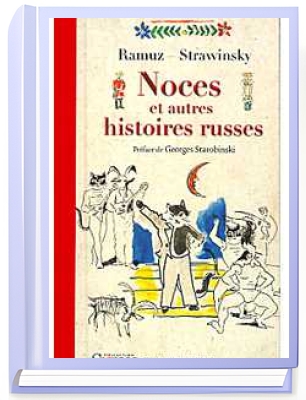
Acte II - Les adaptations de Ramuz sont rassemblées en 1943, à l’instigation de Richard Heyd, qui reprenait alors à Neuchâtel la direction des jeunes Editions Ides et Calendes. Un beau livre en résulte, dont le charme doit beaucoup à ses illustrations. En effet, si les textes se retrouvent séparés de la musique qui en a dicté a forme, ils sont en revanche accompagnés en belle page par des dessins de Théodore Strawinsky, fils du compositeur, aquarellés individuellement par l’artiste dans chaque exemplaire du livre.
Acte III - Tous les documents originaux ayant servi à l’établissement de l’ouvrage de 1943 (manuscrit de l’écrivain, études préparatoires et dessins aquarellés du peintre) sont reliés par la suite avec une partition autographe d’Igor Strawinsky de 1949 et la première version – inédite – de la préface de Ramuz. Dans cet exemplaire unique, les manuscrits de Ramuz apparaissent dans l’ordre où ils ont été publiés en 1943, les dessins de Théodore Strawinsky étant rassemblés à la fin du recueil. C’est cet objet exceptionnel que l’on découvre ici.
Acte I - Entre 1916 et 1919, Charles-Ferdinand Ramuz adapte en langue française huit œuvres d’Igor Strawinsky inspirées par des poésies populaires russes, en étroite collaboration avec le compositeur lors de son séjour en Suisse. Destinées au chant, ces adaptations sont éditées dans les partitions de musique, sous le texte original russe.
Acte II - Les adaptations de Ramuz sont rassemblées en 1943, à l’instigation de Richard Heyd, qui reprenait alors à Neuchâtel la direction des jeunes Editions Ides et Calendes. Un beau livre en résulte, dont le charme doit beaucoup à ses illustrations. En effet, si les textes se retrouvent séparés de la musique qui en a dicté a forme, ils sont en revanche accompagnés en belle page par des dessins de Théodore Strawinsky, fils du compositeur, aquarellés individuellement par l’artiste dans chaque exemplaire du livre.
Acte III - Tous les documents originaux ayant servi à l’établissement de l’ouvrage de 1943 (manuscrit de l’écrivain, études préparatoires et dessins aquarellés du peintre) sont reliés par la suite avec une partition autographe d’Igor Strawinsky de 1949 et la première version – inédite – de la préface de Ramuz. Dans cet exemplaire unique, les manuscrits de Ramuz apparaissent dans l’ordre où ils ont été publiés en 1943, les dessins de Théodore Strawinsky étant rassemblés à la fin du recueil. C’est cet objet exceptionnel que l’on découvre ici.