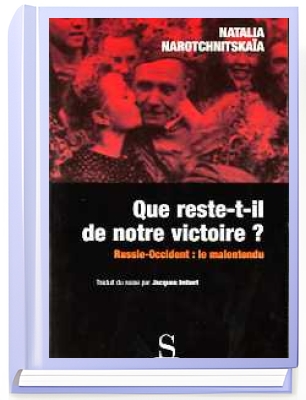
Fort d’une émotion palpable, Que reste-t-il de notre victoire ? est un cri de désespoir du peuple russe qui se croit dépossédé de sa propre histoire.
L’auteur interpelle le lecteur sur le rôle de la Russie pendant la Seconde Guerre mondiale qui fut pour les Russes la « Grande Guerre patriotique ». Selon Natalia Narotchnitskaïa cette guerre a été le point de départ d’une croisade de l’Occident « démocratique » contre l’État soviétique « totalitaire » ; l’auteur fustige ainsi l’idée occidentale visant, selon elle, l’abaissement du peuple et de la nation russes. L’Occident ne combattait alors pas le communisme mais la renaissance de la Russie, car la guerre avait fait renaître un fort sentiment patriotique qui rendait la Russie dangereuse stratégiquement.
Dans cet essai polémique, Narotchnitskaïa nous suggère de quitter un instant nos certitudes historiques pour observer d’un autre œil le théâtre des événements présents ou passés. Elle nous invite à revisiter l’histoire des relations russo-européennes, à affronter ce que nous ne voulons pas toujours voir. Afin, espère-t-elle, que nous comprenions la colère et le sentiment d’injustice qui la révoltent et qui animent avec elle bon nombre de ses compatriotes.
Une lecture nécessaire pour que puisse s’ouvrir un dialogue fécond dont dépend l’avenir des relations entre la Russie et l’Occident.
Natalia NAROTCHNITSKAÏA est historienne et philosophe, spécialiste en relations internationales. Elle a travaillé de 1982 à 1989 au secrétariat de l’ONU à New York. Ancienne députée de la Douma, elle reste une figure emblématique de la renaissance patriotique russe, dans toutes ses contradictions, ses inspirations et dans tous questionnements.
L’auteur interpelle le lecteur sur le rôle de la Russie pendant la Seconde Guerre mondiale qui fut pour les Russes la « Grande Guerre patriotique ». Selon Natalia Narotchnitskaïa cette guerre a été le point de départ d’une croisade de l’Occident « démocratique » contre l’État soviétique « totalitaire » ; l’auteur fustige ainsi l’idée occidentale visant, selon elle, l’abaissement du peuple et de la nation russes. L’Occident ne combattait alors pas le communisme mais la renaissance de la Russie, car la guerre avait fait renaître un fort sentiment patriotique qui rendait la Russie dangereuse stratégiquement.
Dans cet essai polémique, Narotchnitskaïa nous suggère de quitter un instant nos certitudes historiques pour observer d’un autre œil le théâtre des événements présents ou passés. Elle nous invite à revisiter l’histoire des relations russo-européennes, à affronter ce que nous ne voulons pas toujours voir. Afin, espère-t-elle, que nous comprenions la colère et le sentiment d’injustice qui la révoltent et qui animent avec elle bon nombre de ses compatriotes.
Une lecture nécessaire pour que puisse s’ouvrir un dialogue fécond dont dépend l’avenir des relations entre la Russie et l’Occident.
Natalia NAROTCHNITSKAÏA est historienne et philosophe, spécialiste en relations internationales. Elle a travaillé de 1982 à 1989 au secrétariat de l’ONU à New York. Ancienne députée de la Douma, elle reste une figure emblématique de la renaissance patriotique russe, dans toutes ses contradictions, ses inspirations et dans tous questionnements.