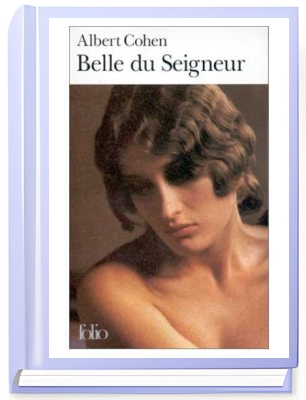
Belle du Seigneur est un roman de l'écrivain suisse francophone Albert Cohen publié en 1968. Commencée dans les années 1930, sa rédaction fut interrompue par la Seconde Guerre mondiale. Le roman Belle du Seigneur fut finalement publié par les éditions Gallimard en 1968. Certaines scènes burlesques ont été retirées du livre à la demande de l'éditeur Gaston Gallimard puis publiées séparément sous le titre Les Valeureux en 1969. Troisième volet d'une tétralogie qui commence avec Solal (1930) et Mangeclous (1938), ce roman a reçu le Grand prix du roman de l'Académie française. Le roman Belle du Seigneur a longuement été repris, corrigé, augmenté. L'auteur y entrecroise et superpose les voix des personnages. Dans les cent six chapitres se mêlent la passion et la drôlerie, le désespoir et les exaltations du cœur. Le roman raconte l’amour fou d’Ariane et de Solal mais aussi l'amour de Cohen pour la langue française et pour l’écriture.
Belle du Seigneur est considéré comme l'un des grands romans de langue française du XXe siècle, qualifié de «chef d'œuvre absolu» (Joseph Kessel), «comme une culture en produit une douzaine par siècle» (François Nourissier). Il connaît aussi un succès public de très grande ampleur et demeure la meilleure vente de la collection Blanche des éditions Gallimard[4].
L'édition utilisée pour étudier Belle du Seigneur est l'édition Folio 2007 (comprenant 1 110 pages). On signale que certaines citations n'ont pas de ponctuation et comportent des fautes d'orthographe. Il s'agit de la volonté de l'auteur et non pas d'erreurs typographiques
Belle du Seigneur est considéré comme l'un des grands romans de langue française du XXe siècle, qualifié de «chef d'œuvre absolu» (Joseph Kessel), «comme une culture en produit une douzaine par siècle» (François Nourissier). Il connaît aussi un succès public de très grande ampleur et demeure la meilleure vente de la collection Blanche des éditions Gallimard[4].
L'édition utilisée pour étudier Belle du Seigneur est l'édition Folio 2007 (comprenant 1 110 pages). On signale que certaines citations n'ont pas de ponctuation et comportent des fautes d'orthographe. Il s'agit de la volonté de l'auteur et non pas d'erreurs typographiques