Bookshelf

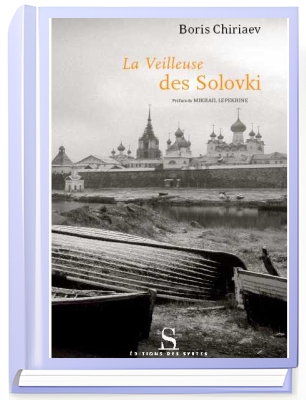
Boris Chiriaev: La Veilleuse des Solovki. Editions des Syrtes, 2005.

La veilleuse des Solovki est l’œuvre d’une vie : celle de Boris Chiriaev, intellectuel moscovite qui fait mémoire de son expérience et écrit pendant vingt-cinq ans cette «chronique des temps de naufrage».
Chiriaev arrive aux Solovki en 1923 ; haut lieu de l’orthodoxie, les Solovki deviennent un haut lieu de souffrance, le premier camp destiné à regrouper les «ennemis» venant de la guerre civile. Dans cette généalogie du difficile on découvre les balbutiements de ce qui allait devenir le symbole de la répression soviétique : le goulag. Le livre de Chiriaev est un témoignage exemplaire : il donne le premier rôle à l’homme qui même dans les pires moments peut rester humain et à la vie qui exige d’être exaltée. Il souligne le paradoxe du camp des Solovki dans les premières années : à la terrible réalité du bagne s’allie une extraordinaire effervescence intellectuelle et artistique encore possible ces années là, car «le travail intellectuel est l’acte de l’esprit». «Le régime des Solovki n’était pas encore bardé de la cuirasse du système», écrira Soljenitsyne dans L’Archipel du goulag. Et au milieu de cette désolation, une lumière : la lueur d’une veilleuse que rien ne peut éteindre, celle du dernier ascète des Solovki, que Chiriaev a surpris en prière dans sa hutte au milieu des bois. Les Solovki étaient un Golgotha, nous dit l’auteur, mais sur elles brillaient aussi la lumière de l’Esprit.


Boris Nikolaïevitch Chiriaev est né en 1889 à Moscou dans une famille aisée. En 1918, il est arrêté et condamné à mort pour avoir tenté de quitter la Russie, mais réussit à s’évader. Condamné une nouvelle fois à la peine capitale, il sera finalement envoyé aux Solovki en 1923. Déporté à Tachkent puis à Stavropol, il quitte l’URSS en 1944 pour l’Allemagne, puis l’Italie où il meurt en 1959.


About the author

Nadia Sikorsky

Nadia Sikorsky was born and raised in Moscow. She graduated from the Faculty of Journalism at Moscow State University and went on to complete her postgraduate studies there, earning a PhD in History. She spent 13 years at UNESCO, first in Paris and then in Geneva. After serving as Director of Communications at Green Cross International, founded by Mikhail Gorbachev, she launched NashaGazeta.ch in 2007, Switzerland’s first Russian-language online daily newspaper.

In 2022, Nadia Sikorsky was named to Le Temps’ Forum des 100, which brings together individuals who, in the newspaper’s view, have “significantly contributed to the success of French-speaking Switzerland”, from across public life, business, politics, science and culture.

After 18 years at the helm of NashaGazeta.ch, Nadia Sikorsky decided to devote herself to what had always held a special place in her work as a journalist: culture in all its diversity. This led to the creation of Russian Accent, a trilingual cultural blog in Russian, French and English, born in the heart of Europe, in Switzerland, which has become her second home and whose multiculturalism and multilingualism have helped shape the character of this new project.

At the heart of the project is the perspective of a European of Russian origin, drawing on more than 35 years of professional experience and a deep knowledge of both cultural traditions. Nadia Sikorsky sees her role as that of a cultural mediator between the two. The title of the blog, Russian Accent, reflects this idea: the accent is neither a linguistic barrier nor a political position, but a distinctive cultural imprint within a European context.

Events
Most read

A new book by the Geneva-based Slavist Jean-Philippe Jaccard and his Russian colleague Andrei Ustinov, now living in San Francisco, has been published by the European University at St Petersburg: Vzir Zaumi. Daniil Harms and the Literary Avant-Garde of the 1920s. In the authors' own words, the volume offers a kind of X-ray of Leningrad's "left-wing " circles and their evolution during the period between Harms's poetic debut and the creation of OBERIU, as well as the dynamics that shaped those circles.

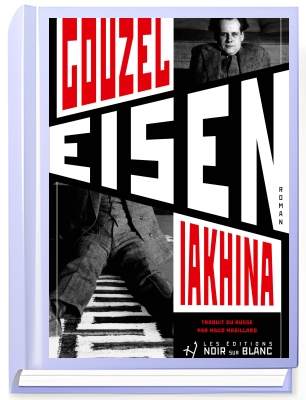
A few days ago, the Lausanne-based publisher Éditions Noir sur Blanc brought out Guzel Yakhina’s novel about the celebrated Soviet film director Sergei Eisenstein. French readers will be able to read it in Maud Mabillard’s translation and, importantly, in full, including the ninth chapter omitted from the Russian edition.