Bookshelf

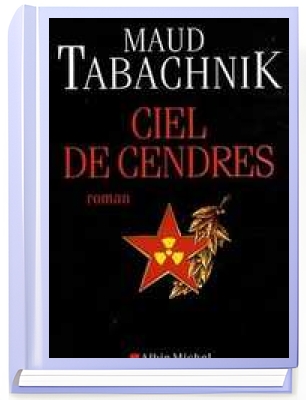
Un ciel de cendre. Éditions Albin Michel, 2008, 288 p.

Ils sont trois. Sans se connaître ils cheminent vers la même ville d'Ukraine. Ce point de non-retour qui a pour nom Tchernobyl. Vladimir, fils d'un tueur politique de Kharkov, deviendra malgré lui mafieux et criminel. Charles, petit-fils de juifs déportés, retrouvera son identité dans les sables du Sinaï. Yvan, fils de kolkhozien brutal, choisira la nature contre la violence des hommes. Enfants d'un après-guerre qui n'en finit pas, héritiers d'un monde qu'ils n'ont pas voulu, comment vont-ils pouvoir conjurer le pire ?
Maud Tabachnik s'égare sous «Un ciel de cendres» ukrainien.

Tous les chemins mènent à Tchernobyl. Même les moins crédibles.

Maud Tabachnik a enfilé les gros godillots de l'Histoire ukrainienne pour écrire Un ciel de cendres. L'Ukraine ne lui sert pas seulement de toile de fond, c'est aussi son fil conducteur pour raconter le parcours des trois protagonistes.

Des hommes aux profils pas toujours subtilement définis, à la limite de la caricature. On les découvre marmots. Un batte­ment de cils caucasiens plus tard, ils sont déjà trentenaires, un chemin de vie parcouru au pas de charge et à l'AK47.

Punition divine

Il y a l'Ukrainien pure sou­che: Vladimir. Le fils d'un com­missaire politique décoré à de multiples reprises durant l'ère soviétique. Loin des espoirs pa­ternels, il préfère endosser le costume de mafieux, accessoire­ment sicaire à ses heures per­dues. Pour réaliser finalement que le passé de son père est aussi sanglant que le sien.

Ukraine toujours avec Char­les, fils de juifs qui ont fui les pogroms. Forcément journaliste pour mieux se raconter et partir aux sources de ses origines. Un reporter baroudeur comme on n'en fait plus.

Ukraine, enfin, où termine Yvan, bûcheron contemplatif et naïf à qui toutes les polices de Russie prêtent des travers de serial killer. On croyait le cliché des forces de l'ordre fainéantes et corrompues éculé, mais non. Les trois hommes ne se con­naissent pas, deux d'entre eux se croisent à peine. Inutile de demander pourquoi, on ne saura pas où mène cette ren­contre.

Un ciel de cendres cher­che juste à guider les trois pro­tagonistes vers un événement: l'explosion du réacteur nu­méro 4 de la centrale de Tcher­nobyl en avril 1986.
Aboutissement cataclysmi­que du roman. On devine alors l'agonie des trois hommes, irra­diés. La punition est infligée, quasi divine. L'ont-ils seule­ment mérité?

Emmanuelle Drevon,  Tribune de Genève, le 7 avril 2008. 
About the author

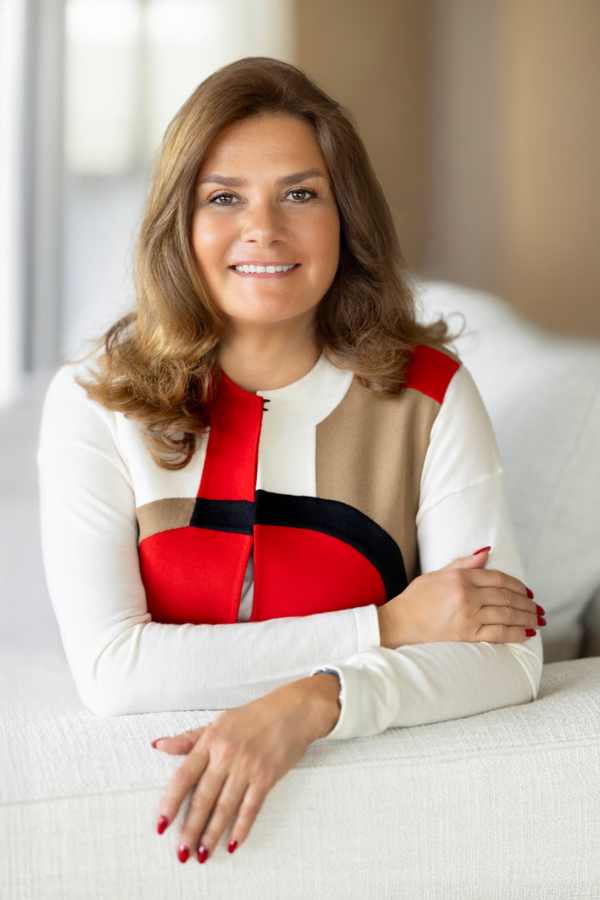
Nadia Sikorsky

Nadia Sikorsky was born and raised in Moscow. She graduated from the Faculty of Journalism at Moscow State University and went on to complete her postgraduate studies there, earning a PhD in History. She spent 13 years at UNESCO, first in Paris and then in Geneva. After serving as Director of Communications at Green Cross International, founded by Mikhail Gorbachev, she launched NashaGazeta.ch in 2007, Switzerland’s first Russian-language online daily newspaper.

In 2022, Nadia Sikorsky was named to Le Temps’ Forum des 100, which brings together individuals who, in the newspaper’s view, have “significantly contributed to the success of French-speaking Switzerland”, from across public life, business, politics, science and culture.

After 18 years at the helm of NashaGazeta.ch, Nadia Sikorsky decided to devote herself to what had always held a special place in her work as a journalist: culture in all its diversity. This led to the creation of Russian Accent, a trilingual cultural blog in Russian, French and English, born in the heart of Europe, in Switzerland, which has become her second home and whose multiculturalism and multilingualism have helped shape the character of this new project.

At the heart of the project is the perspective of a European of Russian origin, drawing on more than 35 years of professional experience and a deep knowledge of both cultural traditions. Nadia Sikorsky sees her role as that of a cultural mediator between the two. The title of the blog, Russian Accent, reflects this idea: the accent is neither a linguistic barrier nor a political position, but a distinctive cultural imprint within a European context.

Events
Most read

A new book by the Geneva-based Slavist Jean-Philippe Jaccard and his Russian colleague Andrei Ustinov, now living in San Francisco, has been published by the European University at St Petersburg: Vzir Zaumi. Daniil Harms and the Literary Avant-Garde of the 1920s. In the authors' own words, the volume offers a kind of X-ray of Leningrad's "left-wing " circles and their evolution during the period between Harms's poetic debut and the creation of OBERIU, as well as the dynamics that shaped those circles.

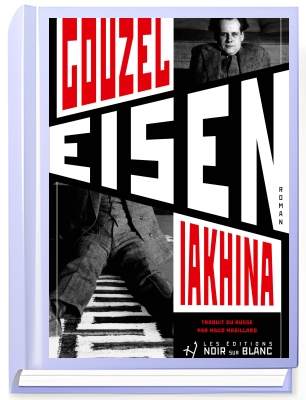
A few days ago, the Lausanne-based publisher Éditions Noir sur Blanc brought out Guzel Yakhina’s novel about the celebrated Soviet film director Sergei Eisenstein. French readers will be able to read it in Maud Mabillard’s translation and, importantly, in full, including the ninth chapter omitted from the Russian edition.