Bookshelf

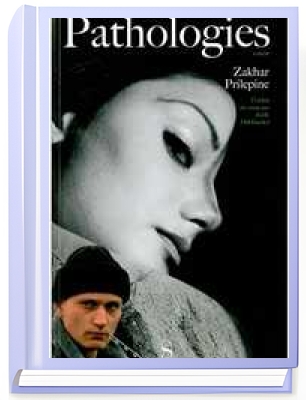
Pathologies, Ed. des Syrtes, 2007

Zakhar Prilepine construit son roman autour des trois axes névralgiques de la vie du narrateur : l'amour, la guerre, l'enfance. Avec une aisance narrative sans faille, il tisse son récit de façon à laisser place à l'imagination du lecteur sans lui accorder le temps de reprendre son souffle. Malade de sa Russie malade, Prilepine nous la décrit en proie à ses démons : un pays mis à genoux par les fautes de ses dirigeants. Sans prendre position, il narre la souffrance de tout un peuple, constitué d'ethnies qui ont du mal à vivre ensemble.

Un détachement militaire russe est envoyé en Tchétchénie : le Spetsnaz, les hommes les plus expérimentés et les plus redoutables ; parmi eux, Egor Tachevski. Les combattants russes s'installent dans une école abandonnée près de Groznyï : tout un symbole pour ces jeunes dont l'âge ne dépasse pas la trentaine. Les conscrits de vingt ans, les officiers rodés, tous gèrent à leur façon la peur, l'ennui et la mort. Tous sont, un jour, mis devant l'obligation de tirer, de tuer. Commencent les opérations de « nettoyage » : devant des Tchétchènes tués et la mort des siens, Egor Tachevski, chef du groupe, a peur. Plus qu'une peur primaire de la mort, c'est une folie, une pathologie qui tourne à l'obsession.

Cette pathologie a une sœur rivale, la Jalousie. Dans le monde civil, les relations d'Egor avec Dacha, jeune femme sensuelle et peu ordinaire, ne sont plus que ruines. Le jour où Dacha confie à Egor avoir eu vingt-six amants avant lui, sa tête explose. Abandonné à la naissance par sa mère, orphelin de son père à six ans, il pensait avoir trouvé en Dacha un refuge, un point de départ et un point de retour.

Le narrateur essaie de se guérir de ces deux pathologies en se plongeant dans l'enfance, certes douloureuse, mais pleine d'espoir.

La traduction du russe de Joëlle Dublanchet a valu à cette dernière le Prix Russophonie décerné par la Fondation Eltsine le 9 février 2008 à Paris.

Zakhar Prilepine, 34 ans, est rédacteur en chef d'une édition régionale de Novaïa Gazeta, le journal d'Anna Politkovskaïa. Il a participé aux deux guerres tchétchènes (en 1996 et 1999). Pathologies, finaliste du prix russe Natsionalnyï et best-seller en 2005, est son premier roman.

Son deuxième roman, Sanka a été finaliste du Booker Prize russe en 2006 et élu meilleur livre étranger en Chine la même année. Le Péché, sera publié en août 2007. Il confirme Zakhar Prilepine comme un des auteurs les plus prometteurs de sa génération littéraire.

Figure emblématique d'une jeunesse engagée, Zakhar Prilepine participe régulièrement aux actions civiques contre le pouvoir en place.


About the author

Nadia Sikorsky

Nadia Sikorsky was born and raised in Moscow. She graduated from the Faculty of Journalism at Moscow State University and went on to complete her postgraduate studies there, earning a PhD in History. She spent 13 years at UNESCO, first in Paris and then in Geneva. After serving as Director of Communications at Green Cross International, founded by Mikhail Gorbachev, she launched NashaGazeta.ch in 2007, Switzerland’s first Russian-language online daily newspaper.

In 2022, Nadia Sikorsky was named to Le Temps’ Forum des 100, which brings together individuals who, in the newspaper’s view, have “significantly contributed to the success of French-speaking Switzerland”, from across public life, business, politics, science and culture.

After 18 years at the helm of NashaGazeta.ch, Nadia Sikorsky decided to devote herself to what had always held a special place in her work as a journalist: culture in all its diversity. This led to the creation of Russian Accent, a trilingual cultural blog in Russian, French and English, born in the heart of Europe, in Switzerland, which has become her second home and whose multiculturalism and multilingualism have helped shape the character of this new project.

At the heart of the project is the perspective of a European of Russian origin, drawing on more than 35 years of professional experience and a deep knowledge of both cultural traditions. Nadia Sikorsky sees her role as that of a cultural mediator between the two. The title of the blog, Russian Accent, reflects this idea: the accent is neither a linguistic barrier nor a political position, but a distinctive cultural imprint within a European context.

Events
Most read

A new book by the Geneva-based Slavist Jean-Philippe Jaccard and his Russian colleague Andrei Ustinov, now living in San Francisco, has been published by the European University at St Petersburg: Vzir Zaumi. Daniil Harms and the Literary Avant-Garde of the 1920s. In the authors' own words, the volume offers a kind of X-ray of Leningrad's "left-wing " circles and their evolution during the period between Harms's poetic debut and the creation of OBERIU, as well as the dynamics that shaped those circles.

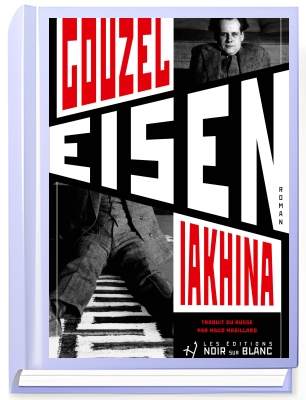
A few days ago, the Lausanne-based publisher Éditions Noir sur Blanc brought out Guzel Yakhina’s novel about the celebrated Soviet film director Sergei Eisenstein. French readers will be able to read it in Maud Mabillard’s translation and, importantly, in full, including the ninth chapter omitted from the Russian edition.