Bookshelf

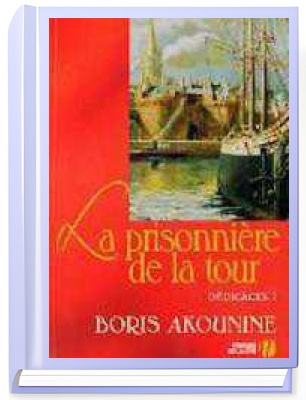
La prisonnière de la tour - Dédicaces I

En ouverture de ces Dédicaces I, les récits Conversation de salon (à Edgar Allan Poe) et De la vie des copeaux (à Georges Simenon) se lisent avec davantage de plaisir et d'intérêt. Sans doute en raison de leur brièveté. Et parce que le héros Eraste Fandorine est ici cueilli plus tôt dans sa carrière. Deux autres volumes sont prévus dans la même série, avec des nouvelles dédiées à Robert Van Gulik, Agatha Christie et Umberto Eco, entre autres. De quoi, malgré tout, piquer notre curiosité...
31 décembre 1899. Pour le détective russe Eraste Fandorine et son serviteur japonais Massa, le passage au siècle nouveau coïncide avec une aventure des plus étonnantes. Sur le chemin des fins limiers, le roi du travestissement, Arsène Lupin lui-même. Et dans le sillage de l'insaisissable voleur, Eraste Fandorine et Massa rencontrent leurs parfaits alter ego: Sherlock Holmes et son fidèle Docteur Watson!

Un jeu du chat et de la souris qui aurait pu tourner au match au sommet entre deux grands investigateurs de la littérature. Sauf que, une fois l'effet de cet étalage de noms passé, on s'ennuie ferme à la lecture de La prisonnière de la tour. Jadis maître du pastiche, Boris Akounine rend hommage à Maurice Leblanc avec une platitude rédhibitoire. Le style du prolifique écrivain russe imite le feuilleton, certes, mais ses personnages sont si caricaturaux, l'intrigue si terre à terre, que l'amateur de serial se retrouve privé de ce qui le tient en haleine dans ce genre de littérature policière: le rebondissement permanent. On est loin de la virtuosité formelle des premiers exploits de Fandorine, les romans Azazel et Le gambit turc.

Luca Sabbatini

About the author

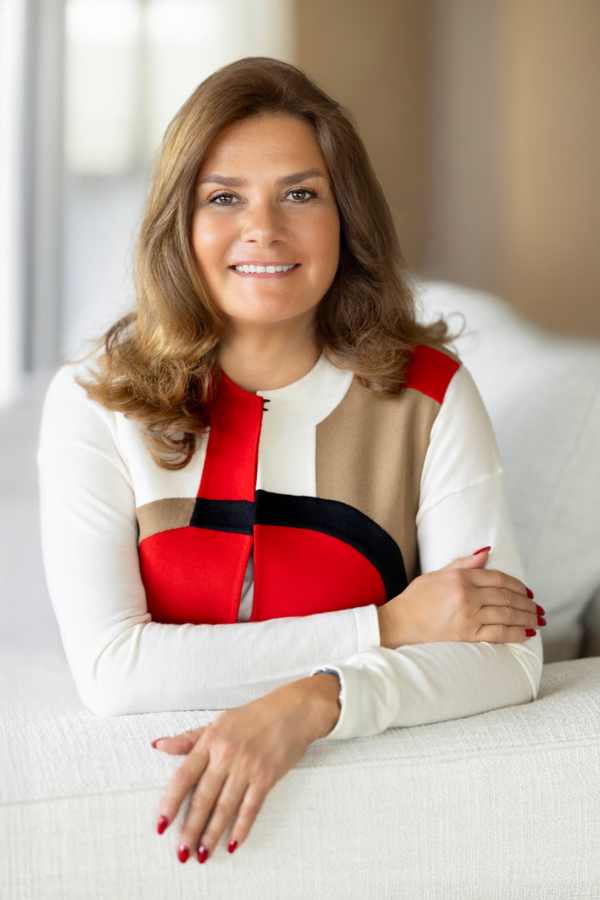
Nadia Sikorsky

Nadia Sikorsky was born and raised in Moscow. She graduated from the Faculty of Journalism at Moscow State University and went on to complete her postgraduate studies there, earning a PhD in History. She spent 13 years at UNESCO, first in Paris and then in Geneva. After serving as Director of Communications at Green Cross International, founded by Mikhail Gorbachev, she launched NashaGazeta.ch in 2007, Switzerland’s first Russian-language online daily newspaper.

In 2022, Nadia Sikorsky was named to Le Temps’ Forum des 100, which brings together individuals who, in the newspaper’s view, have “significantly contributed to the success of French-speaking Switzerland”, from across public life, business, politics, science and culture.

After 18 years at the helm of NashaGazeta.ch, Nadia Sikorsky decided to devote herself to what had always held a special place in her work as a journalist: culture in all its diversity. This led to the creation of Russian Accent, a trilingual cultural blog in Russian, French and English, born in the heart of Europe, in Switzerland, which has become her second home and whose multiculturalism and multilingualism have helped shape the character of this new project.

At the heart of the project is the perspective of a European of Russian origin, drawing on more than 35 years of professional experience and a deep knowledge of both cultural traditions. Nadia Sikorsky sees her role as that of a cultural mediator between the two. The title of the blog, Russian Accent, reflects this idea: the accent is neither a linguistic barrier nor a political position, but a distinctive cultural imprint within a European context.

Events
Most read

A new book by the Geneva-based Slavist Jean-Philippe Jaccard and his Russian colleague Andrei Ustinov, now living in San Francisco, has been published by the European University at St Petersburg: Vzir Zaumi. Daniil Harms and the Literary Avant-Garde of the 1920s. In the authors' own words, the volume offers a kind of X-ray of Leningrad's "left-wing " circles and their evolution during the period between Harms's poetic debut and the creation of OBERIU, as well as the dynamics that shaped those circles.

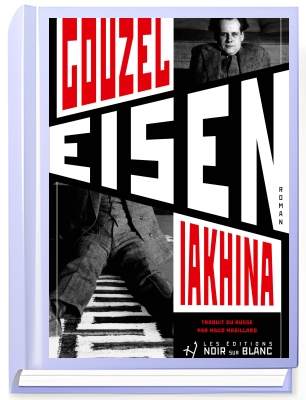
A few days ago, the Lausanne-based publisher Éditions Noir sur Blanc brought out Guzel Yakhina’s novel about the celebrated Soviet film director Sergei Eisenstein. French readers will be able to read it in Maud Mabillard’s translation and, importantly, in full, including the ninth chapter omitted from the Russian edition.