Bookshelf

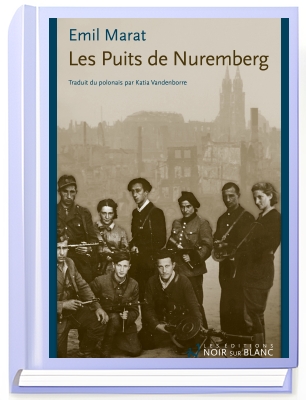
Emil Marat: Les Puits de Nuremberg. Editions Noir sur Blanc, 14 mars 2024, 368 pages • 23.50 Euros • 29 CHF

Traduit du polonais par Katia Vanderborre

Six millions. Nous devons tuer six millions d’Allemands pour venger six millions de Juifs ! – répétaient les membres du groupe Nakam (en hébreu « Vengeance »), réunis autour d’Abba Kovner, un poète de vingt-cinq ans qui, après avoir échappé au ghetto de Vilnius, avait combattu dans le maquis des forêts lituaniennes. Cette vengeance monstrueuse, ils ont été tout près de parvenir à la réaliser. Leur projet d’empoisonner l’eau potable dans plusieurs villes d’Allemagne (Nuremberg, Munich, Hambourg) n’a échoué qu’au tout dernier moment, lorsque Kovner, qui transportait de Palestine des boîtes pleines de poison, a été arrêté dans le port de Toulon. Quelqu’un l’avait trahi. Mais qui ? L’histoire du groupe Nakam, dit aussi la Ligue des justiciers juifs, n’est pas connue du grand public. Ceux qui y ont participé ont gardé le secret toute leur vie. Ils n’ont jamais renoncé à se poser la question : qui est le traître ? Le roman donne une réponse à cette question – elle est hypothétique, étonnante, mais vraisemblable.

Né en 1971, Emil Marat est un écrivain et journaliste polonais diplômé en philosophie de l’Université de Varsovie. Il a reçu de nombreux prix pour ses ouvrages sur l’histoire de la Pologne, dont le prestigieux prix du magazine Polityka en 2015 pour « Made in Poland » (Wielka Litera, 2014), long entretien avec Stanislas Likiernik, un héros de la Résistance polonaise. Son reportage littéraire Le Rêve de Colomb (W.A.B., 2018) sur le héros mi-gangster mi-rêveur de l’insurrection de Varsovie a été nominé pour le prix Nike 2019.


Lisez nos critiques en russe et en français

About the author

Nadia Sikorsky

Nadia Sikorsky was born and raised in Moscow. She graduated from the Faculty of Journalism at Moscow State University and went on to complete her postgraduate studies there, earning a PhD in History. She spent 13 years at UNESCO, first in Paris and then in Geneva. After serving as Director of Communications at Green Cross International, founded by Mikhail Gorbachev, she launched NashaGazeta.ch in 2007, Switzerland’s first Russian-language online daily newspaper.

In 2022, Nadia Sikorsky was named to Le Temps’ Forum des 100, which brings together individuals who, in the newspaper’s view, have “significantly contributed to the success of French-speaking Switzerland”, from across public life, business, politics, science and culture.

After 18 years at the helm of NashaGazeta.ch, Nadia Sikorsky decided to devote herself to what had always held a special place in her work as a journalist: culture in all its diversity. This led to the creation of Russian Accent, a trilingual cultural blog in Russian, French and English, born in the heart of Europe, in Switzerland, which has become her second home and whose multiculturalism and multilingualism have helped shape the character of this new project.

At the heart of the project is the perspective of a European of Russian origin, drawing on more than 35 years of professional experience and a deep knowledge of both cultural traditions. Nadia Sikorsky sees her role as that of a cultural mediator between the two. The title of the blog, Russian Accent, reflects this idea: the accent is neither a linguistic barrier nor a political position, but a distinctive cultural imprint within a European context.

Events
Most read

A new book by the Geneva-based Slavist Jean-Philippe Jaccard and his Russian colleague Andrei Ustinov, now living in San Francisco, has been published by the European University at St Petersburg: Vzir Zaumi. Daniil Harms and the Literary Avant-Garde of the 1920s. In the authors' own words, the volume offers a kind of X-ray of Leningrad's "left-wing " circles and their evolution during the period between Harms's poetic debut and the creation of OBERIU, as well as the dynamics that shaped those circles.

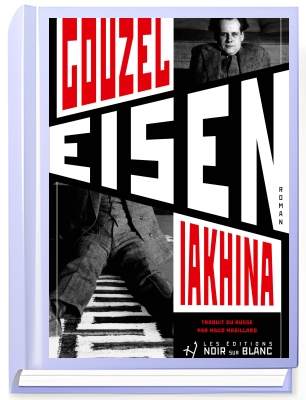
A few days ago, the Lausanne-based publisher Éditions Noir sur Blanc brought out Guzel Yakhina’s novel about the celebrated Soviet film director Sergei Eisenstein. French readers will be able to read it in Maud Mabillard’s translation and, importantly, in full, including the ninth chapter omitted from the Russian edition.