Bookshelf

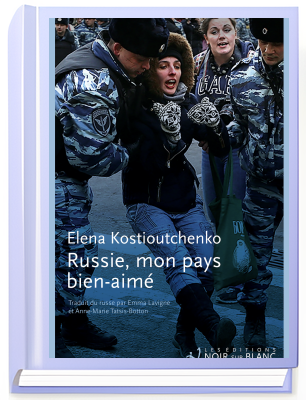
Elena Kostioutchenko: Russie, mon pays bien aimé. 8 février 2024; 400 pages • 24 Euros • 30 CHF

Traduit du russe par Emma Lavigne et Anne-Marie Tatsis-Botton

Être journaliste, c’est dire la vérité. Avec Russie, mon pays bien-aimé, Elena Kostioutchenko documente son pays, tel qu’il est vécu par celles et ceux qu’il efface systématiquement, par exemple les filles de la campagne recrutées comme travailleuses du sexe, les personnes queer des provinces éloignées, les patientes et les médecins d’une maternité ukrainienne – et les journalistes, dont elle fait partie. Cet ouvrage est le portrait singulier d’une nation, et celui d’une jeune femme qui refuse de garder le silence. En mars 2022, alors qu’elle est reporter pour Novaïa Gazeta, l’un des derniers journaux russes indépendants, Kostioutchenko se rend en Ukraine pour couvrir la guerre. Elle se donne pour mission d’informer les Russes sur les horreurs que Poutine commet en leur nom. Elle sait dès le début que si elle retourne dans son pays, elle risque d’être condamnée à quinze ans de prison, sinon pire. Portée par la conviction que la plus grande forme d’amour et de patriotisme est la critique, elle continue à écrire, nullement découragée, les yeux grands ouverts.

Elena Kostioutchenko est née à Iaroslavl, en Russie, en 1987, dans une famille pauvre. Elle commence à travailler à l’âge de 9 ans, en faisant des ménages.

À 14 ans, elle découvre le travail d’Anna Politkovskaïa sur la Tchétchénie et devient journaliste. Pendant dix-sept ans, elle écrit des reportages pour Novaïa Gazeta, le principal journal indépendant du pays. En 2011, elle fait son coming out dans un post qui fait scandale en Russie, « Pourquoi je vais à la Gay Pride ».

Au printemps 2022, suite aux reportages réalisés en Ukraine, Novaïa Gazeta est interdit, et Kostioutchenko renonce à rentrer en Russie. En automne 2022, elle réchappe à une tentative d’empoisonnement en Allemagne. Lauréate du Prix européen de la presse, du Gerd Bucerius Award et du Prix Paul Klebnikov, elle est l’autrice de plusieurs livres et pièces de théâtre.

Notre texte à lire ici

About the author

Nadia Sikorsky

Nadia Sikorsky was born and raised in Moscow. She graduated from the Faculty of Journalism at Moscow State University and went on to complete her postgraduate studies there, earning a PhD in History. She spent 13 years at UNESCO, first in Paris and then in Geneva. After serving as Director of Communications at Green Cross International, founded by Mikhail Gorbachev, she launched NashaGazeta.ch in 2007, Switzerland’s first Russian-language online daily newspaper.

In 2022, Nadia Sikorsky was named to Le Temps’ Forum des 100, which brings together individuals who, in the newspaper’s view, have “significantly contributed to the success of French-speaking Switzerland”, from across public life, business, politics, science and culture.

After 18 years at the helm of NashaGazeta.ch, Nadia Sikorsky decided to devote herself to what had always held a special place in her work as a journalist: culture in all its diversity. This led to the creation of Russian Accent, a trilingual cultural blog in Russian, French and English, born in the heart of Europe, in Switzerland, which has become her second home and whose multiculturalism and multilingualism have helped shape the character of this new project.

At the heart of the project is the perspective of a European of Russian origin, drawing on more than 35 years of professional experience and a deep knowledge of both cultural traditions. Nadia Sikorsky sees her role as that of a cultural mediator between the two. The title of the blog, Russian Accent, reflects this idea: the accent is neither a linguistic barrier nor a political position, but a distinctive cultural imprint within a European context.

Events
Most read

A new book by the Geneva-based Slavist Jean-Philippe Jaccard and his Russian colleague Andrei Ustinov, now living in San Francisco, has been published by the European University at St Petersburg: Vzir Zaumi. Daniil Harms and the Literary Avant-Garde of the 1920s. In the authors' own words, the volume offers a kind of X-ray of Leningrad's "left-wing " circles and their evolution during the period between Harms's poetic debut and the creation of OBERIU, as well as the dynamics that shaped those circles.

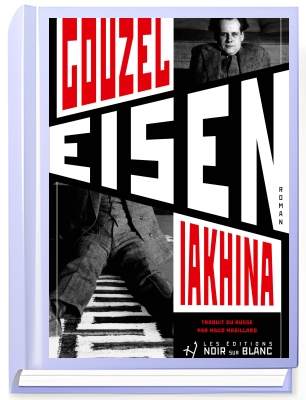
A few days ago, the Lausanne-based publisher Éditions Noir sur Blanc brought out Guzel Yakhina’s novel about the celebrated Soviet film director Sergei Eisenstein. French readers will be able to read it in Maud Mabillard’s translation and, importantly, in full, including the ninth chapter omitted from the Russian edition.