Bookshelf

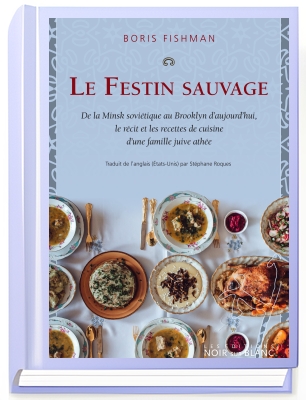
Boris Fishman: Le Festin sauvage. Editions Noir sur Blanc, 2022. 288 pages • 24 Euros • 28 CHF

De la Minsk soviétique au Brooklyn d’aujourd’hui, le récit et les recettes de cuisine d’une famille juive athée. Traduit de l’anglais (États-Unis) par Stéphane Roques

Le Festin sauvage raconte, de manière truculente et désinvolte, la famille juive russe (et athée) de l’auteur – deux de ses grands-parents, ses parents et lui-même –, sa fuite hors d’URSS, l’émigration à Vienne, puis à Rome, avant d’atteindre les États-Unis en 1988, lorsque l’auteur avait 9 ans. Tout au long du récit, le thème central est la nourriture comme manifestation visible de l’amour. Corollaire naturel : la faim, à la fois la faim réelle vécue par les membres les plus âgés de la famille pendant la guerre, et la faim métaphorique de Fishman adulte, son appétit pour l’indépendance, le succès en tant qu’écrivain et les conquêtes amoureuses.

L’auteur devient un homme, il révise peu à peu ses jugements sur le succès ou l’amour romantique, il s’américanise aussi, et s’éloigne malgré lui des générations précédentes. Jusqu’à ce qu’une aide à domicile ukrainienne soit engagée auprès du grand-père, devenu veuf. Par la magie de sa cuisine, elle va provoquer les retrouvailles des trois générations et faire affluer les souvenirs lors de festins sauvages. On évoque la grand-mère Daria, qui « avait un fourneau de la taille d’un lit. Il en sortait des pommes de terre croustillantes, coupées en quatre, saupoudrées d’aneth avant d’être badigeonnées de crème aigre… »

Boris Fishman est né à Minsk, en Biélorussie, et a émigré aux États-Unis en 1988. Ses textes ont été publiés par le New Yorker, la revue du New York Times, la New York Times Book Review, la London Review of Books, le Wall Street Journal et le Guardian, entre autres titres. Il est l’auteur de deux romans, tous deux traduits chez Buchet Chastel : Une vie d’emprunt et Rodéo. À leur parution, ces deux romans ont figuré parmi les « meilleurs livres de l’année » du New York Times. Boris Fishman enseigne l’écriture créative à l’université de Princeton. Il habite New York.

A lire notre critique ici

About the author

Nadia Sikorsky

Nadia Sikorsky was born and raised in Moscow. She graduated from the Faculty of Journalism at Moscow State University and went on to complete her postgraduate studies there, earning a PhD in History. She spent 13 years at UNESCO, first in Paris and then in Geneva. After serving as Director of Communications at Green Cross International, founded by Mikhail Gorbachev, she launched NashaGazeta.ch in 2007, Switzerland’s first Russian-language online daily newspaper.

In 2022, Nadia Sikorsky was named to Le Temps’ Forum des 100, which brings together individuals who, in the newspaper’s view, have “significantly contributed to the success of French-speaking Switzerland”, from across public life, business, politics, science and culture.

After 18 years at the helm of NashaGazeta.ch, Nadia Sikorsky decided to devote herself to what had always held a special place in her work as a journalist: culture in all its diversity. This led to the creation of Russian Accent, a trilingual cultural blog in Russian, French and English, born in the heart of Europe, in Switzerland, which has become her second home and whose multiculturalism and multilingualism have helped shape the character of this new project.

At the heart of the project is the perspective of a European of Russian origin, drawing on more than 35 years of professional experience and a deep knowledge of both cultural traditions. Nadia Sikorsky sees her role as that of a cultural mediator between the two. The title of the blog, Russian Accent, reflects this idea: the accent is neither a linguistic barrier nor a political position, but a distinctive cultural imprint within a European context.

Events
Most read

A new book by the Geneva-based Slavist Jean-Philippe Jaccard and his Russian colleague Andrei Ustinov, now living in San Francisco, has been published by the European University at St Petersburg: Vzir Zaumi. Daniil Harms and the Literary Avant-Garde of the 1920s. In the authors' own words, the volume offers a kind of X-ray of Leningrad's "left-wing " circles and their evolution during the period between Harms's poetic debut and the creation of OBERIU, as well as the dynamics that shaped those circles.

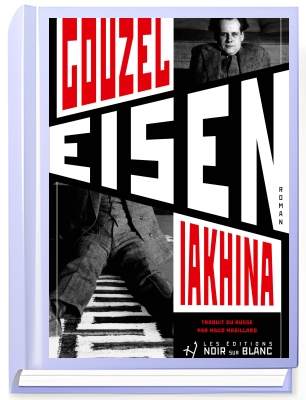
A few days ago, the Lausanne-based publisher Éditions Noir sur Blanc brought out Guzel Yakhina’s novel about the celebrated Soviet film director Sergei Eisenstein. French readers will be able to read it in Maud Mabillard’s translation and, importantly, in full, including the ninth chapter omitted from the Russian edition.