Bookshelf

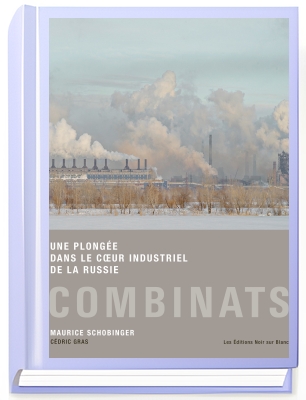
Maurice Schobinger (photos), Cédric Gras (texte): Combinats. Editions Noir sur Blanc, 12 mai 2022. 160 pages • 39 Euros • 45 CHF

Combinats est un regard photographique sur la région de l’Oural et ses immenses usines métallurgiques, qui sont nées dans les premières années de l’URSS et ont contribué au développement économique de l’empire soviétique.

Le photographe Maurice Schobinger est fasciné depuis longtemps par la Russie. Lors de ses voyages, à force de ténacité, il a pu entrer dans ces univers totalement fermés au public : les combinats métallurgiques de l’Oural. Ses images impressionnantes des usines et de leurs architectures improbables, tuyaux enchevêtrés, cuves géantes, cheminées fumantes, poussière noire et feu jaillissant sous la suie, laissent deviner la silhouette d’hommes remuant le métal en fusion, petits points perdus dans l’immensité d’une tâche destinée à faire fonctionner tout un pays… Combinats donne aussi à voir les vastes et somptueux paysages de l’Oural, dans une tension entre nature sauvage et industries démesurées.

Écrivain et géographe passionné par la Russie, Cédric Gras remet l’Oural au centre du continent eurasiatique dans un texte passionnant, explorant ses dimensions économiques, réelles et fantasmées, et son importance dans la construction de l’URSS.

Le photographe Maurice Schobinger est connu pour ses images de haute montagne et pour ses travaux sur des sujets industriels. Il a notamment réalisé le suivi photographique du tunnel de base du Gothard, le plus long du monde (Gotthard, via subalpina, d’autre part, 2002). Il a notamment publié m2, le défi (Favre, 2008), Altitude 4000 (d’autre part, 2008), Stalingrad-Volgograd et Face à face (Noir sur Blanc, 2010 et 2015). Il a exposé ses travaux dans de nombreux festivals et galeries.

Né en 1982, Cédric Gras a suivi des études de géographie et dirigé plusieurs antennes de l’Alliance française dans l’espace postsoviétique. Il continue aujourd’hui de sillonner les immensités eurasiatiques pour ses écrits et des films. Il a notamment publié chez Phébus Vladivostok (2011) et Le Nord c’est l’Est (2013), et chez Stock L’Hiver aux trousses (2015) et Alpinistes de Staline (2020), récompensé par le prix Albert Londres.


About the author

Nadia Sikorsky

Nadia Sikorsky was born and raised in Moscow. She graduated from the Faculty of Journalism at Moscow State University and went on to complete her postgraduate studies there, earning a PhD in History. She spent 13 years at UNESCO, first in Paris and then in Geneva. After serving as Director of Communications at Green Cross International, founded by Mikhail Gorbachev, she launched NashaGazeta.ch in 2007, Switzerland’s first Russian-language online daily newspaper.

In 2022, Nadia Sikorsky was named to Le Temps’ Forum des 100, which brings together individuals who, in the newspaper’s view, have “significantly contributed to the success of French-speaking Switzerland”, from across public life, business, politics, science and culture.

After 18 years at the helm of NashaGazeta.ch, Nadia Sikorsky decided to devote herself to what had always held a special place in her work as a journalist: culture in all its diversity. This led to the creation of Russian Accent, a trilingual cultural blog in Russian, French and English, born in the heart of Europe, in Switzerland, which has become her second home and whose multiculturalism and multilingualism have helped shape the character of this new project.

At the heart of the project is the perspective of a European of Russian origin, drawing on more than 35 years of professional experience and a deep knowledge of both cultural traditions. Nadia Sikorsky sees her role as that of a cultural mediator between the two. The title of the blog, Russian Accent, reflects this idea: the accent is neither a linguistic barrier nor a political position, but a distinctive cultural imprint within a European context.

Events
Most read

A new book by the Geneva-based Slavist Jean-Philippe Jaccard and his Russian colleague Andrei Ustinov, now living in San Francisco, has been published by the European University at St Petersburg: Vzir Zaumi. Daniil Harms and the Literary Avant-Garde of the 1920s. In the authors' own words, the volume offers a kind of X-ray of Leningrad's "left-wing " circles and their evolution during the period between Harms's poetic debut and the creation of OBERIU, as well as the dynamics that shaped those circles.

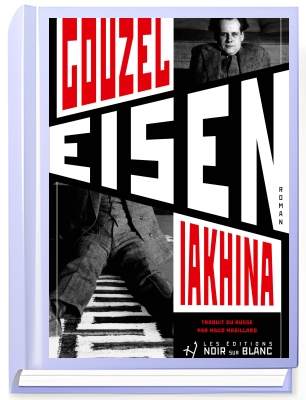
A few days ago, the Lausanne-based publisher Éditions Noir sur Blanc brought out Guzel Yakhina’s novel about the celebrated Soviet film director Sergei Eisenstein. French readers will be able to read it in Maud Mabillard’s translation and, importantly, in full, including the ninth chapter omitted from the Russian edition.