Tadjikistan, années 1990. Au lendemain de l’effondrement de l’URSS, la guerre civile plonge le pays dans le chaos.
Un ancien cadre du parti communiste retourne dans les montagnes du Pamir pour y imposer sa loi et convertir les habitants à la culture du pavot. Il porte autour du cou un gigantesque python qui évoque le roi Zahhâk, personnage issu du célèbre Livre des rois du Persan Ferdowsi.
Sept narrateurs prennent tour à tour la parole, forcés de remettre en question leur univers alors que la guerre civile fait rage : Andreï et Zarina, jumeaux âgés de seize ans, de père tadjik et de mère russe, obligés de vivre dans un village de montagne ; leur oncle Djoroub, empreint des traditions des hauts plateaux ; le jeune Karim, naïf et rêveur ; Oleg, journaliste russe qui replace le récit dans son contexte historique ; Davron, ancien officier soviétique, et le cheikh Vahhob, ermite soufi issu du monde séculier.
Medvedev nous fait découvrir le monde très peu connu du Pamir tadjik. Il tisse une généalogie du despotisme et de la terreur, tout en tenant le lecteur en haleine face au destin des différents personnages.
Né dans les années 1940 dans la région du Baïkal, Vladimir Medvedev a déménagé au Tadjikistan dans sa petite enfance et y a passé la plus grande partie de sa vie. Il parle le russe et le tadjik, a mené des recherches ethnographiques dans le pays et suivi de près sa vie politique grâce notamment à sa profession de journaliste. À la fois amoureux du Tadjikistan et érudit, il témoigne dans son premier roman, Zahhâk, le roi serpent, des coutumes et des croyances de la population. Il y retranscrit les chants et les contes qu’il a recueillis sur les hauts plateaux et les met au service d’un récit universel, qui parle avant tout de l’homme face aux vicissitudes de l’Histoire.
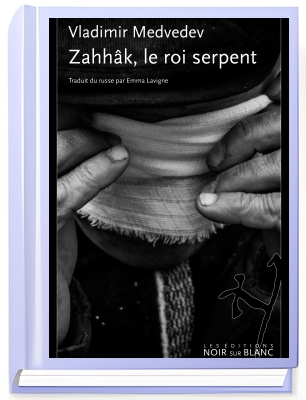
Vladimir Medvedev : Zahhâk, le roi serpent. Éditions Noir sur Blanc, 2019, 576 pages
About the author
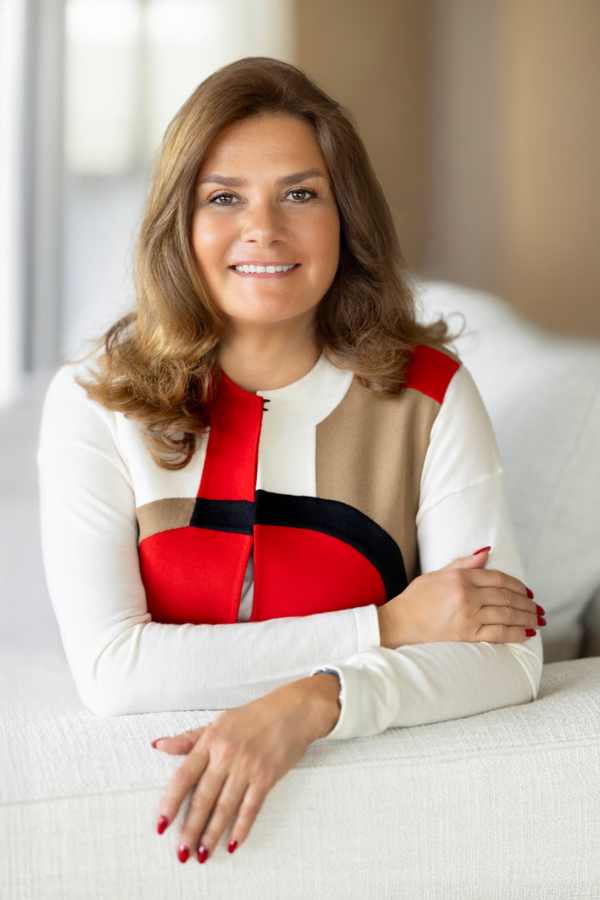
Nadia Sikorsky was born and raised in Moscow. She graduated from the Faculty of Journalism at Moscow State University and went on to complete her postgraduate studies there, earning a PhD in History. She spent 13 years at UNESCO, first in Paris and then in Geneva. After serving as Director of Communications at Green Cross International, founded by Mikhail Gorbachev, she launched NashaGazeta.ch in 2007, Switzerland’s first Russian-language online daily newspaper.
In 2022, Nadia Sikorsky was named to Le Temps’ Forum des 100, which brings together individuals who, in the newspaper’s view, have “significantly contributed to the success of French-speaking Switzerland”, from across public life, business, politics, science and culture.
After 18 years at the helm of NashaGazeta.ch, Nadia Sikorsky decided to devote herself to what had always held a special place in her work as a journalist: culture in all its diversity. This led to the creation of Russian Accent, a trilingual cultural blog in Russian, French and English, born in the heart of Europe, in Switzerland, which has become her second home and whose multiculturalism and multilingualism have helped shape the character of this new project.
At the heart of the project is the perspective of a European of Russian origin, drawing on more than 35 years of professional experience and a deep knowledge of both cultural traditions. Nadia Sikorsky sees her role as that of a cultural mediator between the two. The title of the blog, Russian Accent, reflects this idea: the accent is neither a linguistic barrier nor a political position, but a distinctive cultural imprint within a European context.