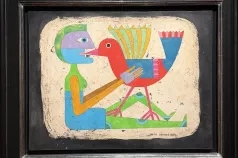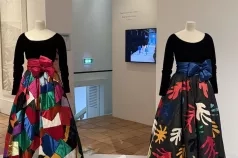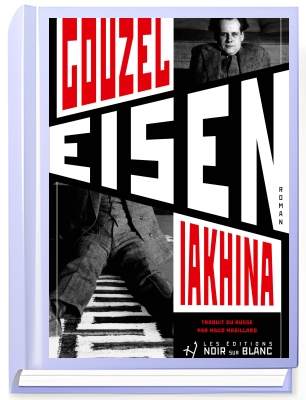
Nous partons virtuellement pour le Massachusetts et voyageons réellement en Russie – à Saint-Pétersbourg, à Moscou, à Kazan, à Samara, à Koktebel, à Yalta. Ce septième volume est cosacré à deux poétesses majeures : une Américaine du XIXe siècle et une Russe de la première partie du XXe siècle. Emily Dickinson et Marina Tsvetaieva n’ont apparemment pas grand-chose en commun. La première reste reclus chez elle, à Amherst, dans la vallée du Connecticut, tandis que la seconde, née à Moscou, étudie à Nervi, Lausanne et Paris ; contemporaine de la révolution d’Octobre, elle séjourne à plusieurs reprises en Crimée, avant de s’exiler en 1922 à Berlin, puis en Tchécoslovaquie et en banlieue parisienne. En 1939, elle retourne en Union soviétique où elle se suicide deux ans plus tard.
À travers les vies héroïques de ces deux femmes, le livre évoque deux aventures littéraires qui ont survécu à l’indifférence, à l’hostilité, voire à la censure. Femmes, elles ont refusé de se plier aux convenances et aux procédés du genre poétique, faisant preuve d’une inspiration existentielle à la fois féminine et universelle. Formellement, rythmiquement, métaphoriquement, elles ont bousculé l’ordre littéraire pour imposer un art poétique nouveau. Ni Dickinson ni Tsvetaieva n’ont douté de leur postérité, convaincues que leur œuvre, surgie du plus profond de leur être, entrerait un jour dans la grande histoire de la poésie moderne.
Frédéric Pajak est né en 1955 dans les Hauts-de-Seine. Il a publié une quinzaine d’ouvrages, souvent écrits et dessinés : Le Chagrin d’amour ; Humour — une biographie de James Joyce ; Nietzsche et son père, Nervosité générale, Mélancolie, aux PUF ; La Guerre sexuelle, J’entends des voix et Autoportrait, chez Gallimard. Il est l’éditeur des Cahiers dessinés.
Après L’Étrange Beauté du monde et En souvenir du monde, réalisés avec Lea Lund, après la nouvelle édition de L’Immense Solitude et les six premiers volumes du Manifeste incertain (Avec Walter Benjamin, rêveur abîmé dans le paysage ; Avec Nadja, André Breton, Walter Benjamin sous le ciel de Paris ; La Mort de Benjamin. Ezra Pound mis en cage ; La liberté obligatoire. Gobineau l’irrécupérable ; Vincent van Gogh. Une biographie ; Blessures), les Éditions Noir sur Blanc poursuivent la publication des œuvres de Frédéric Pajak. Il a reçu, pour le Manifeste incertain 3, le Prix Médicis Essai 2014 et le Prix suisse de la littérature 2015.
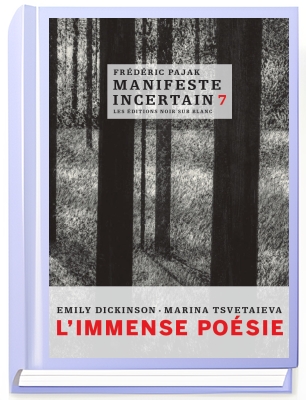
Frédéric Pajak : Manifeste incertain, tome 7. Emily Dickinson, Marina Tsvetaieva – L’immense poésie. Les Editions Noir sur Blanc, 2018
About the author

Nadia Sikorsky was born and raised in Moscow. She graduated from the Faculty of Journalism at Moscow State University and went on to complete her postgraduate studies there, earning a PhD in History. She spent 13 years at UNESCO, first in Paris and then in Geneva. After serving as Director of Communications at Green Cross International, founded by Mikhail Gorbachev, she launched NashaGazeta.ch in 2007, Switzerland’s first Russian-language online daily newspaper.
In 2022, Nadia Sikorsky was named to Le Temps’ Forum des 100, which brings together individuals who, in the newspaper’s view, have “significantly contributed to the success of French-speaking Switzerland”, from across public life, business, politics, science and culture.
After 18 years at the helm of NashaGazeta.ch, Nadia Sikorsky decided to devote herself to what had always held a special place in her work as a journalist: culture in all its diversity. This led to the creation of Russian Accent, a trilingual cultural blog in Russian, French and English, born in the heart of Europe, in Switzerland, which has become her second home and whose multiculturalism and multilingualism have helped shape the character of this new project.
At the heart of the project is the perspective of a European of Russian origin, drawing on more than 35 years of professional experience and a deep knowledge of both cultural traditions. Nadia Sikorsky sees her role as that of a cultural mediator between the two. The title of the blog, Russian Accent, reflects this idea: the accent is neither a linguistic barrier nor a political position, but a distinctive cultural imprint within a European context.