La Tête de Lénine, d’abord paru en samizdat à Moscou, puis soutenu par Alexandre Zinoviev et Maurice Nadeau, est une satire impitoyable de l’idéologie soviétique, de l’idolâtrie ambiante et des institutions. Il paraît pour la première fois à Paris en 1972 anonymement ; son auteur vit alors en URSS, où il est très actif dans l’édition clandestine. Dénoncé pour avoir fait passer un grand nombre de textes hors du pays, il doit se réfugier en France en 1975. La Tête de Lénine continue à circuler sous le manteau et connaît un grand succès, au point de devenir un livre culte. Édité chez Robert Laffont en 1982, l’ouvrage participe à la déstabilisation de l’Union soviétique.
Dans sa préface à l’édition de 1982, Alexandre Zinoviev écrit : « Ce petit livre a paru à Moscou en samizdat il y a quelques années et il a produit immédiatement une forte impression dans le milieu des lecteurs de la littérature proscrite. Je sais qu’il y circule toujours avec le même succès. Et cela ne m’étonne pas. Je suis en effet convaincu que tout propos sérieux et objectif sur la littérature russe des années 1960 et 1970 ne peut plus, désormais, ignorer La Tête de Lénine. »
Dans ce bref roman, un jeune pickpocket moscovite, las de dérober des portefeuilles, décide un jour de voler la tête de Lénine dans le mausolée de la place Rouge. Il y réussit – ce qui n’étonnera personne. Ce qui est étonnant, et encore plus subversif, ce sont les rebondissements qui s’ensuivent… Chez Nicolas Bokov, les statues sont renversées, les masques des puissants arrachés, et les institutions vacillent.
Ils en parlent…
• « Pochade décousue mais souvent irrésistible, ce court livre est aussi un document étonnant sur la vie dans l’URSS des années 1970, et la corrosion du communisme par l’humour, les pénuries et l’alcool, qui y était engagée. »
André Loez, Le Monde
• « Une farce burlesque sur le culte de la personnalité et la bureaucratie bolchevique, façon Boulgakov. »
Bernard Quiriny. L’Opinion.
Interview de Nasha Gazeta avec Nikolas Bokov à lire ici.
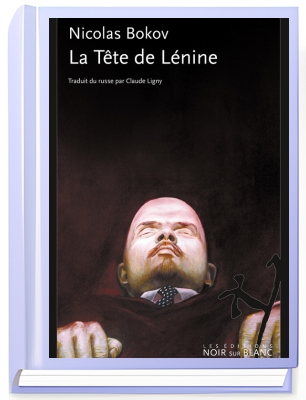
Nikolas Bokov: «La Tête de Lénine». Les Editions Noir-sur-Blanc, Lausanne, 2017
About the author

Nadia Sikorsky was born and raised in Moscow. She graduated from the Faculty of Journalism at Moscow State University and went on to complete her postgraduate studies there, earning a PhD in History. She spent 13 years at UNESCO, first in Paris and then in Geneva. After serving as Director of Communications at Green Cross International, founded by Mikhail Gorbachev, she launched NashaGazeta.ch in 2007, Switzerland’s first Russian-language online daily newspaper.
In 2022, Nadia Sikorsky was named to Le Temps’ Forum des 100, which brings together individuals who, in the newspaper’s view, have “significantly contributed to the success of French-speaking Switzerland”, from across public life, business, politics, science and culture.
After 18 years at the helm of NashaGazeta.ch, Nadia Sikorsky decided to devote herself to what had always held a special place in her work as a journalist: culture in all its diversity. This led to the creation of Russian Accent, a trilingual cultural blog in Russian, French and English, born in the heart of Europe, in Switzerland, which has become her second home and whose multiculturalism and multilingualism have helped shape the character of this new project.
At the heart of the project is the perspective of a European of Russian origin, drawing on more than 35 years of professional experience and a deep knowledge of both cultural traditions. Nadia Sikorsky sees her role as that of a cultural mediator between the two. The title of the blog, Russian Accent, reflects this idea: the accent is neither a linguistic barrier nor a political position, but a distinctive cultural imprint within a European context.