Немецкий офицер, хладнокровный дознаватель Гестапо, манипулирующий людьми и умело дрессирующий овчарок, к моменту поражения Германии в войне решает скрыться от преследования под чужим именем и под чужой историей. Чтобы ничем себя не выдать, загоняет свой прежний опыт в самые дальние уголки памяти. И когда его душа после смерти была подвергнута переформатированию наподобие жесткого диска – для повторного использования – уцелевшая память досталась новому эмбриону.
Эта душа, полна нечеловеческого знания о мире и людях, оказывается в заточении – сперва в утробе новой матери, потом в теле беспомощного младенца, и так до двенадцатилетнего возраста, когда Йонас (да, тот библейский Иона из чрева кита) убегает со своей овчаркой из родительского дома на поиск той стертой послевоенной истории, той тайной биографии простого человека Андерсена, который оказался тоже далеко не прост.
Шарль Левински – признанный швейцарский классик, драматург и киносценарист, автор нескольких романов, известных во всем мире. Он часто дает своим романам названия по фамилии главного героя – Мельниц, Геррон, теперь Андерсен. Но были еще «Иванов день», «Десять и одна ночь» и другие романы, неизменно популярные у читателя и кинозрителя.
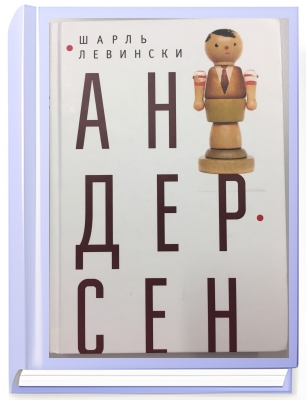
Шарль Левински: «Андерсен». Издательство «Алетейя», Санкт-Петербург, 2017
About the author

Nadia Sikorsky was born and raised in Moscow. She graduated from the Faculty of Journalism at Moscow State University and went on to complete her postgraduate studies there, earning a PhD in History. She spent 13 years at UNESCO, first in Paris and then in Geneva. After serving as Director of Communications at Green Cross International, founded by Mikhail Gorbachev, she launched NashaGazeta.ch in 2007, Switzerland’s first Russian-language online daily newspaper.
In 2022, Nadia Sikorsky was named to Le Temps’ Forum des 100, which brings together individuals who, in the newspaper’s view, have “significantly contributed to the success of French-speaking Switzerland”, from across public life, business, politics, science and culture.
After 18 years at the helm of NashaGazeta.ch, Nadia Sikorsky decided to devote herself to what had always held a special place in her work as a journalist: culture in all its diversity. This led to the creation of Russian Accent, a trilingual cultural blog in Russian, French and English, born in the heart of Europe, in Switzerland, which has become her second home and whose multiculturalism and multilingualism have helped shape the character of this new project.
At the heart of the project is the perspective of a European of Russian origin, drawing on more than 35 years of professional experience and a deep knowledge of both cultural traditions. Nadia Sikorsky sees her role as that of a cultural mediator between the two. The title of the blog, Russian Accent, reflects this idea: the accent is neither a linguistic barrier nor a political position, but a distinctive cultural imprint within a European context.