Klop Ustinov fut sans doute l’agent secret le plus ingénieux du Royaume Uni. N’ayant jamais reçu le fameux « permis de tuer », il devint maître dans l’art de raconter des fables, déroutant ses ennemis et les amenant à lui révéler leurs secrets les plus sombres. De l’accession des nazis au pouvoir à la guerre froide, il parvint à s’insinuer dans la confiance de ses adversaires les plus redoutables, chefs de la Gestapo, commissaires soviétiques et autres espionnes venues du froid.
Dans Klop Ustinov, le plus ingénieux des espions britanniques, Peter Day fait revivre Jona von Ustinov, un homme né à Jaffa, en Palestine, dont la famille mêlait aristocrates russes et princesses éthiopiennes, orthodoxes et juifs convertis au protestantisme, et qui se croyait, pour sa part, le parfait Anglais. De nom de code U35, il fut surtout connu par son surnom, Klop, qui en russe signifie « punaise des lits », un sobriquet que lui avait donné son épouse, compréhensive, à cause de son extraordinaire capacité à sauter du lit d’une femme à l’autre – au service de Sa Majesté.
Fréquentant les assemblées mondaines de toute l’Europe sous l’apparence d’un simple bon vivant, il y faisait preuve d’un incomparable talent d’amuseur (un trait dont son fils, l’acteur Peter Ustinov, a sans aucun doute hérité). Klop était un virtuose pour débusquer la vérité en racontant des histoires ; voici la sienne.
Peter Day a travaillé près de quarante ans pour la presse écrite. Désormais spécialiste dans la recherche d’archives ayant trait à la politique, à l’histoire des conflits et à l’espionnage, il continue à publier des reportages dans le Sunday Times et le Mail on Sunday. Son livre précédent, Les Amis de Franco, révélait la part des autorités britanniques dans l’ascension et le maintien au pouvoir du général Franco.
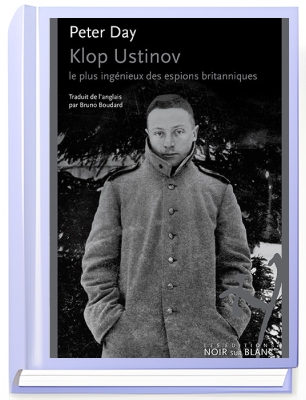
Peter Day: «Klop Ustinov: Le plus ingénieux des espions britanniques». Editions Noir sur Blanc, 2017.
About the author
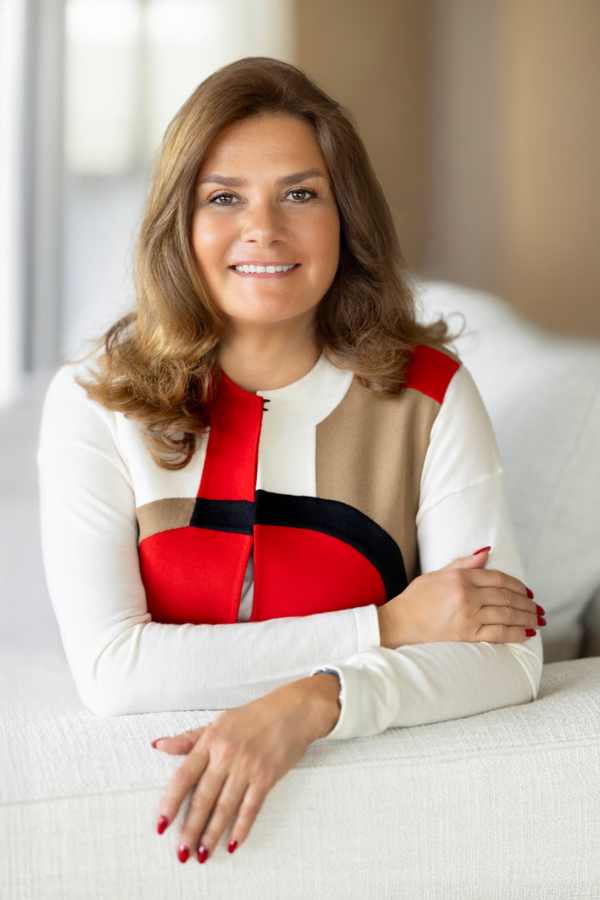
Nadia Sikorsky was born and raised in Moscow. She graduated from the Faculty of Journalism at Moscow State University and went on to complete her postgraduate studies there, earning a PhD in History. She spent 13 years at UNESCO, first in Paris and then in Geneva. After serving as Director of Communications at Green Cross International, founded by Mikhail Gorbachev, she launched NashaGazeta.ch in 2007, Switzerland’s first Russian-language online daily newspaper.
In 2022, Nadia Sikorsky was named to Le Temps’ Forum des 100, which brings together individuals who, in the newspaper’s view, have “significantly contributed to the success of French-speaking Switzerland”, from across public life, business, politics, science and culture.
After 18 years at the helm of NashaGazeta.ch, Nadia Sikorsky decided to devote herself to what had always held a special place in her work as a journalist: culture in all its diversity. This led to the creation of Russian Accent, a trilingual cultural blog in Russian, French and English, born in the heart of Europe, in Switzerland, which has become her second home and whose multiculturalism and multilingualism have helped shape the character of this new project.
At the heart of the project is the perspective of a European of Russian origin, drawing on more than 35 years of professional experience and a deep knowledge of both cultural traditions. Nadia Sikorsky sees her role as that of a cultural mediator between the two. The title of the blog, Russian Accent, reflects this idea: the accent is neither a linguistic barrier nor a political position, but a distinctive cultural imprint within a European context.