Dans la région de Krasnoïarsk, au sud de la Sibérie, un investisseur privé décide de terminer la construction d’une centrale hydroélectrique ; l’électricité sera vendue à la Chine. Un immense territoire est voué à disparaître sous les eaux.
Roman Sentchine raconte l’histoire simple des femmes et des hommes qui subissent les fléaux de l’injustice, de la bureaucratie et de la corruption, et doivent quitter leurs villages et leur campagne fertile. Ce roman basé sur une histoire vraie (la construction du barrage de Bogoutchany sur l’Angara entre 2008 et 2012) convoque divers personnages, parfois fatalistes, parfois révoltés, toujours touchants : la journaliste Olga, qui récolte des informations sur les habitants relogés de force et n’obtiendra que le silence ; Alexeï, le chef de l’administration du village, qui se bat pour que le cimetière, voué à être inondé, soit transféré en ville ; le vieil Ignati, qui raconte à son petit-fils Nikita la vie qu’ils menaient avant, et les traditions perdues…
La Zone d’inondation restitue avec une précision bouleversante les gestes du quotidien, la parole, la vie sociale, la vision du monde, les bonheurs et les malheurs d’une poignée de villageois destinés à se fondre dans la ville, et qui semblent soudain prendre conscience d’eux-mêmes.
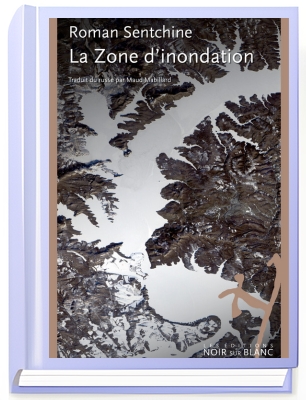
Roman Sentchine: La Zone d’inondation. Les Editions Noir sur Blanc, 2016
About the author

Nadia Sikorsky was born and raised in Moscow. She graduated from the Faculty of Journalism at Moscow State University and went on to complete her postgraduate studies there, earning a PhD in History. She spent 13 years at UNESCO, first in Paris and then in Geneva. After serving as Director of Communications at Green Cross International, founded by Mikhail Gorbachev, she launched NashaGazeta.ch in 2007, Switzerland’s first Russian-language online daily newspaper.
In 2022, Nadia Sikorsky was named to Le Temps’ Forum des 100, which brings together individuals who, in the newspaper’s view, have “significantly contributed to the success of French-speaking Switzerland”, from across public life, business, politics, science and culture.
After 18 years at the helm of NashaGazeta.ch, Nadia Sikorsky decided to devote herself to what had always held a special place in her work as a journalist: culture in all its diversity. This led to the creation of Russian Accent, a trilingual cultural blog in Russian, French and English, born in the heart of Europe, in Switzerland, which has become her second home and whose multiculturalism and multilingualism have helped shape the character of this new project.
At the heart of the project is the perspective of a European of Russian origin, drawing on more than 35 years of professional experience and a deep knowledge of both cultural traditions. Nadia Sikorsky sees her role as that of a cultural mediator between the two. The title of the blog, Russian Accent, reflects this idea: the accent is neither a linguistic barrier nor a political position, but a distinctive cultural imprint within a European context.