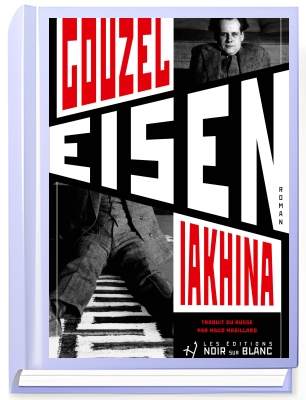
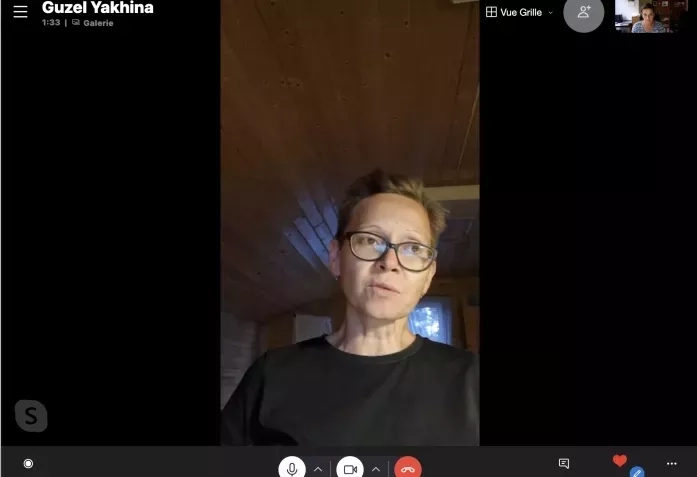
To mark the publication in French of Guzel Yakhina’s novel A Volga Tale by Éditions Noir sur Blanc in Lausanne, we spoke once again to the acclaimed Russian writer and asked her thirteen questions. Maud Mabillard’s translation will reach Swiss bookshops tomorrow, 19 August 2021.
I have been following Guzel Yakhina’s work closely for several years, ever since she took part in the Days of Russian Literature in Zurich in 2017. I later wrote about her sensational debut novel, Zuleikha, and last year covered the controversy surrounding the television adaptation made for the Rossiya 1 channel.
At the heart of A Volga Tale, the novel we are discussing today, is Bach, a Volga German and schoolmaster living during the early years of the Soviet Union. The novel appeared in 2018 and was immediately included in Forbes Russia’s list of the ‘20 Most Important Books of 2018’. In December 2019, Guzel Yakhina received the Ivo Andrić Literary Prize for Best Book. That same month, the novel took third place in the jury vote for Russia’s Big Book Award and won the readers’ vote.
Guzel, the success of Zuleikha was overwhelming. Were you frightened to embark on a second novel?
Terrified. I had all sorts of fears and struggled with them for quite a long time, almost a year. I was afraid of writing a novel weaker than the first. I was also seriously concerned that I might fail to do justice to the Volga Germans, a people to whom I did not belong by blood, even though I knew them very well. I wondered whether I had the right to write about them. It seemed to me that a novel about the Volga Germans should be written by Volga Germans themselves, and by no one else.
But as I researched the subject, I realised that I needed to write not about Germans, but about people. Although I drew extensively on folklore and Germanic mythology, I was ultimately writing more about human beings, about the country, about the ethnic minorities that inhabited it and about their relationship with those in power.
My fears gradually receded, but by the time I finished the book, I realised that they had entered the text and that its central theme had become fear and the overcoming of it. In the end, I brought that fear to the forefront.
Throughout the twenty-two years covered by the novel, its protagonist, the schoolmaster Bach, moves towards overcoming his fears. At different moments, he is tormented by fear of other people, fear of love, fear of losing the love that came to him so late, fear of the child and then fear of losing him. He gradually frees himself from all these fears.
A second important narrative develops alongside the first: that of Joseph Stalin, who, by contrast, sinks ever more deeply into fear. He moves from the euphoria of power, from soaring in his imagination above the country, towards an inglorious end in an armoured car. These two trajectories, the protagonist’s ascent and Stalin’s descent, mirror one another and form the narrative foundation of the novel.
It feels slightly strange to be discussing your second novel when your third, Train to Samarkand, has already appeared, so that we can now speak of a trilogy. But translators cannot keep pace with you, which means we shall sometimes have to look back and sometimes leap ahead. Let us begin with what seems to me the essential question. Writers are said to write about what hurts them. Why is it precisely this period of Russian history, the 1920s and 1930s, that hurts you?
I think it hurts all of us. I see no sign that interest in this subject, and therefore the pain associated with it, is diminishing. We are speaking about the dawn of Soviet power, the period when the foundations were laid for the state in which we still live. It was also when the foundations were laid for the Soviet person who still lives within each of us. I can certainly say that about myself. It sprouts even in our children, simply because it is we who bring them up.
The Soviet identity that took shape a hundred years ago is therefore still alive and still governs us. That is why I find the period some cultural historians call ‘Soviet antiquity’ extraordinarily compelling. It inspires awe and fear, but also curiosity and fascination.
When I immerse myself in those events, I am not escaping into the past. Quite the opposite: I am trying to understand what is happening to us now. For me, this is not escapism, but an attempt to recognise what remains Soviet within us and, by doing so, to overcome it.
Clearly, you are not alone in feeling this pain. Otherwise your books would not provoke such intense and contradictory emotions. Some accuse you of deliberate provocation and of portraying Soviet life in the darkest possible colours; others, on the contrary, of whitewashing it. Has your response to these accusations changed over time?
All three of my novels are historical. All three are devoted to the early Soviet period, and all three examine the little man confronting the mighty state. Each has provoked much the same accusations, which are also diametrically opposed. This has taught me two things.
First, a novel, a film or any other work of art is often used as an opportunity to debate the Soviet experience and one’s own attitude towards it. The past will not let go. It demands to be discussed, and there are few places where such a discussion can take place, so every opportunity is seized.
Second, any work of art provokes responses that often reveal more about the critic than about the work itself. I judge this by the extent to which reactions to my books contradict one another, not only in their attitudes towards the Soviet past but also, for example, on questions of nationality.
You describe your novels as historical, yet they contain fictional characters and not all the events you portray actually took place. How do fact and fiction coexist in your work?
I would be flattered if my novels were regarded both as historical and as something other than historical fiction. A Volga Tale can be read as a historical novel because it is woven entirely from fragments of truth. But it can also be read as non-historical because all that truth forms an invented plot which, I hope, can be considered independent of any particular period.
The novel may be read as an account of life in the Volga German autonomy, established in 1918 and abolished in 1941. I paid extremely close attention to ethnographic detail. Take any example and it will prove to be authentic: recipes for steppe dumplings or Kyrgyz tea prepared by Germans, patterns carved into the window frames of their houses, or their various superstitions. All of this comes from the writings of ethnographers.
And that is without even mentioning the real landmarks in the history of the autonomy. Jakob Bach keeps a kind of calendar in which each year is given a particular name and the entire history of the Volga German autonomy is encoded. This body of historical truth accompanies the timeless story of a man attempting to flee from time and from the historical process. That is what Bach does throughout all twenty-two years covered by the novel.
You have anticipated my next question. For much of the novel, the inhabitants of Gnadenthal, where the principal events unfold, and Jakob Bach with them, seem to inhabit a parallel reality, far removed from the events convulsing one-sixth of the Earth’s land surface. But reality eventually catches up with them. Is that collision inevitable?
Yes. Bach’s quiet, mouselike existence and his tiny village are suddenly invaded by History with a capital H: revolution, civil war, famine and repression. He tries to escape it all by crossing to the opposite bank of the Volga. It is a form of internal emigration, a flight of the mind.
The answer to the novel’s central question, whether it is possible to escape one’s time, is therefore unequivocal: no, it is not. Bach has to immerse himself in his time and descend to its very depths, which is what happens at the end of the novel. History suddenly takes physical form as the Volga. The river becomes a symbol of History itself, and Bach dissolves into it.
Incidentally, Bach means ‘stream’ in German. The stream flows into the Volga, just as all of us are little streams flowing into the great history of our country.
People want to believe in fairy tales, and your novel is full of them. I find the moment when Bach realises that his ‘Hoffmann tales’ are beginning to come true particularly interesting. He then abandons the German fairy-tale tradition, which is often far from benign, for the Russian tradition, with its obligatory happy ending. This shift opens up a wealth of questions, from the writer’s role in history to the censor within each of us. But you must surely have had something else in mind as well.
The German fairy tale is the novel’s central metaphor: a metaphor for the Soviet fairy tale that failed to come true. In the novel’s three central chapters, Bach imagines that plots from German folklore are being realised amid the circumstances of the early Soviet years. The dark, harsh aesthetic of the German fairy tale merges with the equally dark and harsh reality of the period.
At first, the promises of the fairy tale are lavishly fulfilled, and all its characters seem to come alive. There is the Valiant Little Tailor, Lazy Hans and the Three Spinners. The communal fields are rich with wheat because dwarfs beneath them are forging gold; enormous sturgeon are caught in the fishermen’s nets; bean stalks grow almost to the sky; and the tractors ploughing the fields are called ‘Dwarfs’, another reference to German folklore.
It is 1925 and 1926, a period of extraordinary optimism when people believe the Soviet fairy tale is coming true. Literature, architecture and cinema are flourishing. The country rejoices in anticipation of tomorrow, and this is reflected in the life of the tiny colony where the protagonist lives.
Then 1927 arrives and everything changes. The opposition is driven out, Stalin establishes one-man rule, and it becomes clear that the Soviet fairy tale is being realised in a very different way from the one people had dreamed of. The same thing happens in the protagonist’s life and in his stories. Suddenly, without any intention on his part, the tales begin to come true in the cruellest possible way. The Pied Piper of Hamelin leads away the Young Pioneers, who will never return to their parents; the collective farm’s horses turn to stone, as in a German legend; then come crop failure, famine and disease.
I tried to steep the novel in German mythology not only through its plot but also through its language. I read and reread German fairy tales, particularly those of the Brothers Grimm, selecting images and expressions and scattering them throughout the text. Even the surnames of some of the characters, Grimm, Bach and Wagner, refer to German culture.
At the same time, some details that appear fantastical are in fact real. One example is the curse ‘May a dragon tear you limb from limb’. One critic even saw it as a reference to Tolkien, but it was a genuine expression used by Soviet Germans in the 1920s. Germans on collective farms addressed one another using both the masculine and feminine forms of ‘comrade’, while invoking dragons in their curses.
An attentive reader will notice that no truly supernatural events occur in the novel. There are subplots, but all the magic takes place in Bach’s imagination.
Literature occupied a special place in the Soviet Union, as it does in any closed country. It was no accident that the country developed a magnificent school of literary translation, enabling readers to peer beyond the Iron Curtain into the wider world. The Soviet Union was said to be the world’s most widely read country, and for many people the stories told in books became part of life itself. Curiously, writing provides an outlet both for Bach and for his antithesis, Hoffmann, a committed communist determined to transform traditional Gnadenthal into an exemplary communist town. Yet you write that Hoffmann was building something lifeless, while Bach breathed life into it through his stories. Could you comment on this passage?
Hoffmann is one of those people who were known as the German idealists. They came from Germany in the early 1920s hoping to build a communist paradise in Soviet Russia. To us, reading the novel today, it is immediately obvious that his fate will be tragic: he will either disappear into a labour camp or be killed.
My original plan was to bring Bach and Hoffmann together in a final confrontation and have Bach emerge victorious. In the end, however, I decided that this would be too obvious. Hoffmann’s departure into the Volga, his merging with History, seemed more symbolic.
The figure of Hoffmann was inspired by the 1927 film Martin Wagner, the only feature film made at Nemkino, a studio based in Saratov that produced films about life in the Volga German autonomy. Among the non-professional actors appearing in this film about collectivisation was a dwarf with a hunched back, an exceptionally beautiful, gentle face and expressive eyes. He seemed destined for a novel in which German mythology plays a central role. That is how Hoffmann entered the text, and once again fact and fiction merged.
You write that, towards the end of his life, Bach is ready to leave his daughter Antje ‘the world created through his efforts, fertile, well-fed and therefore kind’. Does that mean evil comes from hunger, the subject that would become central to your third novel?
Hunger has always been with me as a theme. It is present in my first novel as well. And as you know, famine ravaged the Volga region, where the second novel is set. My third novel, which Maud Mabillard is now also translating into French, something that makes me very happy, is devoted entirely to famine.
It seems to me that this experience is present in one form or another in every family in our country, perhaps less visibly than the experience of war, but present nevertheless. In my own family, which lived in the Volga region, bread was always treated with particular reverence. You could never brush crumbs from the table, for example. You had to gather them in your palm and eat them.
During the lean years of the 1990s, the experience of the older generation proved useful. My grandparents dried bread to make rusks: a dormant survival mechanism had come back to life.
Despite the historical distance separating us from the events you describe, some resonate with our own reality, confirming the cyclical nature of history. I am thinking, for example, of the magnificent scene in which the monument to Catherine II is toppled during Stalin’s flying visit to the Volga German autonomy. Do you think we are destined to go on erecting monuments and tearing them down?
The episode in which the monument, cast by the celebrated sculptor Baron von Klodt, is demolished is historically accurate. It really happened. The metal was melted down to make tanks.
As for the destruction of monuments in general, that is an eternal question. One immediately thinks of Sergei Eisenstein’s film October, which begins with a crowd pulling down the monument to Alexander III. As the monument breaks into pieces, it symbolises the collapse of the regime.
When it comes to our own monuments, I have no definitive answer. On the one hand, symbols of evil would seem to demand destruction: every last monument to Lenin should be demolished, and the statue of Dzerzhinsky removed from Lubyanka Square in the 1990s must under no circumstances be restored. Or so it would seem.
On the other hand, can history simply be erased? If we follow that logic, why should monuments to tsars be preserved while monuments to revolutionaries are destroyed? And what about monuments to Hitler? I repeat: I have no answer to this question, nor is it clear who could provide one. It seems that we shall simply have to live with it.
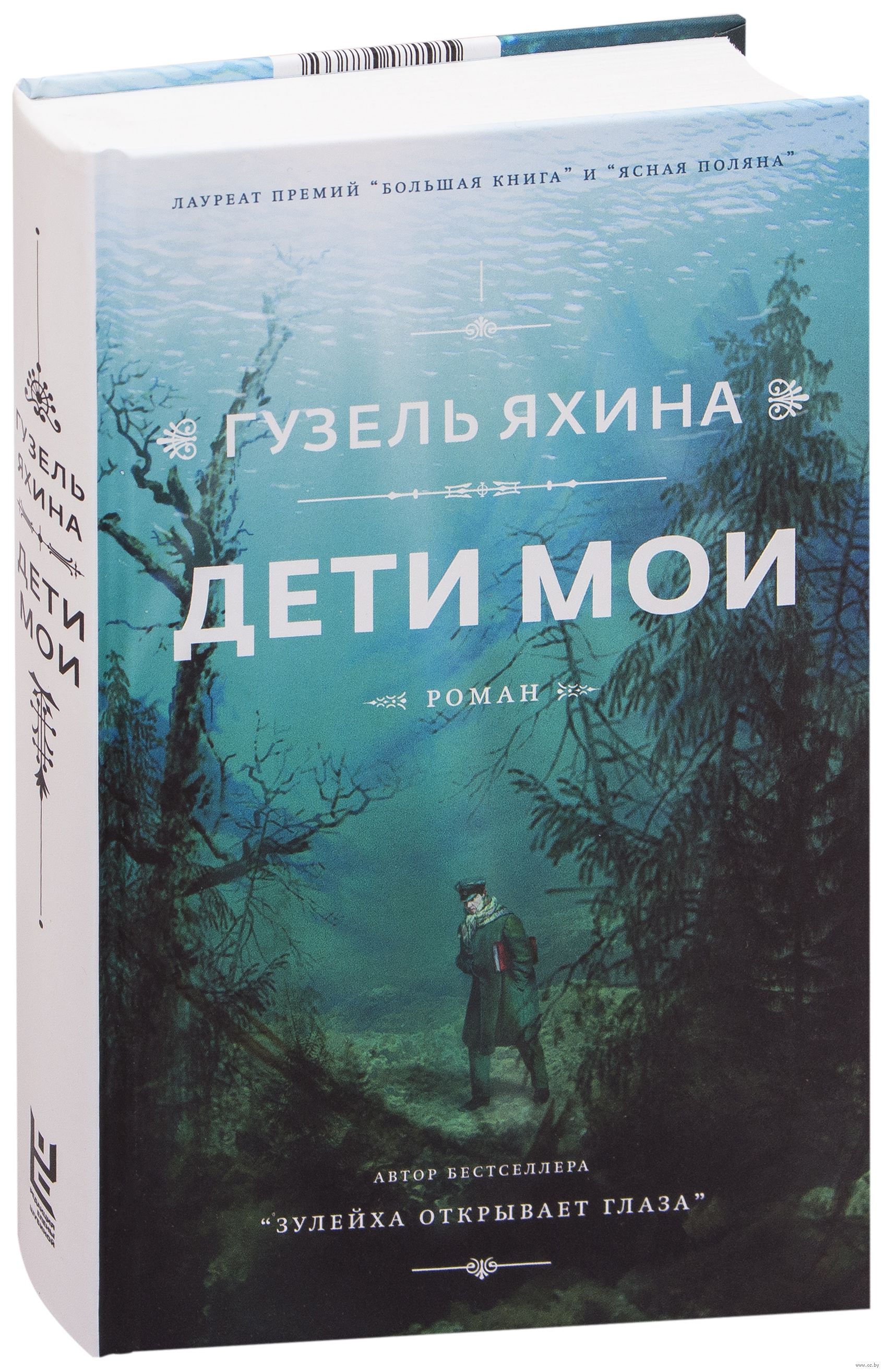
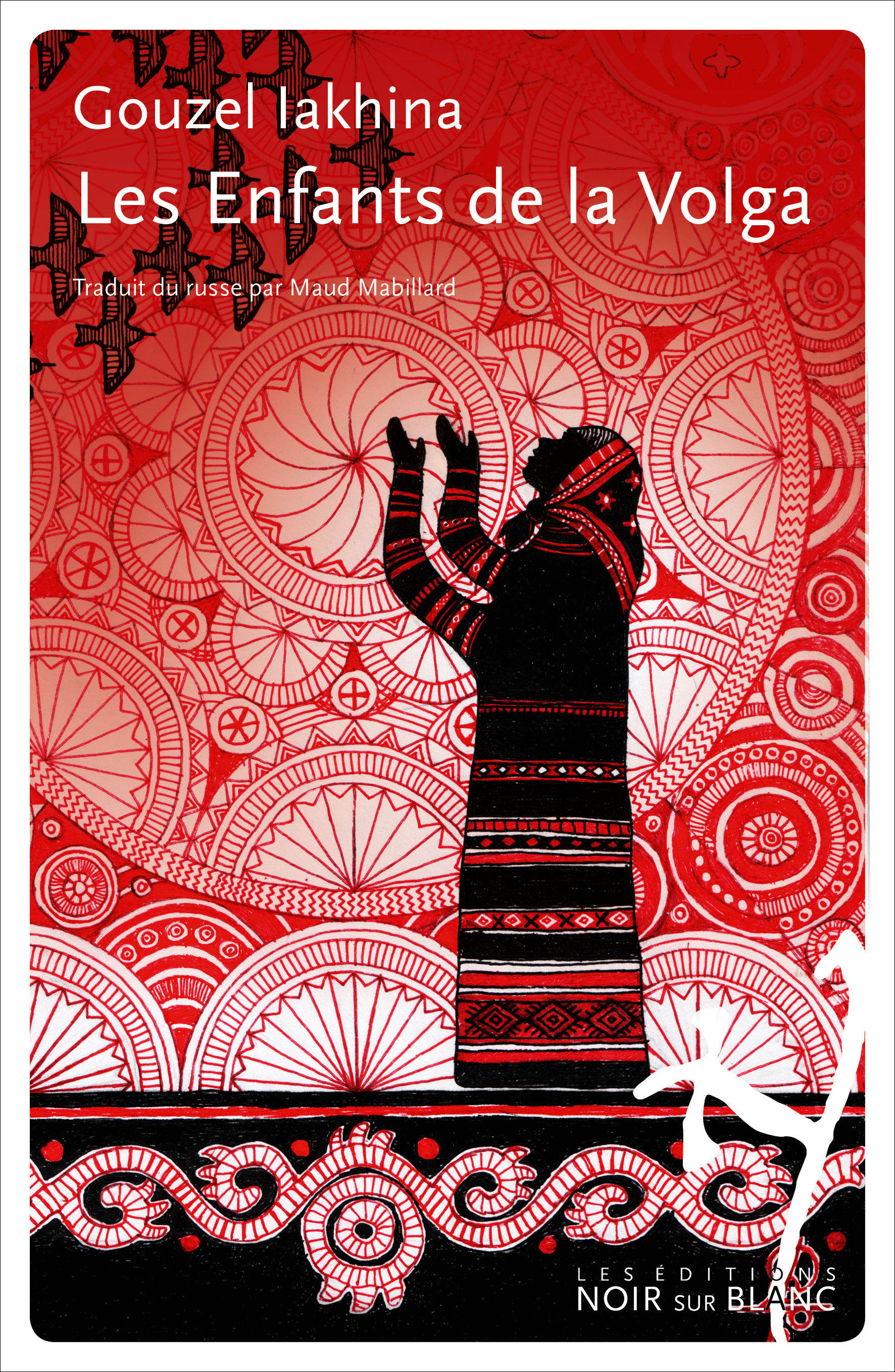
The Russian title of the novel, My Children, comes from Catherine II’s words of welcome to the first settlers who arrived in the Volga region from various German territories at her invitation. In the book, of course, the words acquire a broader, universal and philosophical resonance. Yet both the German and French translations were published under the title Children of the Volga. Does this represent a loss for the reader, a narrowing of the title’s meaning?
Let me begin with a little historical background. In 1763 and 1764, Catherine II issued manifestos inviting her German compatriots to settle in Russia and promising them land to cultivate. As a result, a German enclave arose and developed around Saratov. This was before German unification, and the settlers brought with them the customs, outlooks and dialects of their small German homelands, preserving them into the Soviet period.
As for the title, there is indeed a scene in the novel in which Catherine, standing on the quay at Oranienbaum, welcomes her compatriots. On behalf of the state, she promises them protection and parental care, receiving them into the great family of Russia’s peoples. More than a century later, another Russian ruler, Stalin, deprives them of that paternal protection.
On Stalin’s orders, the Volga German Autonomous Republic was abolished after Nazi Germany invaded the Soviet Union. The country’s leaders regarded Russia’s Germans as Trojan horses who might prove treacherous at a critical moment and defect to the enemy. All Germans were consequently deported to remote parts of the country: Siberia, the Altai and Kazakhstan.
Stalin made orphans of an entire people. That is why the parallel between two fathers was so important to me: the ‘Father of Nations’, who withdrew his love not only from the Germans but from many other ethnic minorities, and Bach, who devotes his entire being to two adopted children.
I proposed the title Children of the Volga myself. In translation, the inverted word order of the Russian title, My Children, which is rarely used in Russian and lends the phrase an elevated register, simply does not work: its particular resonance is lost. Children of the Volga seems to me an appealing title for foreign readers. It promises a story about Russia and reflects the meaning of the novel, because over the course of a hundred and fifty years on the Volga, the Germans put down roots in that land, came to love it and became its children.
The settlers Catherine ‘enticed’ to Russia, whose descendants met such a tragic fate, inevitably bring to mind the White Russians whom the Soviet government persistently encouraged to return to their homeland after the war. Many of those who believed its promises found no proverbial rivers of milk awaiting them: if not death, then the camps. Did you consider this parallel?
No, I did not, although I did think about all the ethnic minorities subjected to repression. An entire chapter of the novel is devoted to Stalin’s reflections on nationalities policy, his decision to abolish the Volga German autonomy, and his assessment of the campaign of ethnic ‘purges’ and deportations.
We must remember the Chechens, Ingush, Romanians, Albanians, Koreans, Ingrian Finns and many others. Stalin did not fear only the Germans. It was fear that dictated his actions.
And so we have returned to the theme of fear with which our conversation began. You said that the novel’s central subject was fear and the overcoming of it. Yet it still seems to me that this novel, like the other two, is about love, which is stronger than fear.
Let us say that it is also about love. I understood that I was not writing about an easy subject, that I was sometimes describing tragic events, and I wanted to fill the text with the love that people feel for one another.
Bach learns to love late in life, but gives himself to it with all his passion: to his love for Klara, for his daughter and for Vaska, the Kyrgyz boy he takes in. This fan of affections gradually unfolds and fills his life, joining his newly awakened love of artistic creation and his love for the Volga, which becomes a symbol of time.
I read somewhere that immediately after the publication of My Children, you signed an agreement for a feature-film adaptation to be directed by Alexey Uchitel. Is that true? And if so, after your experience with the adaptation of Zuleikha, do you regret that decision?
No, I do not regret it! The project is a difficult one, however, and these are difficult times. The pandemic disrupted many plans and reduced filmmakers’ already modest budgets. But the agreement has been signed and remains in force. The screen rights belong to Rock Films, Alexey Uchitel’s studio, and I cannot say anything more about the project for the moment.
Then all we can do is be patient and wait for the French translation of Train to Samarkand, the screen adaptation of A Volga Tale and, of course, the fourth novel.