La ville de Slavoutytch est la plus jeune d’Ukraine. Située à cinquante kilomètres de la centrale de Tchernobyl, elle a été construite par les autorités soviétiques immédiatement après la catastrophe de 1986, à la lisière de la zone contaminée, afin de loger les liquidateurs et le personnel affecté à l’entretien des réacteurs encore en activité. Conçue comme la ville idéale soviétique pour travailleurs de choc, Slavoutytch abrite 25 000 habitants.
Trente ans après l’accident, une nouvelle génération est née et a grandi à Slavoutytch, à l’ombre de la plus grande catastrophe nucléaire de l’Histoire. Niels Ackermann est parti à la rencontre des habitants, de cette jeunesse pleine de rêves et d’espoirs. Il rencontre Ioulia, une adolescente qui lui présente ses amis et lui montre les différentes facettes de la ville. Au fil des séjours du photographe, entre 2012 et 2015, Ioulia se transforme peu à peu en une jeune femme, qui perd ses rêves et se voit confrontée à la réalité.
Loin des discours catastrophistes ou misérabilistes, loin des clichés en noir et blanc, Niels Ackermann et le journaliste Gaetan Vannay montrent dans L’Ange blanc leur amour pour l’Ukraine, et toutes les interrogations sur la vie qui continue, dans cette région pas tout à fait comme les autres.
Né en 1987, Niels Ackermann est un photographe suisse qui partage sa vie entre l’Ukraine et la Suisse. Photographe de presse, il travaille notamment pour Le Temps, Le Monde, la Neue Zürcher Zeitung, le New York Times, le Wall Street Journal… Il vient de fonder une nouvelle agence photographique, Lundi13, avec Fred Merz, Guillaume Perret, Nicolas Righetti et François Wavre. Son reportage photographique sur la ville de Slavoutych a reçu le prix du jury et le prix du public au Prix Photo 2015, à Zurich, ainsi que le prix Globetrotter en 2013, le prix Focale Ville de Nyon en 2015, et le Swiss Press Photo 2016.
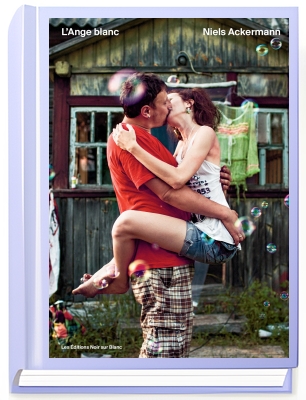
Niels Ackermann : L’Ange blanc. Les enfants de Tchernobyl sont devenus grands, Les Editions Noir sur Blanc, 2016, 180 pages.
About the author

Nadia Sikorsky was born and raised in Moscow. She graduated from the Faculty of Journalism at Moscow State University and went on to complete her postgraduate studies there, earning a PhD in History. She spent 13 years at UNESCO, first in Paris and then in Geneva. After serving as Director of Communications at Green Cross International, founded by Mikhail Gorbachev, she launched NashaGazeta.ch in 2007, Switzerland’s first Russian-language online daily newspaper.
In 2022, Nadia Sikorsky was named to Le Temps’ Forum des 100, which brings together individuals who, in the newspaper’s view, have “significantly contributed to the success of French-speaking Switzerland”, from across public life, business, politics, science and culture.
After 18 years at the helm of NashaGazeta.ch, Nadia Sikorsky decided to devote herself to what had always held a special place in her work as a journalist: culture in all its diversity. This led to the creation of Russian Accent, a trilingual cultural blog in Russian, French and English, born in the heart of Europe, in Switzerland, which has become her second home and whose multiculturalism and multilingualism have helped shape the character of this new project.
At the heart of the project is the perspective of a European of Russian origin, drawing on more than 35 years of professional experience and a deep knowledge of both cultural traditions. Nadia Sikorsky sees her role as that of a cultural mediator between the two. The title of the blog, Russian Accent, reflects this idea: the accent is neither a linguistic barrier nor a political position, but a distinctive cultural imprint within a European context.