The life of Jewish entertainer Kurt Gerron is a truly extraordinary and unique story, and Lewinsky does it ample justice in this epic novel. Telling the story from the perspective of Gerron, star of stage and screen in the pre-war years, Lewinsky keeps a balance between the gregarious cynicism of Gerron’s legendary stage persona and an unflinching record of the horrific events unfolding around him. In this way, the author succeeds in viewing the Holocaust through a new and startling lens.
Imprisoned in Theresienstadt, Gerron is asked to direct a propaganda film about this ‘paradise ghetto’. He isn’t accustomed to moral reflection and, to avoid the terrible choice he’s been forced to make, he escapes into his memories. With gusto the entertainer recalls his youth, his rise and fall in show business, and the long, cruel sequence of events that have led to his imprisonment. The horrific world of the concentration camp seeks to reduce him to nothing; he needs to remember that he was once someone, starring opposite Marlene Dietrich in The Blue Angel and premiering ‘Mack the Knife’ in The Threepenny Opera. Eventually, he agrees to make the film, if only to save his wife and the participants in the film from deportation.
Directing, he feels himself once again. But the entire process is full of macabre jokes, which Gerron notes with bitter irony; only, of course, there is nothing funny at all about Theresienstadt. The film is never edited properly, and one day Gerron finds that he has been assigned to a transport: the comedy of his life will reach a horrific end. Gerron’s voice is cynical, wry and warm. Lewinsky has chosen to dispense with the modernist aesthetics often thought appropriate for Holocaust literature in German, instead telling the story in a straightforwardly realist fashion through Gerron’s acerbic voice, which is knowing while also being ignorant of the scale of the genocide around him. As he is tugged back to the reality of his life in the concentration camp again and again, he draws cynical parallels between the scenes of his youth – his snobbish mother, in the trenches, on the stage, performing cabaret in a transit camp – and the bitter absurdities of his current existence. His anecdotes are lively, scurrilous and rambling, and his remarks on Theresienstadt and Nazism perceptive and biting without ever deteriorating into pontification.
A gripping and moving masterpiece.
‘Truly a literary miracle.’– Neue Zürcher Zeitung
‘A love story. Without question. Narrated by Lewinsky as if he were Kurt Gerron, that comedian of banality, standing at the abyss but then growing above and beyond it.’
– Die Welt
‘A wonderful, moving, clever book.’
– Norddeutscher Rundfunk
Рецензия Александра Терехова, лауреата премии "Большая книга", здесь.
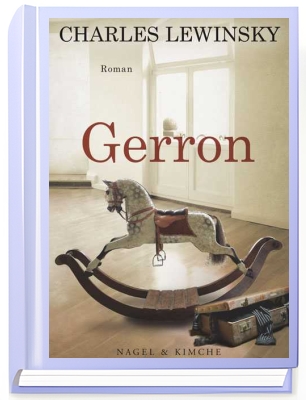
Charles Lewinsky: "Gerron", Nagel & Kimche, 2011
A propos de l’auteur

Nadia Sikorsky est née et a grandi à Moscou. Diplômée de la faculté de journalisme de l’Université d’État de Moscou, elle y a également poursuivi des études doctorales et obtenu un doctorat en histoire. Elle a travaillé pendant 13 ans à l’UNESCO, d’abord à Paris, puis à Genève. Après avoir occupé le poste de directrice de la communication de la Croix-Verte internationale, fondée par Mikhaïl Gorbatchev, elle crée en 2007 NashaGazeta.ch, le premier quotidien russophone en ligne de Suisse.
En 2022, Nadia Sikorsky a rejoint le Forum des 100 du Temps, qui réunit des personnalités ayant, selon la rédaction, « sensiblement contribué au succès de la Suisse romande », issues de la vie publique, économique, politique, scientifique et culturelle.
Après 18 ans à la tête de NashaGazeta.ch, Nadia Sikorsky a décidé de se consacrer à ce qui a toujours occupé une place particulière dans son travail de journaliste : la culture dans toute sa diversité. C’est ainsi qu’est né « L’Accent russe », un blog culturel trilingue en russe, français et anglais, au cœur de l’Europe, en Suisse, devenue sa seconde patrie et dont le multiculturalisme et le multilinguisme ont contribué à façonner le caractère de ce nouveau projet.
Au cœur du projet se trouve le regard d’une Européenne d’origine russe, forte de plus de 35 ans d’expérience professionnelle et d’une connaissance approfondie des deux traditions culturelles. Nadia Sikorsky conçoit son rôle comme celui d’une médiatrice entre ces deux cultures. Le titre du blog, « L’Accent russe », reflète cette idée : l’accent n’est ici ni une barrière linguistique ni un positionnement politique, mais une empreinte culturelle singulière dans le contexte européen.