
Vadim Repin: “The Profession Comes First”
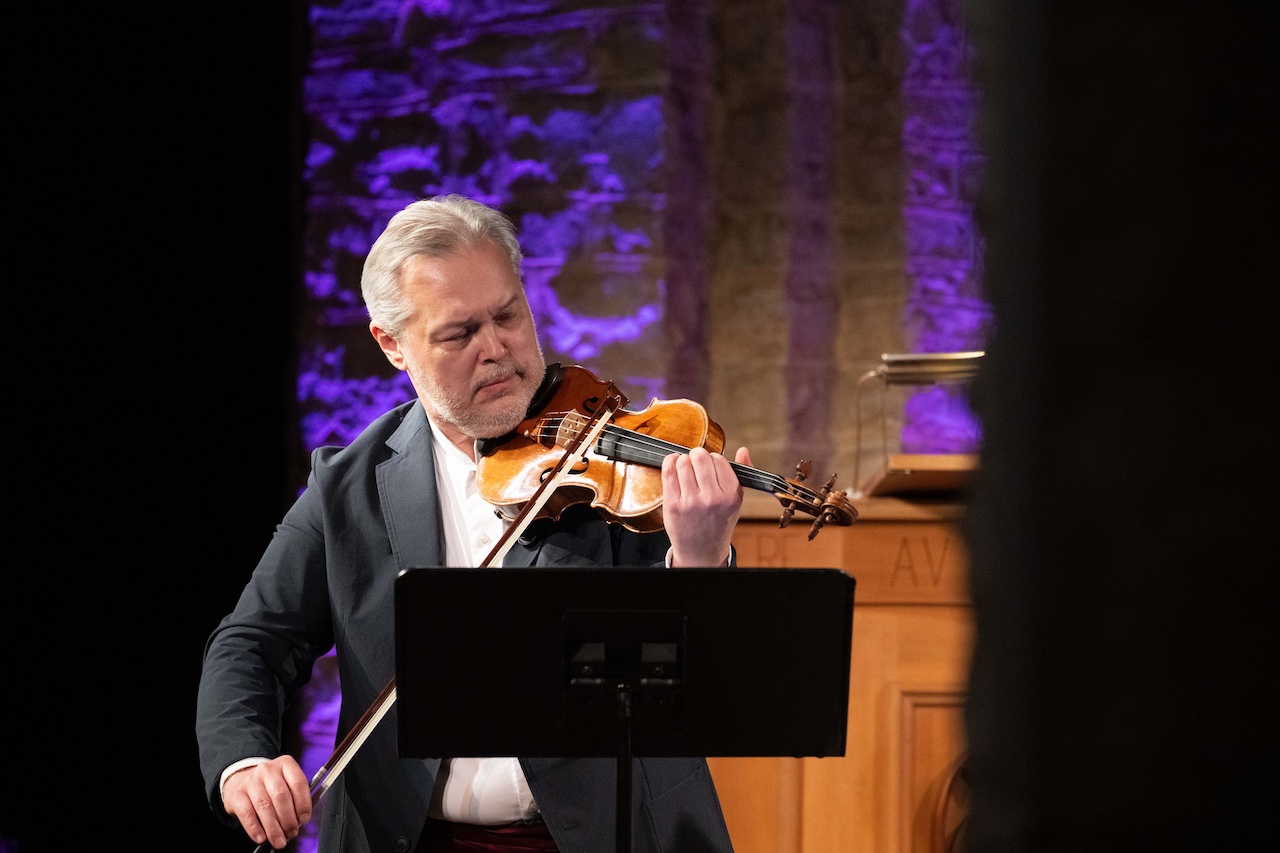
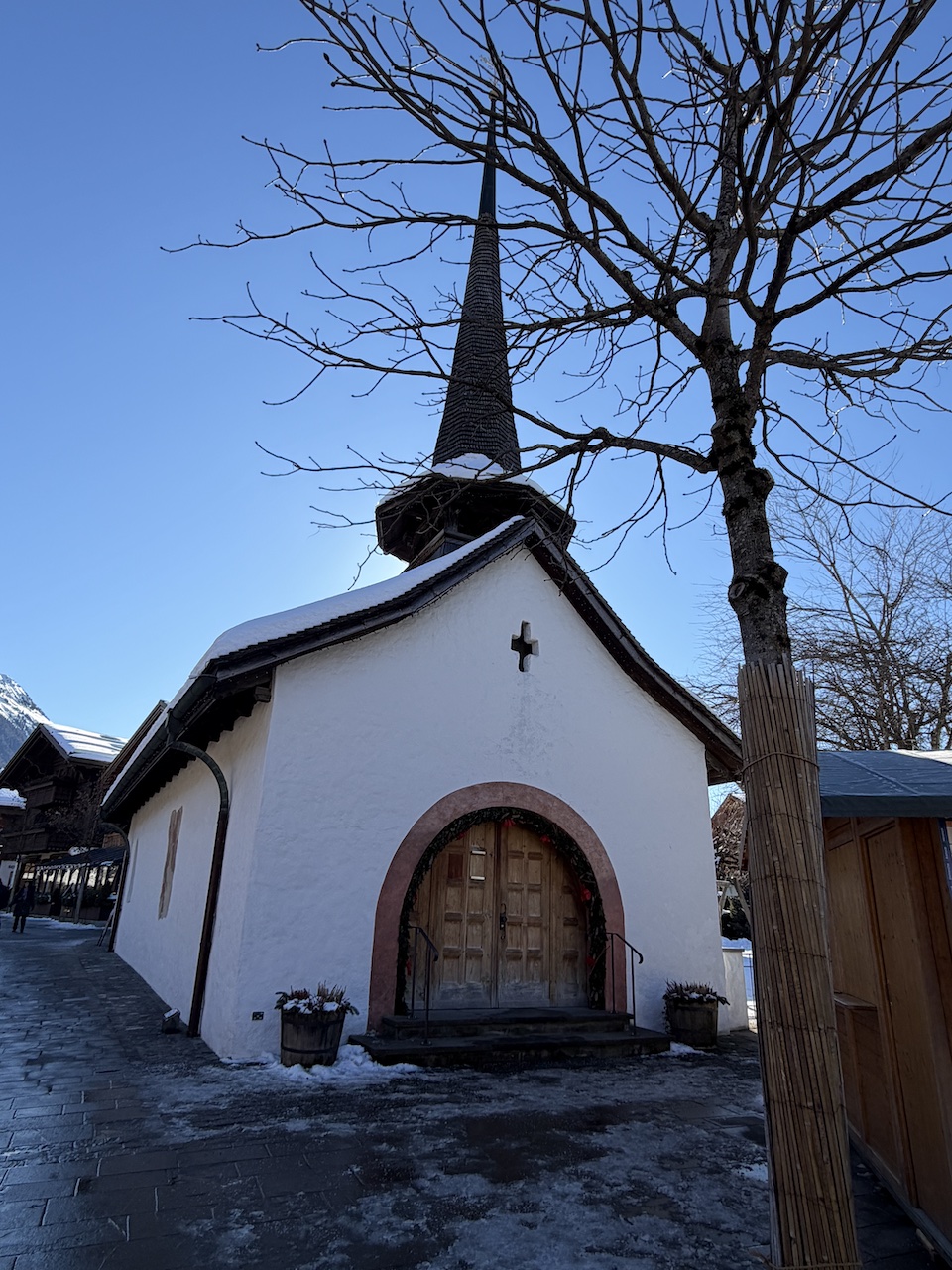
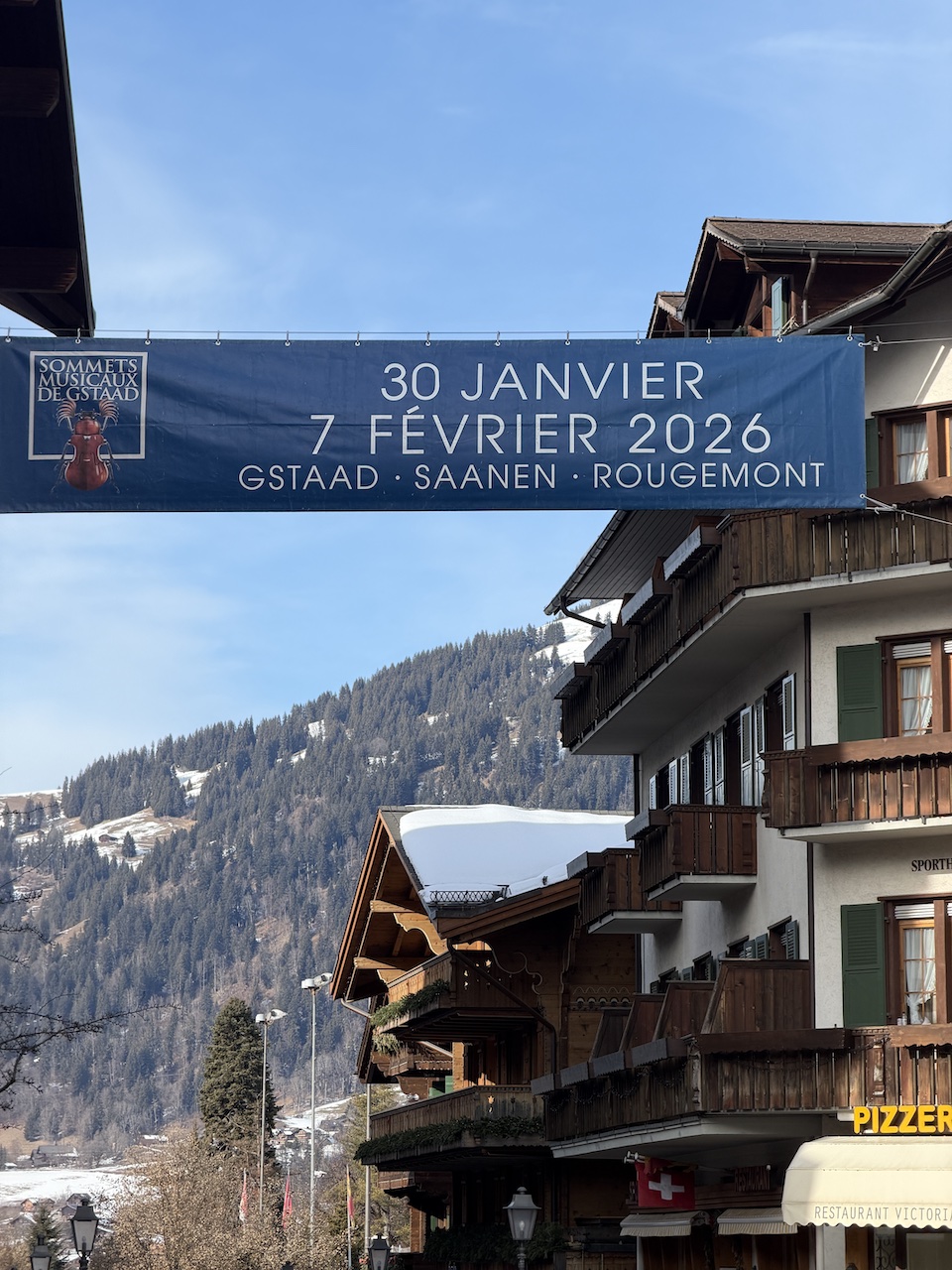
Introducing the program of Les Sommets musicaux 2026, which concluded last weekend in Gstaad, I mentioned that the presence of the Russian violinist Vadim Repin had not met with unanimous approval. The organizers received letters demanding explanations and, in some cases, calling for the cancellation of his concert. The position of the festival’s artistic director, the French violinist Renaud Capuçon, did not waver. Some journalists who are regulars at the festival chose this time to stay away, but beyond that nothing out of the ordinary occurred. Repin rehearsed, spoke with colleagues and members of the audience, and worked attentively with young violinists. During their afternoon concerts in the chapel, he would sit at the back of the hall, listening closely before offering his impressions and advice.
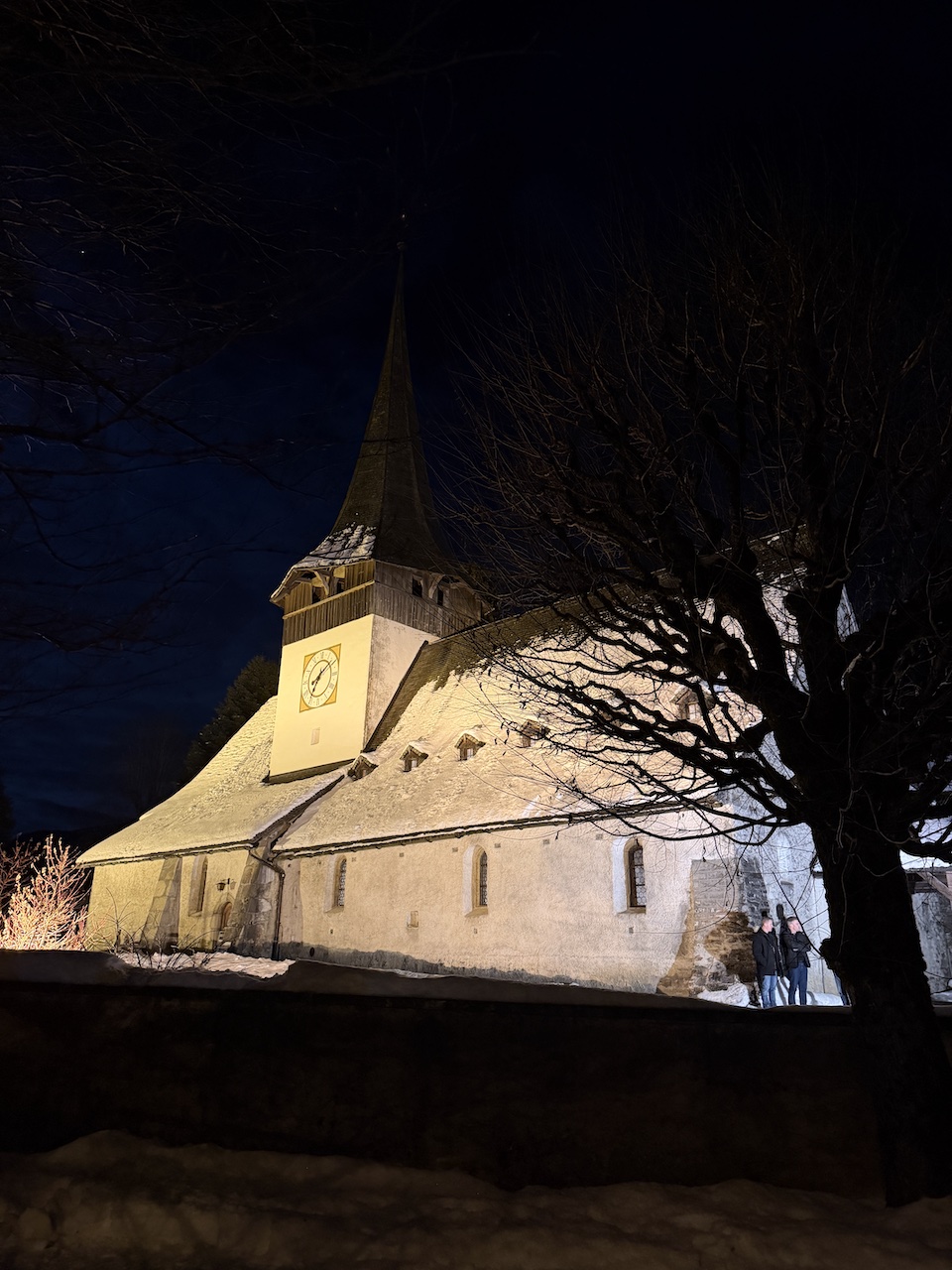
On the day of Repin’s concert at the church in Rougemont, there was talk of a possible need to call the police, but this proved unnecessary. No protest took place. The concert itself was remarkable. The audience was fully engaged, including a Ukrainian journalist based in Geneva, who applauded along with everyone else.
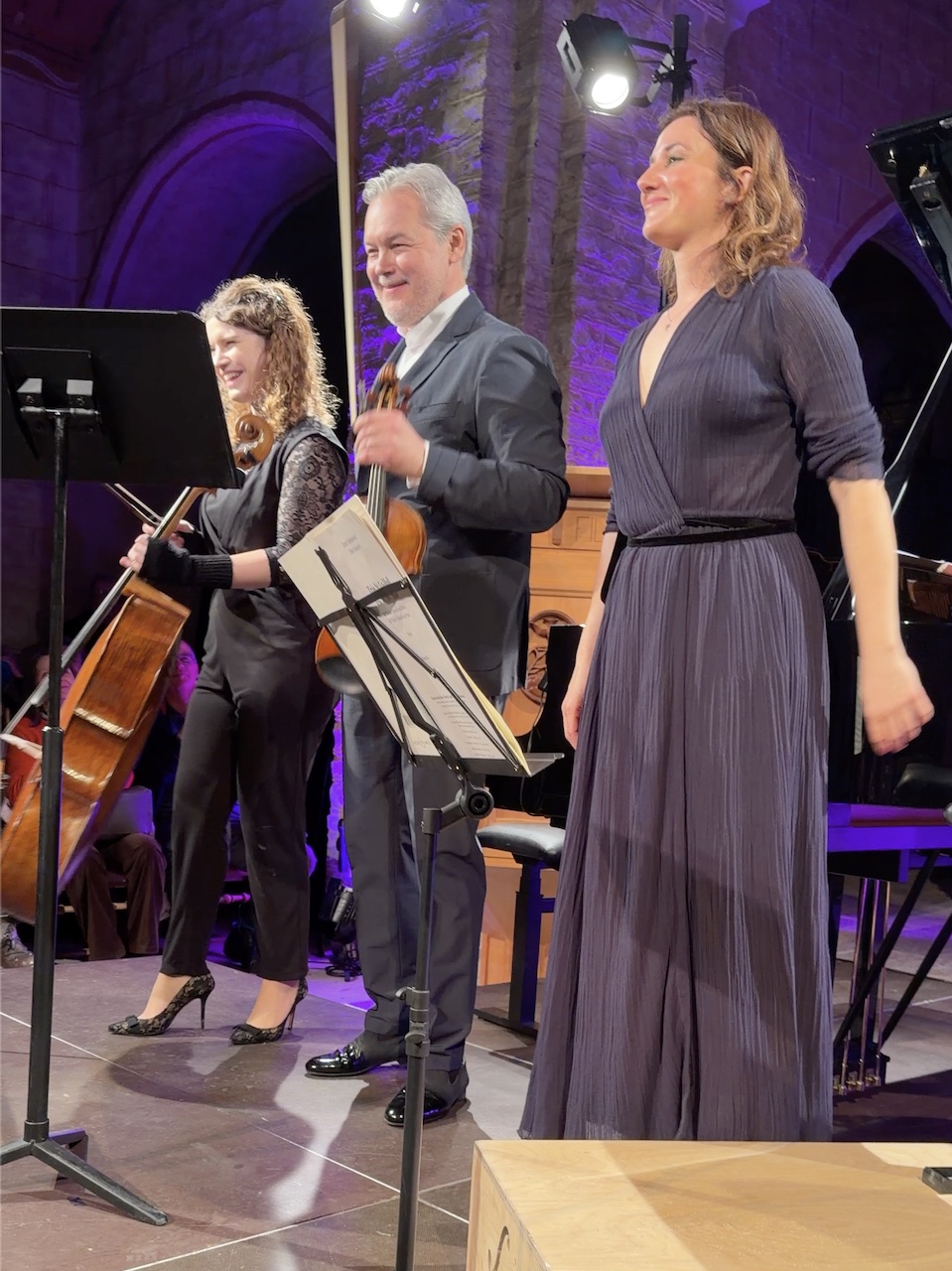
For me, the heart of the evening lay in the music of Shostakovich and Tchaikovsky, so well known to me, and in its compelling interpretation by a trio formed for the occasion, bringing together Vadim Repin with Martina Filjak, piano, and Julia Hagen, cello. Another detail also struck me. In all my years of attending this festival, I had never seen a musician step onto the modest stage, dressed with such impeccable elegance – patent-leather shoes and a burgundy cummerbund included – as Vadim Repin did, in a church built around 1080 by the monks of Cluny. This did not seem a matter of habit, but rather a deliberate gesture of respect toward both the organizers and an audience that welcomed him with evident warmth.
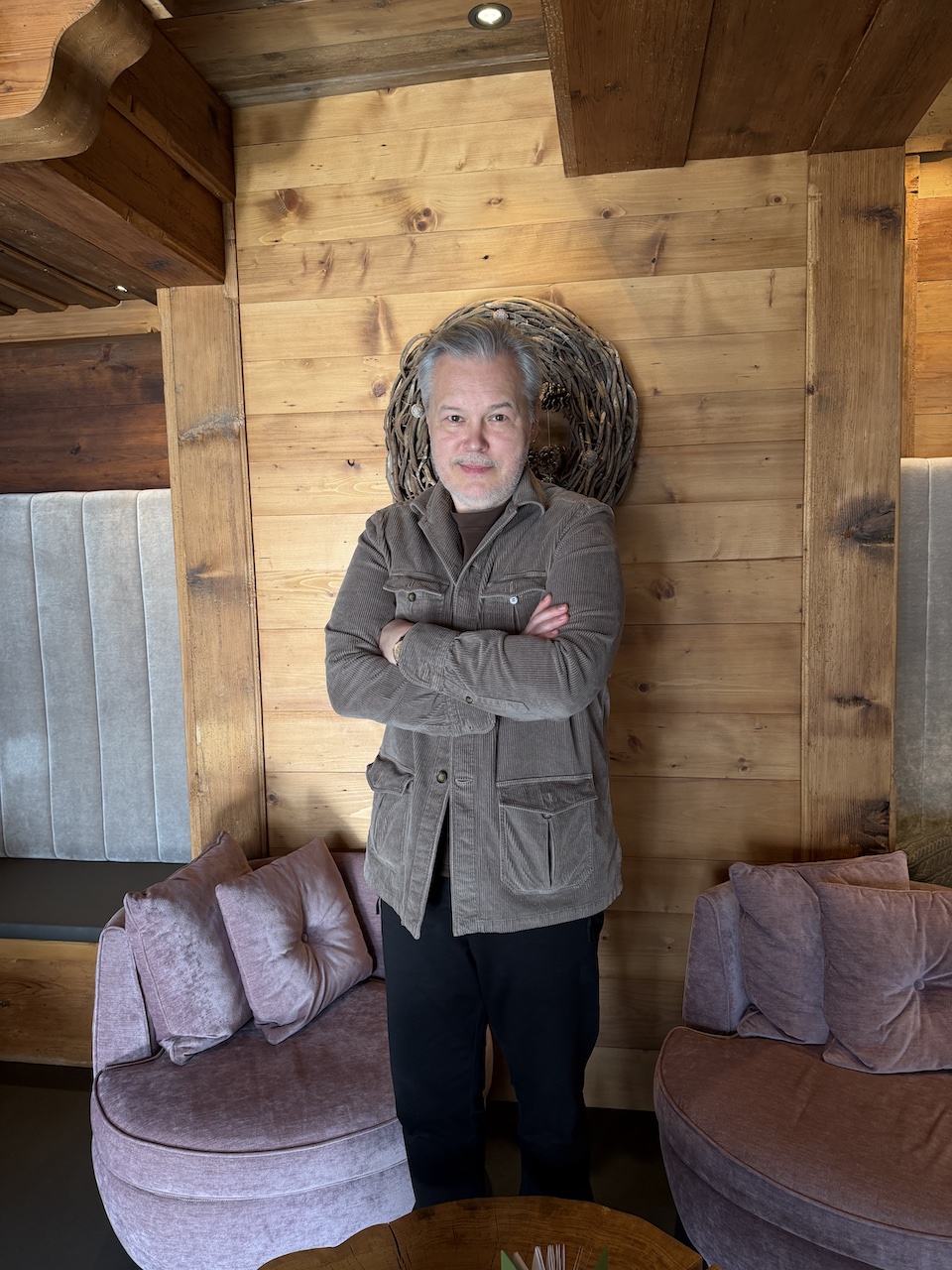
He showed the same respect toward me, arriving for the interview at the agreed time, to the minute. (Few musicians, in truth, would agree to an interview on the very day of a concert.) I admit that I hesitated before embarking on this conversation. It has been four and a half years since I last saw my parents, who live in Moscow, and I do not know when I will see them again. Yet Repin is from Moscow. On the other hand, if young Ukrainian musicians, now refugees, did not give up on attending his master class, even if they preferred to converse in English, I, too, could set my reservations aside. In the end, I decided to approach this interview in a strictly professional manner, without emotion: to ask the questions that mattered to me and to try to avoid receiving ready-made formulas or evasions in return. I believe the exchange lived up to that intention. I share it here.
Vadim, when you granted me a first interview at the Verbier Festival in 2009, you spoke of how much you enjoyed living in Geneva. Where do you live today?
Today I live between Moscow and Vienna, and have done so for about fifteen years. When I have only short intervals between trips, Vienna is extremely convenient. But as soon as the window is a little wider, I take the first flight to Moscow. My family is there, above all my mother.
How long had it been since you last played in Switzerland?
Probably seven or eight years. First there was the pandemic, and then the past four years.
We left the USSR in the same year, 1989, the year the Berlin Wall fell. I am a little older than you, so I left for Paris on my own, whereas you, Maxim Vengerov, Natalia Prischepenko and Nikolai Madoev were taken to Germany by your teacher Zakhar Bron. Were you happy about it at the time?
Of course. Everything was so new! By that time I had already won the Queen Elisabeth Competition, but what mattered most was staying with my teacher, who had received an invitation to teach in Lübeck. He made enormous efforts to secure the best possible conditions for us. Maxim and I were already earning a living, while the others had not yet experienced such a breakthrough. So, we gave concerts together and sought funding for the other students. It was an extraordinary period because what matters most for a musician? The stage, the audience, and an opening onto the world.
In Russia today it has become fashionable to criticize Mikhail Gorbachev. For my part, I am deeply grateful to him. Without him, my life would have been entirely different. What about you? How would your life have unfolded without perestroika?
History, as we know, does not tolerate the conditional. I cannot say whether it would have been better or worse, simpler or more difficult. Even today I remain outside geopolitics, and all the more so when I was fifteen or sixteen. Things happened as they were meant to happen. Life is a succession of decisions, small and large, which ultimately form a destiny. We were all convinced, based on the Russian tradition Professor Bron passed on to us, that we were born to be soloists and nothing else. Yet it was in the 1990s that I discovered chamber music in a profound way and devoted myself to it extensively. At that time it was flourishing in Europe, with a multitude of ensembles. Today this momentum has faded, most probably for financial reasons. The number of chamber music concerts has, in my observation, dropped by more than half, at least in major halls. All the work of those who had built networks and sought patrons to bring the finest ensembles to audiences has collapsed. This experience remains very dear to me, and I try to to carry it forward by giving chamber music a central place in the programming of our festival in Novosibirsk.
It is no secret that Zakhar Bron was marginalized in the USSR because of his Jewish origins, and that the careers of his students were long hindered, particularly in Moscow and Leningrad. Yet someone always ended up opening a door. Looking back today, do you think Zakhar Bron employed an Aesopian language transposed into music, and that it was no coincidence that, after your victory at the Wieniawski Competition in Lublin, he had you work on Tikhon Khrennikov’s First Concerto, Khrennikov having since 1948 held the post of Secretary General of the Union of Soviet Composers?
Perhaps. I met Tikhon Nikolaevich in 1983, thanks to Igor Oistrakh, who had been Bron’s teacher, and he truly became our patron. The situation was not easy for Bron, certainly, but Khrennikov sincerely admired not only my work but also that of Bron’s other students, and he supported Bron in a remarkable way. He recognized his talent and his stature in the profession. Tikhon Nikolaevich was accessible for advice on a wide range of issues, from exit visas to the acquisition of instruments. Maxim and I played on the finest instruments from the state collection, Stradivarius violins, only thanks to Khrennikov’s personal request and initiative. To this day I retain the memory of the warmth with which he surrounded us.
You always speak of Zakhar Bron with deep respect and gratitude. Are you still in contact with him today?
Yes, of course. He recently celebrated his birthday. He is in great shape, in excellent spirits, his voice strong. He is still fully immersed in the profession, and it is impossible to contain such a force of nature! Where on Earth does he draw this daily energy from, for more than fifty years?! In the constellation of my lucky stars, he is one of the most important. Imagine this: I was born in Novosibirsk and, in the same year, he settled there, waited five years for me to take a violin in my hands, and gave me a profession.
At the festival “Les Sommets musicaux ” de Gstaad, you are present not only as a performer, but also as a mentor to young violinists. What are your impressions? Had you received any information about them in advance, for example recordings, or did you discover everything on site?
No, I had received nothing in advance, I relied entirely on Renaud Capuçon. I do not teach anywhere on a permanent basis, but master classes are part of my daily life. Wherever I come, especially in major cities with an academy or conservatory, I often find a letter inviting me to exchange ideas and give a master class. If time allows, I always do so with pleasure. From the very first edition of our festival in Novosibirsk, we set ourselves the goal of passing on to the next generation not only our own knowledge, but also that of our distinguished guests.
In Gstaad, I placed my trust in Renaud, who personally selected all the candidates as this is a competition, not an open call. Each day I met new young musicians, spoke with them, and tried to offer a few useful suggestions. My overall impression is extremely positive. Some are already fully formed artists, others still need time and life experience, but the level is exceptional, to the point that many international competitions could pride themselves on such a group of finalists.
According to festival tradition, all participants in the master classes were required to learn a work by a contemporary composer written especially for the occasion. What did you think of Bleu sur bleu by the French composer Yves Chauris?
I heard it for the first time on the opening day of the festival. It is contemporary music, sometimes with a minimalist dimension. Various thoughts arise as one listens, but its principal value, in my view, lies in the fact that everything depends on the performer. The performer can raise it to a philosophical level, or bring color and nuance to it, creating a genuinely impressionistic musical canvas.
Our last meeting dates back to December 2018, in Saint Petersburg, at Yuri Temirkanov’s jubilee. What have been the most important events in your life since then?
Yuri Temirkanov has left us, and my heart remains deeply wounded by his loss, so close was he to me. His character, his way of forging relationships, his talent, his artistic stature, all drew people to him. The spiritual kindness that emanated from him was unique. For many generations of artists, his passing represents an immense loss.
As for my own life, shortly thereafter the pandemic began, confinement was decreed, and I experienced perhaps the happiest period I had known in many years. Touring usually leaves only a few days for family, whereas then we spent long months together without parting. During that time something remarkable happened. My wife and daughter continued to work to stay in shape, while I used that time to expand my repertoire. This was essential, because over the years of the Novosibirsk festival’s existence I had played an immense number of works, and it was becoming difficult to propose new programs capable of surprising our audience. My repertoire was thus enriched with many major works, which still bring me precious artistic dividends today.
How has musical life in Russia evolved in recent years?
In recent years an entire constellation of remarkable conductors has emerged. There were, of course, a few isolated figures before, to whom we may not have paid sufficient attention. Today it would take more than two hands to count them, and each has something distinctive. Working with them is a genuine pleasure.
Is this explained in part by the fact that many conductors have left the country or no longer perform in Russia?
Yes, in part. Space has opened up, and new talents have been able to unfold fully.
On February 24, 2022, a rupture occurred not only politically, but also culturally. Many artists decided to leave Russia or to stop performing there. You, by contrast, received, in April 2022, the title of People’s Artist of Russia. This title, which was introduced in the USSR in the early 1930s, functioned as a means of reward for artists loyal to the authorities. Did you appreciate this “gift”?
I do not know how things were done nearly a hundred years ago, but the title of People’s Artist is first and foremost an artistic distinction, and I am proud of it. For a Russian artist who, like me, grew up in the Soviet Union, where one’s character and the foundations of an entire professional life were formed, this title is not merely symbolic. It represents recognition of an immense body of work, of countless tours through hundreds of Russian cities, of the creation of a festival, and, if you like, of a popularity with the public over which neither an official title nor the status accompanying it has any direct influence.
I will cite one example that particularly struck me. During the coronavirus pandemic, while confinement was in force, a gala concert was held at the Bolshoi Theatre in tribute to doctors who were saving patients at the risk of their own lives. The hall was empty, but many leading artists took part. It was a beautiful initiative, broadcast on television. On that occasion, I was already being presented as a People’s Artist, as if it went without saying, even though, formally, I had not yet received the title.
Did the moment chosen for the attribution of this distinction, barely a month after the beginning of “the special military operation”, trouble you?
It was a coincidence. The attribution of the title of People’s Artist is a long procedure, at the end of which decisions are taken by a council attached to the president.
What was your reaction when colleagues and friends of yours were placed on the list of “foreign agents”?
Everyone makes their own decision. During that week in February, I realized that my family was what mattered most to me. They are in Russia, as is my Novosibirsk festival, in which I have invested so much energy and emotional strain. It was essential for me to try, through this festival, to give back to my native city a part of what it had given me during my formative years. The school, the conservatory, the symphony orchestra, Maestro Arnold Katz, many teachers in different disciplines all contributed to making me a musician. I therefore never doubted that my place was there, in Russia.
It is impossible not to address uncomfortable issues. Quite recently, your concerts were cancelled in Italy, then in Germany. Your appearance in Gstaad also sparked controversy. How do you yourself respond to the reluctance to see you on many European stages? Do you consider this unfair, or do you understand the reasons behind it?
This is more a question for the organizers. As for my own reaction as an artist, of course it is unpleasant. Artists are easy targets. The task of art in general, and of us artists in particular, is to build bridges, and cultural bridges are the strongest of all. It is no coincidence that my festival is called the Trans-Siberian Festival, conceived as an axis between East and West. At all times, artists have sought reconciliation, have tried through their work to offer people a refuge, to prevent the last threads that bind us from being severed. I express my feelings through music, and they can be understood best of all at my concerts.
The program in Gstaad included two works. One, Shostakovich’s Trio, is the result of a first love, whether happy or not is beside the point. The other, Tchaikovsky’s Trio, is a requiem for a great artist.
You have just used an important word: “reconciliation”. Do you personally, as an artist, Vadim Repin, seek reconciliation?
No, I seek the deeper meaning of the music I am about to perform, because I, like any classical artist, am an interpreter. My role is to take the audience by the soul and lead it through music on a journey imagined and given to us by great composers. For part of the audience this is simply entertainment; another part takes part in this journey, empathizing with the performer. And so I, as an artist, stepping onto the stage, must, whatever my personal feelings may be, first portray the purest love, and ten minutes later the deepest mourning and compassion.
You had not performed in Switzerland for so many years that your admirers were probably expecting a solo concert rather than a chamber ensemble. Was this your choice?
No, it was a joint decision with Renaud Capuçon, who very much wanted Tchaikovsky’s Trio to be included in the program. For me, this work is one of the jewels of world music, so I was delighted by his suggestion. More generally, it is wonderful that this festival presents different genres, and for me it was a great pleasure to perform for the first time with colleagues who were new to me.
We journalists like to look for hidden meanings everywhere, even in the choice of musical works. One might say that Shostakovich has given rise to no controversy even in 2022, whereas Tchaikovsky has and continues to do so. Their association within a single program can therefore be read in various ways. Is there any basis to this reasoning?
As I have already said, the choice was made by Renaud and by me, without any hidden intention. It rested exclusively on the artistic qualities of these works. In times such as ours, the reaction of the public is unpredictable. Everyone hears music in their own way. Ask three people and you will receive three different impressions. The strength of art lies in its ability to convey emotion directly, without context or filter. Some find consolation in Shostakovich, others in Tchaikovsky, and still others in both.
Tchaikovsky dedicated his Trio to Nikolai Rubinstein, founder of the Moscow Conservatory, without stating this explicitly, entitling the work In Memory of a Great Artist. Many musicologists have seen in this a desire to create a universal figure of the Artist. Do you think artists can truly stand apart from the realities of life?
For us, the profession comes first. Whatever the repertoire, whatever your state of mind, whatever you carry in your heart, or however many hours you have spent on airplanes, you must be absolutely honest with your audience. This occupies the greater part of our lives. One cannot step onto the stage without being prepared, without being at one’s highest level. Our work is constant. Sometimes one cannot sleep at night when learning a new work, so completely does it occupy the mind. I dreamed of this profession from childhood, of that magical word, “tour”, when you do not know where you will land but you know what you must do. It almost resembles an addiction. No, this word is not a good one. Let us rather say a vocation, to which one devotes childhood, youth, and an entire life. And when one reaches a certain age, it does not become easier, but more demanding still, and more time-consuming. Among musicians there is a saying: you are worth what your last concert was worth.
Where do you see yourself in five years?
My festival will be eighteen years old. My son will be an adult, and my daughter will be entering another stage as well. What awaits me?! I cannot help boasting, by the way. In recent days, at international rhythmic gymnastics competitions in Italy, my daughter won all the gold medals, as well as the gold in the overall standings. I am immensely happy and proud.
Would you like to add anything in conclusion?
I would simply like to thank Renaud Capuçon, who has undoubtedly been under considerable pressure from all sides. We have been friends for many years, I deeply admire his art. We see each other less often today, to be sure, but the friendship remains.