
Minotaur Without Theseus

Film lovers need no introduction to Andrey Zvyagintsev, one of the best-known and most internationally acclaimed contemporary Russian directors. His very first feature film, The Return (2003), won the Golden Lion at the Venice Film Festival. It was followed by The Banishment (2007), Elena (2011), which received the Special Jury Prize in the Un Certain Regard section at Cannes and, in December 2019, became the only film from Russia included in the American magazine Rolling Stone’s list of the 50 best films of the 2010s; Leviathan (2014), which won the Best Screenplay Award at Cannes and the Golden Globe for Best Foreign Language Film; and Loveless (2017), which received the Jury Prize at Cannes. Both Leviathan and Loveless were submitted by Russia for the Academy Award and went on to receive nominations. And that is just the tip of the awards iceberg.
There was a nine-year wait for his next film. Such a long break had both personal and external causes: in 2021, the director became gravely ill with Covid, came close to death and underwent lengthy treatment and rehabilitation abroad. The war against Ukraine, which began in February 2022, made his return to Russia impossible. Zvyagintsev had already taken a clear public stand in 2014, openly condemning the annexation of Crimea.
The new Minotaur continued the impressive run of international successes enjoyed by the Russian director, now living in France, but… with aggravating circumstances.
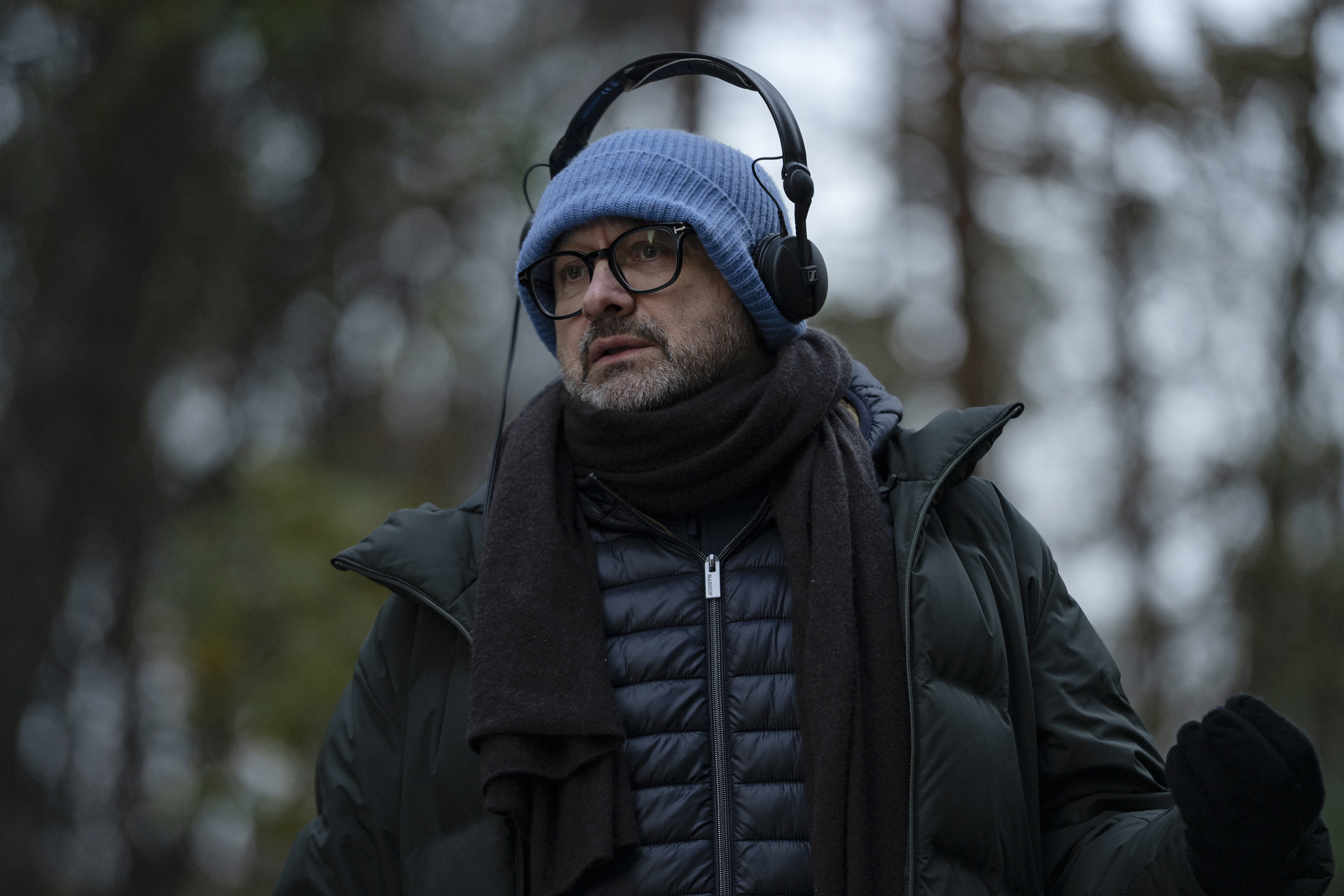
On 23 May 2026, while accepting the Grand Prix at the closing ceremony of the Cannes Film Festival, Zvyagintsev appealed to Russian President Vladimir Putin to end the war against Ukraine. Who, one might think, could possibly object to that? Yet his words provoked a debate no less heated than the one surrounding the film itself. For some, they represented a courageous anti-war statement; for others, they showed that even Russians opposed to the war do not fully recognise their country’s responsibility for what is happening. Ukrainian cultural figures and journalists reacted particularly sharply, seeing his reference to suffering ‘on both sides of the line of contact’ as an unacceptable equation of aggressor and victim, and Zvyagintsev’s address of ‘Mr President’ as an almost deferential appeal to the man who had unleashed the war. Someone even called his speech ‘a humble petition to the Tsar’. The Kremlin, for its part, responded through Dmitry Peskov, who declared that Zvyagintsev had no moral right to address Putin. Well, as the saying goes, even a cat may look at a king, so… The director himself rejected accusations of servility, stressing that he had addressed the only person capable of stopping the bloodshed and had wanted to express solidarity with the millions of Russians denied the opportunity to speak openly against the war.
And what do I think about all this? That Andrey Zvyagintsev deserves praise on every count: for speaking out at all (he could have chosen not to, so as not to divert the press’s attention from his own success), and for doing so respectfully (an educated, civilised person should hardly stoop to ‘we’ll waste them in the outhouse’, and risk being accused of plagiarism). You can’t please everyone. That’s a fact. Nor should you try.
Summer passed, autumn arrived, and within the space of just two days Andrey Zvyagintsev received two more rather unusual forms of recognition. On 16 September, France submitted Minotaur for the Academy Award for Best International Feature Film, while on 18 September Russia’s Ministry of Justice added the director to its register of ‘foreign agents’. ‘Everything is going according to plan.’
Quite a few books have already been written about the ongoing war in Ukraine. One need only look at the Bookshelf on my own website to see that. Fiction films have been made too. But Andrey Zvyagintsev’s Minotaur, set in Russia in the autumn of 2022, is, as far as I know, the first fiction film on such a scale to explore what was happening within Russian society itself at that time. The first, and a frightening one.
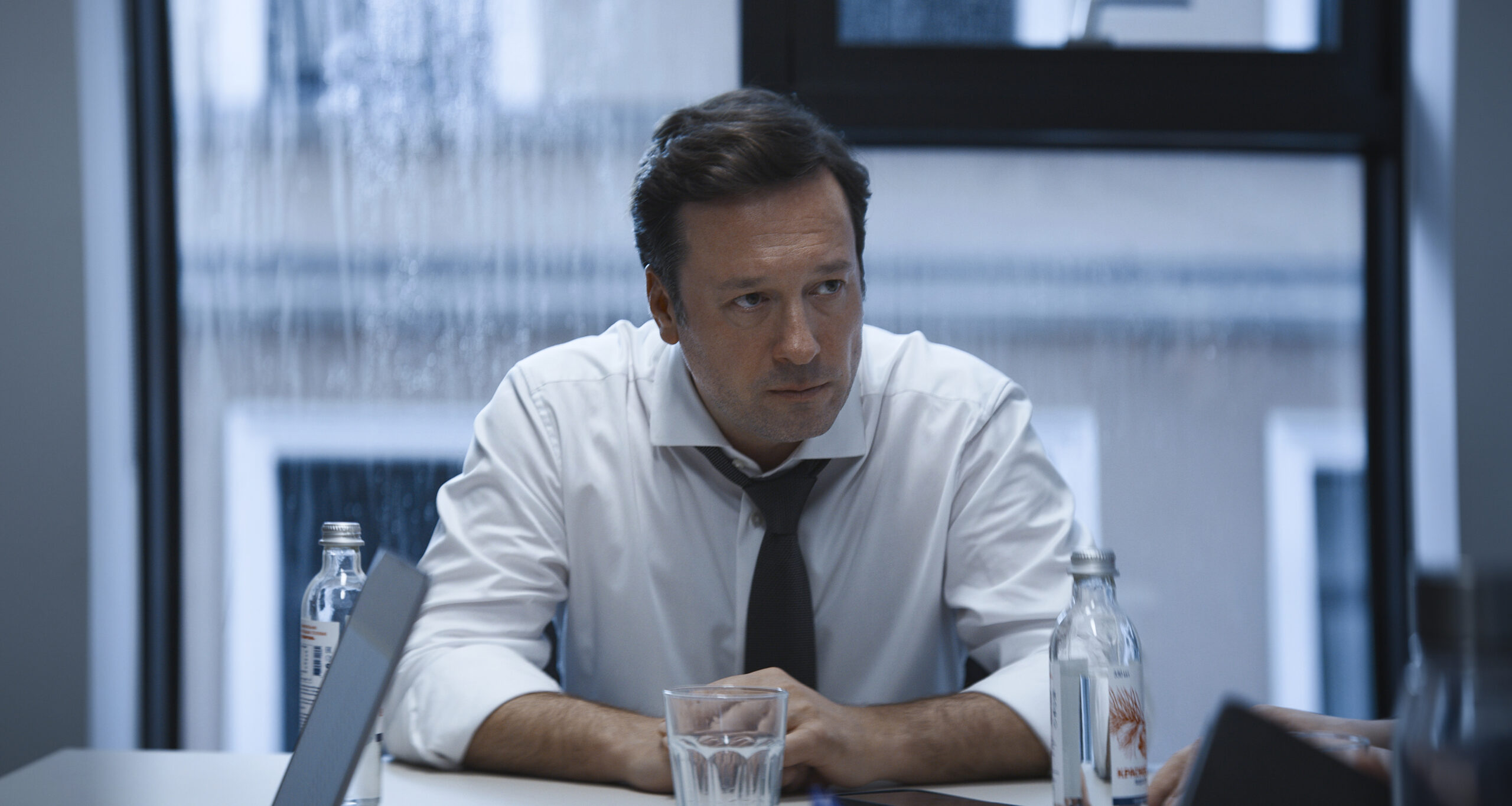
But Minotaur is not only a film about war. Indeed, Zvyagintsev originally intended to make an entirely different story. His starting point was Claude Chabrol’s The Unfaithful Wife (La Femme infidèle, 1969), a psychological thriller about a prosperous bourgeois family whose outward tranquillity proves deceptive. A husband begins to suspect his wife of infidelity, discovers that she has a lover and commits a crime whose consequences call the very survival of the family into question. Zvyagintsev had considered making a new version of the film as early as 2017–2018, but was unable to acquire the rights at the time. He returned to the idea after the war in Ukraine had begun, when it became clear that a story of marital infidelity transplanted into Russian reality would inevitably take on an entirely different dimension.
In many respects, Minotaur is a quintessential Zvyagintsev film. There is the theme of lovelessness familiar from his earlier work, along with troubled family relationships, an interest perhaps connected to the director’s own experience: his father left the family when Andrey was still very young. In The Return, the absence of a father and his sudden reappearance became a drama of power, submission and resistance. In The Banishment, family tragedy grew out of an inability to listen to and understand someone close. In Elena, conflict within the family exposed social inequality and a willingness to sacrifice another person’s life for one’s own sake and that of one’s family. In Loveless, the disappearance of a child became the terrible consequence of the collapse of a relationship between two people absorbed in their own lives. And in Leviathan, a family disintegrated under the pressure of the state, the Church and human betrayal, against a backdrop of chaos in the face of which the individual was powerless. But whereas in Leviathan Zvyagintsev used the biblical image of a sea monster as a symbol of an immense force that overwhelms human beings, in Minotaur he turns to an ancient Greek myth in which the monster demands very real human sacrifices.
Perhaps it is worth recalling the ‘plot’ of the myth. The Minotaur, a creature with a human body and the head of a bull, lived in a labyrinth on the island of Crete. The Athenians were obliged to send seven young men and seven young women, fourteen people in all, to be devoured by it, until the hero Theseus entered the labyrinth and killed the monster.
Andrey Zvyagintsev shot his film in Riga in the autumn of 2025, but the story takes place in Russia in the autumn of 2022, following the announcement of ‘partial mobilisation’. The protagonist, Gleb Morozov (played by Dmitry Mazurov), runs a transport company in the Moscow region, as indicated by the regional code 760 on his car’s number plate. He is a respected man, on familiar terms with the town’s mayor. A brand-new Volvo and a modern house overlooking a stretch of water are the trappings of professional success. But in Russian literature, where there is water, there is bound to be a drowned body, if not a corpse deliberately dumped in it. Business is thriving, but Gleb’s relationship with his wife Galina (played by Iris Lebedeva) is clearly troubled. This becomes apparent in the film’s opening minutes, and the tension only increases as the story unfolds. Yet Gleb seems genuinely to love his wife, as he does their son Sergei, a schoolboy. But Galina has grown bored with him, and a handsome young photographer has appeared on the scene…
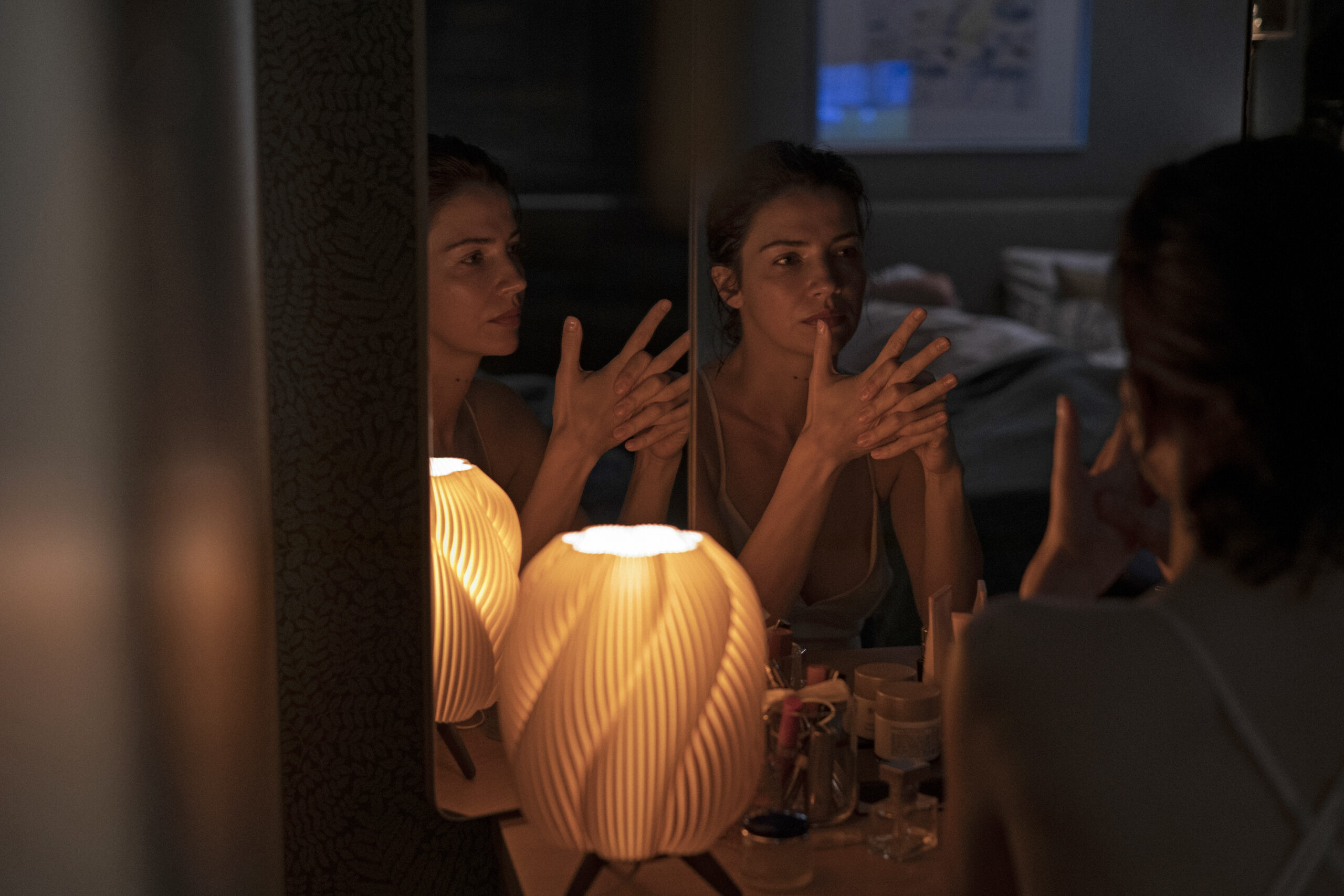
Meanwhile, Gleb receives a demand from the mayor: he must provide fourteen of his employees to be sent to fight in Ukraine. Fourteen, mind you! Otherwise, the men will be taken without his involvement: the military recruitment officers will simply turn up at his office and take them away.
And so Gleb suddenly finds himself facing two ‘problem situations’: which of his employees to send to war, and what to do about his wife’s infidelity. In both cases, the issues are power over another person’s fate, trust, betrayal and responsibility. But while Gleb sees himself as the injured party in his marriage, in his dealings with the state he becomes part of the machinery that turns other people into victims. This is where the film’s central moral question arises: where is the boundary between someone forced to submit to circumstances and someone who willingly accepts their rules in order to preserve his own comfortable existence?
I shall not tell you how Gleb deals with his problems or how he finds his way out of the labyrinth – I hope you will watch the film and discover that for yourselves. But he does manage it. People like him always do. They have everything sewn up. What I want to talk about is something else.
Gleb resembles a great many Russians. Neither he nor his friends appear to be committed supporters of the war, or opponents of it. One of them is planning to clear off to Thailand with his young mistress and ‘wait it out’ there; the others simply keep quiet. Like so many others, Gleb wants to preserve his business, the life he is used to and his position in society, and does not care about anything else. Yes, he was not the one who decided to start the war or announce mobilisation, but it is he who must translate other people’s decisions into the fates of actual human beings. And he does so. And becomes an accomplice: the state knows what it is doing, and its ‘invitation to complicity’ falls on well-prepared ground. A society in which human relationships have long been built on lies, fear, self-interest and indifference proves ready for it.
The film has received numerous glowing reviews, from The Guardian to Variety and from Le Monde to Le Figaro. An unexpectedly harsh review appeared in the Argentine publication EscribiendoCine, whose author argues that Gleb and Galina’s family story differs little from an ordinary melodrama about wealthy people suffering from jealousy and boredom, and that Zvyagintsev gives banal material an unjustifiably monumental treatment. I beg to differ.
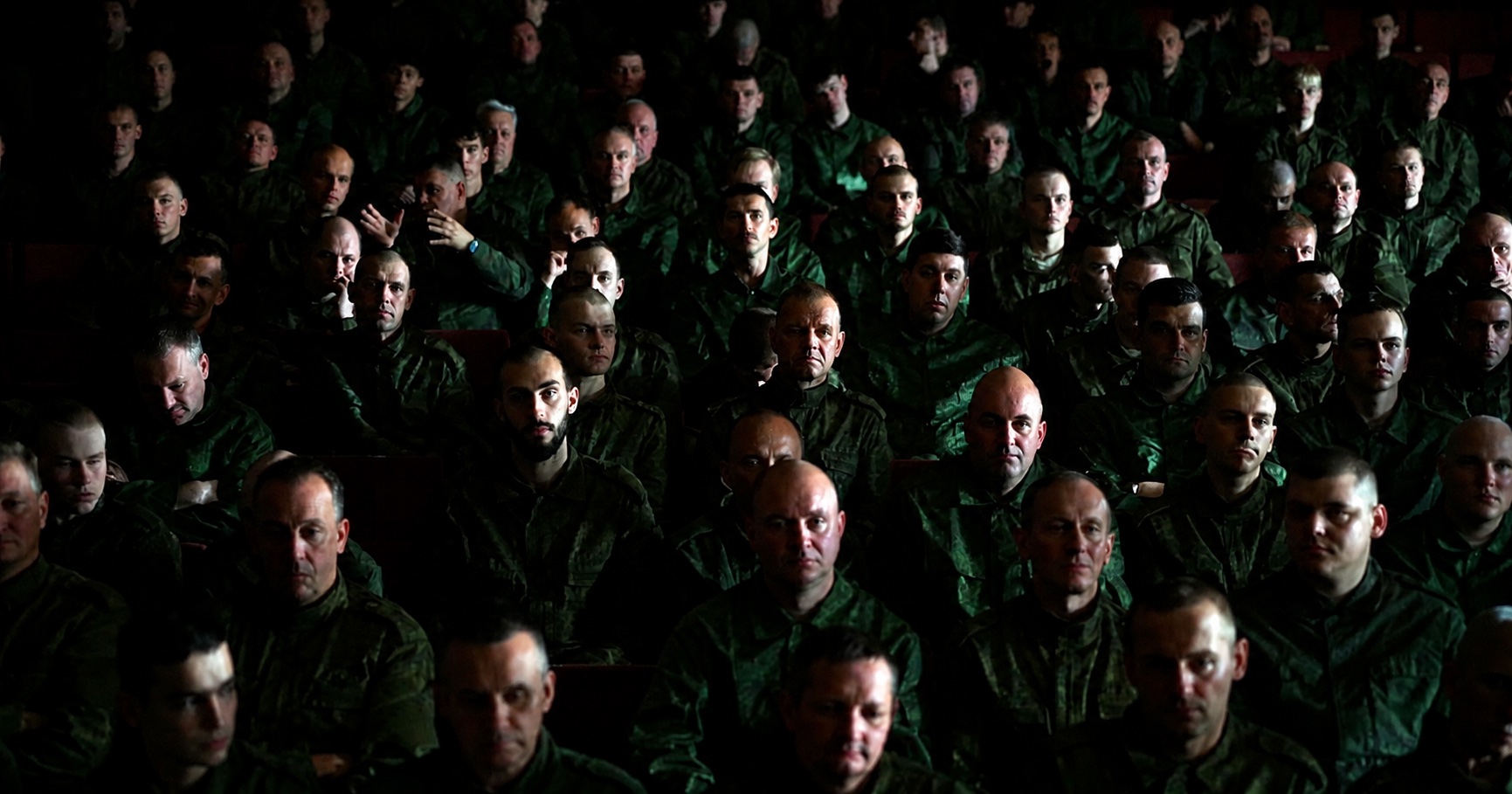
Murder is not exactly banal, one would like to think. Nor is a party with friends on the eve of sacrificing fourteen human beings. Nor is the possibility of escaping justice in exchange for doing the mayor a ‘favour’. And there is certainly nothing banal about the repellent propagandist who, under the benevolent gaze of a priest, exhorts the mobilised men to fulfil their ‘sacred duty’. And what about those mobilised men themselves, setting off for a senseless war to the ill-fated strains of the march Farewell of Slavianka? Are they victims, or obedient killers, perhaps even willing ones?
Minotaur is frightening in its unhurried pace, its ordinariness and ‘normality’, and the familiarity of its characters, none of whom, taken individually, seems quite a monster. But together?.. Together, they make up a film not merely about Russia waging war against Ukraine, but about the moral decay of a society, a decay that begins in its basic ‘cell’, the family, and ultimately leaves that society in a state in which such a war becomes possible.
… At the end of the film, Gleb and his family fly off on holiday. Where to, do you think? Crete, the birthplace of the Minotaur.