
Trash: From the Street to the Museum
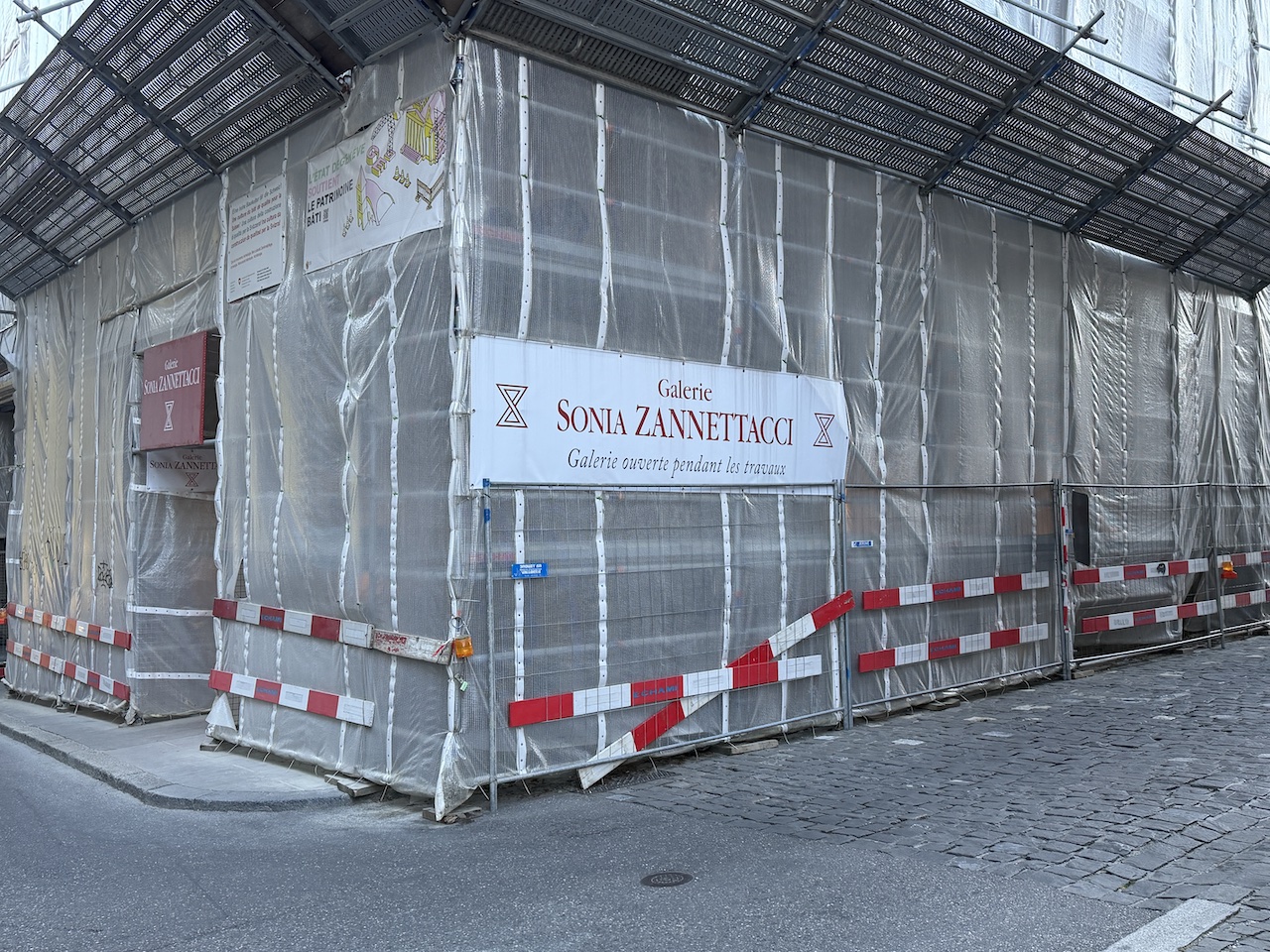
Sonia Zannettacci, an iconic figure on Geneva’s art scene, opened her gallery in the Old Town in December 1980. Since then, it has hosted dozens of fascinating exhibitions introducing visitors to some of the most prominent figures in Surrealism, Nouveau Réalisme, Narrative Figuration and photography.
Behind the names of artistic movements are always people. While Sonia Zannettacci never knew Amedeo Modigliani, she worked for years with many other remarkable artists and became friends with some of them: Arman, César, Hains, Rotella and Villeglé are more to her than names in an art history textbook.
And now, 46 years later, circumstances forced her to leave the place she had occupied for so long. Fortunately, she did not have far to go: literally to the neighbouring arcade, on the corner of rue Henri-Fazy and rue de la Grange. Even the postal address remains unchanged. There are now three fewer steps for visitors to climb, the gallery owner jokes, and the new space actually has more light. This will become even more apparent once the building work is completed and the scaffolding comes down. Neither the gallery’s artistic focus nor its “company” has changed: Sonia Zannettacci is opening this new chapter with Le Nouveau Réalisme. Un recyclage poétique du réel urbain, and the walls and rooms are once again filled with works by Arman, César, Christo, Dufrêne, Klein, Niki de Saint Phalle, Rotella, Spoerri, Tinguely and Villeglé...
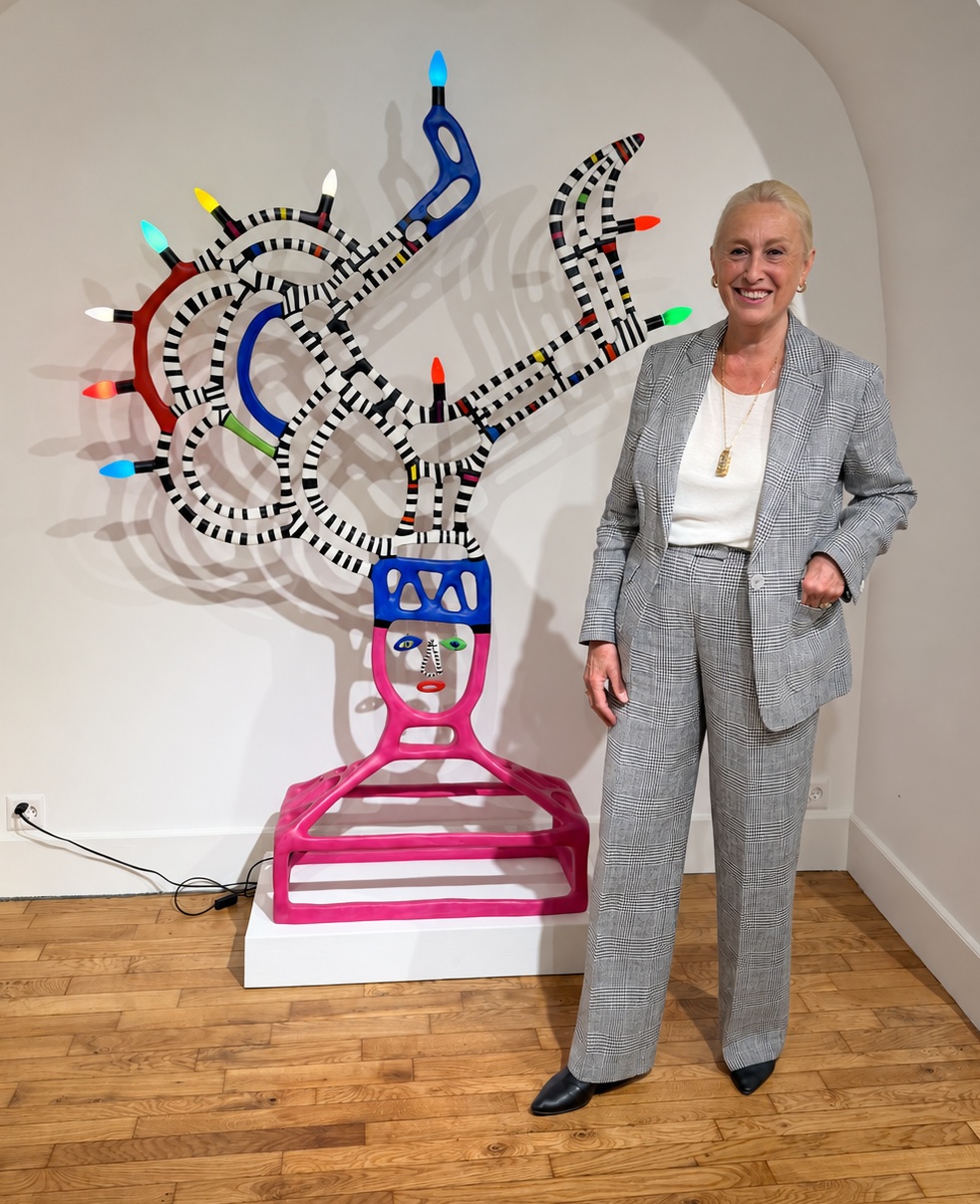
Yes, Sonia Zannettacci has invited into her new space those old friends who, back in 1960, convinced the world that practically any object could become material for art. They were the very artists who stood at the origins of Nouveau Réalisme.
The movement was officially born on 27 October 1960 in Yves Klein’s Paris apartment, where Klein, Arman, François Dufrêne, Raymond Hains, Martial Raysse, Daniel Spoerri, Jean Tinguely and Jacques Villeglé signed the founding declaration of the new movement, drafted by the art critic Pierre Restany. In it, they acknowledged their “collective singularity” and proclaimed: “Nouveau Réalisme = new ways of approaching the real.” César and Mimmo Rotella had been invited but were unable to attend; Niki de Saint Phalle joined the group somewhat later, as did Christo, the Bulgarian-born American artist and sculptor.
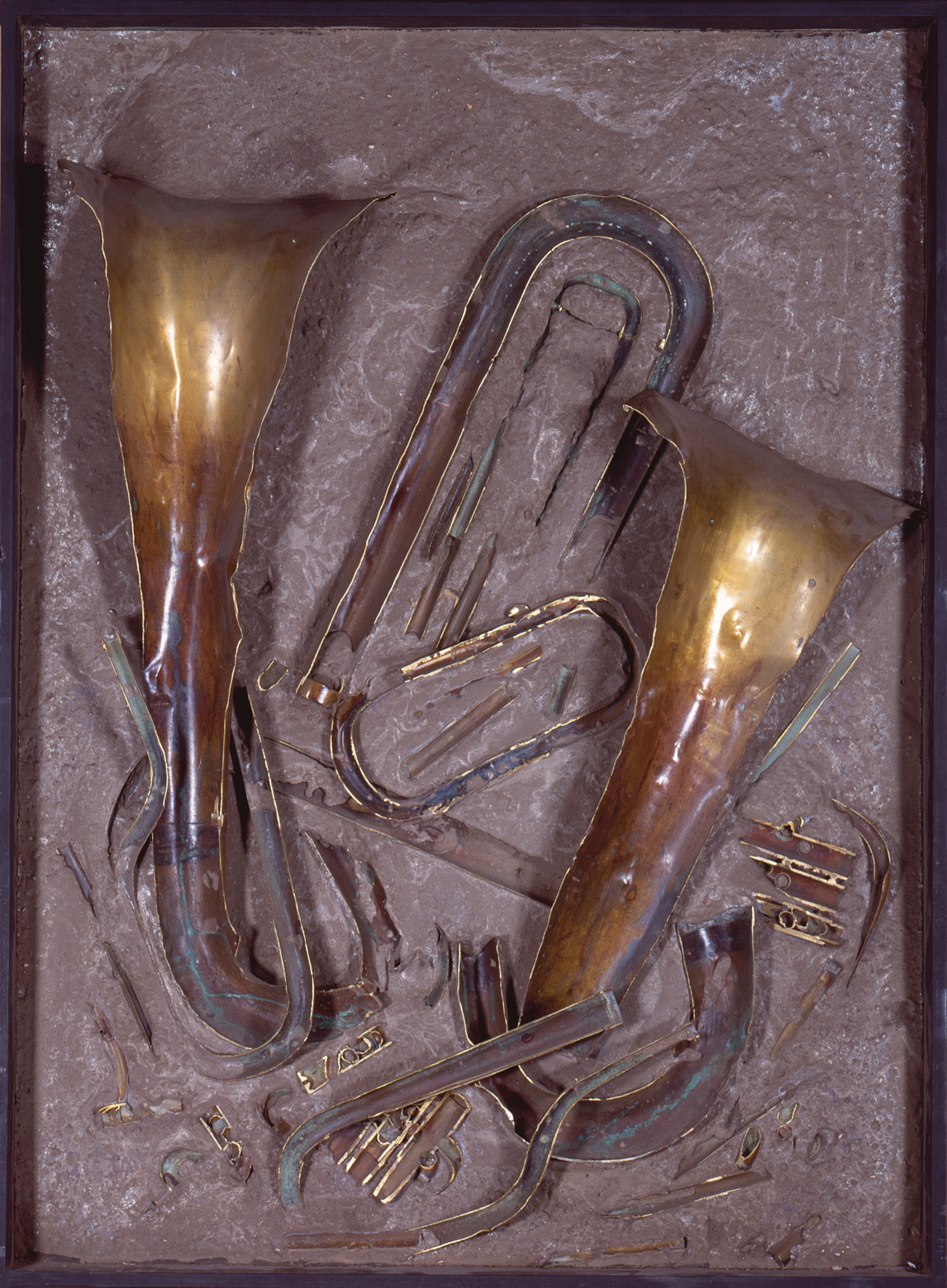
A play on words: taïaut (a traditional hunting cry) / taillé (“cut”), referring to the hunting horn cut into sections.
The Nouveaux Réalistes sought to bring reality back into art, but in 1960 the very word “realism” had to be handled with care. They therefore deliberately distanced themselves both from lyrical abstraction, setting against it a direct engagement with the world around them, and from traditional figurative painting. Still more emphatically, they distanced themselves from Stalinist Socialist Realism: a reality whose meaning had been predetermined by ideology and then depicted in accordance with that interpretation was thе opposite of the direct encounter with reality they were seeking.
By the time Nouveau Réalisme was born, Stalin had been dead for seven years. The Soviet Union was experiencing the Thaw; four years had passed since the 20th Party Congress denounced the “cult of personality”. Art, too, was changing. Yet Socialist Realism remained the official artistic method of an enormous country covering, as we were taught at school, one sixth of the world’s land surface. But there is an important caveat here: the fact that the method was official did not mean that the artists working within its constraints lacked talent. There were remarkable artists working within it, and many did far more than paint ceremonial portraits of leaders, happy collective-farm women and muscular steelworkers. Moreover, after Khrushchev’s notorious attack on the exhibition at the Manege in 1962, the scope allowed for artistic experimentation narrowed sharply once again, which only spurred the further development of Soviet nonconformist art, rejecting the monopoly of Socialist Realism.
But even if we confine ourselves to official art, very different artists worked within the boundaries imposed by the state, and the best of them knew how to push those boundaries, investing prescribed subjects with their own vision, psychological depth, a sense of tragedy and sometimes even veiled doubt. One need only think of Alexander Deineka, Yuri Pimenov, Arkady Plastov or the later works of Gely Korzhev. Their paintings cannot honestly be reduced to the single label of “ideological art”, although nor can they be separated from the system within which they were created.
All the more intriguing, then, that at almost the same time, in Eastern and Western Europe alike, artists were trying to reclaim reality, although the freedom available to them was hardly comparable and they understood the task in radically different ways. Soviet artists of the Thaw gradually brought the private individual, with his or her emotions and doubts, back into official art, abandoning pomp and pathos in favour of everyday, unheroic life. The Nouveaux Réalistes in France went much further: they decided there was no need to depict reality at all if you could simply take a piece of it and turn it into art. A poster could be torn from a wall, never mind that passers-by had already ripped parts of it away (Jacques Villeglé). A car could be put through a press (César), discarded objects gathered into an “accumulation” (Arman), the remains of a meal fixed to a table and the table turned upright, plates, glasses, cutlery and all (Daniel Spoerri). You could construct an extraordinary machine out of whatever came to hand and make it move, clatter or even draw (Jean Tinguely). Or you could begin by wrapping cans, bottles, chairs and typewriters and end up wrapping Paris’s oldest bridge, the Pont-Neuf, and the Reichstag in Berlin, or surrounding eleven islands near Miami with floating pink fabric (Christo and Jeanne-Claude).
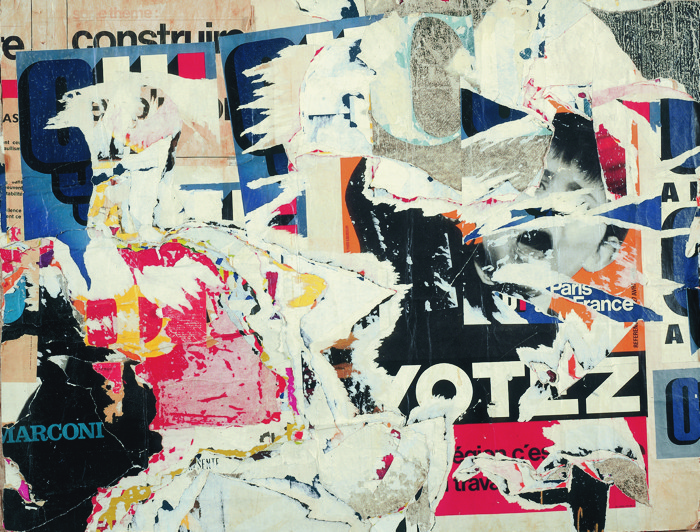
Thus, on opposite sides of the Iron Curtain, a kind of remote, almost philosophical debate took shape over who had the right to define reality. Socialist Realism proceeded from the assumption that its meaning was known in advance. The Soviet artist was expected to show reality in its “revolutionary development”. Nouveau Réalisme refused to tell reality which way it ought to develop. Here it is, its representatives seemed to say: the street, advertising, metal, things, waste. See for yourselves. What the city produced, sold, consumed, damaged and discarded returned to it in a different guise. Pierre Restany called this process the “poetic recycling of urban reality”, and 66 years later his phrase “suggested” the title of Sonia Zannettacci’s new exhibition.
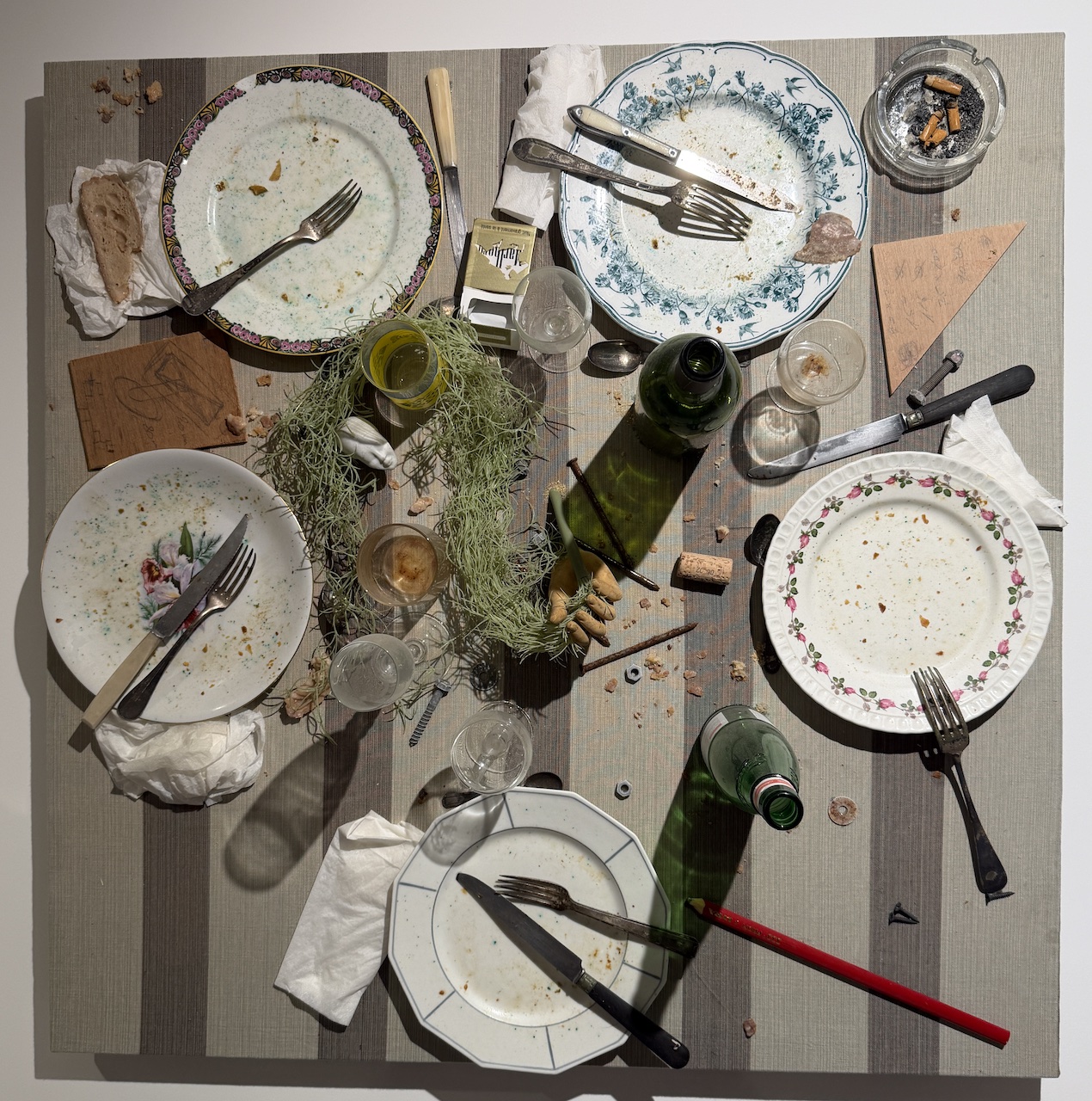
That same year, the Galerie nationale du Jeu de Paume in Paris hosted a project by Daniel Spoerri in which he created his tableaux-pièges (“snare-pictures”) from tables left as they were after meals. Jeu de pomme plays on Jeu de Paume, the name of the gallery, replacing paume with pomme.
History had a rather curious destiny in store for the two realisms.
At the turn of the 1980s and 1990s, as the Soviet system began to collapse, interest in Socialist Realism rose sharply. Previously inaccessible collections were opened to public, Soviet art poured into the West, and exhibitions, studies and collectors proliferated. What only recently had seemed to many like the dreary official output of an alien ideological system suddenly became evidence of a disappearing world. Soviet art, including Socialist Realism, became genuinely fashionable. By the late 1980s, even Pierre Restany was paying close attention to what was happening on the other side of the Iron Curtain: he travelled to the USSR and in 1988 gave lectures on Western art at the New Tretyakov Gallery in Moscow. What interested him most, however, were not the recognised representatives of official Socialist Realism at all, but nonconformist artists.
The fashion, as fashions usually do, passed, but Socialist Realism did not disappear. It remained the subject of serious museum, historical and art-historical study, while individual masters have long since taken their rightful place in the history of art.
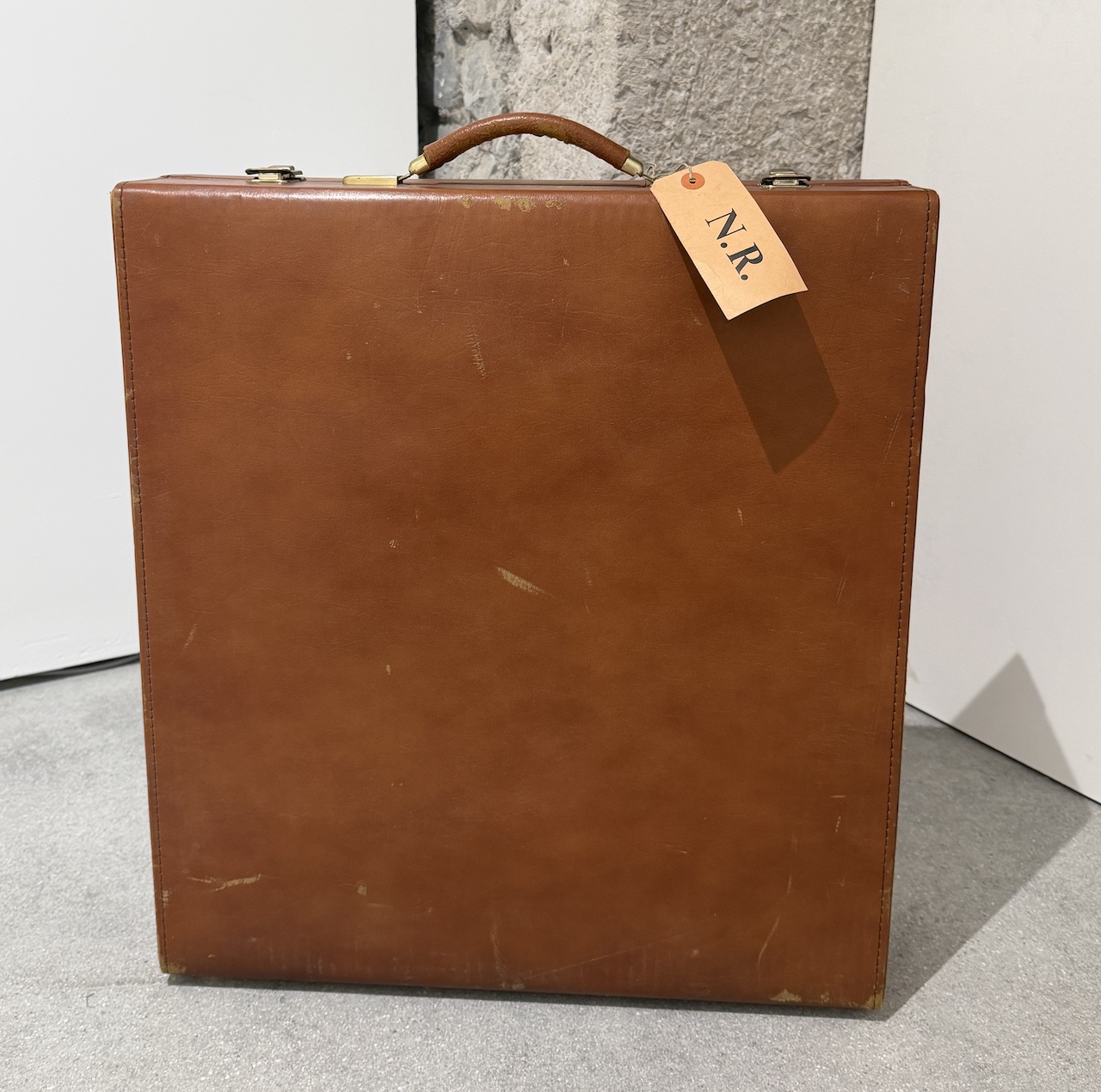
A collective work incorporating works by members of the movement. Photo © N. Sikorsky
Nouveau Réalisme, too, has long since become part of the museum canon. A compressed car, a poster torn from a wall or a pile of identical objects no longer particularly shocks anyone. But something else is curious: the world around us has become even more like the one the Nouveaux Réalistes saw in 1960. Mass production has become more massive still, advertising pursues us far beyond the walls of buildings, consumption has accelerated, and we produce so much rubbish that the word recyclage ceased long ago to be an artistic metaphor and became an everyday obligation.
The future towards which Socialist Realism invited us to look never arrived. The consumer society that Nouveau Réalisme saw around it has surpassed the boldest expectations. Sonia Zannettacci has achieved something very few people manage: to move on without breaking with the past, and to begin anew without starting from scratch.
Come and see the exhibition. It runs until 31 October. Then we can compare impressions.