
Armed Swiss Neutrality: in the Museum and in Life

The word “neutrality” does not appear in the title, yet it is this fundamental principle of Swiss foreign policy, established at the Congress of Vienna in 1815 with the active participation of the Russian emperor Alexander I, a pupil of the Swiss Frédéric-César de La Harpe, that this exhibition is devoted to.

Opinions within the country and beyond as to what neutrality means in a contemporary context, what privileges it confers and what obligations it entails, have diverged in recent years, first because of the war in Ukraine and then in the Middle East. According to data for summer 2025, support for the principle of neutrality remains high (87%), although before the war in Ukraine it stood at 97%. While military neutrality is supported by a majority, whether Switzerland should take a clear political stance in foreign conflicts is disputed. A strict understanding of neutrality, including the rejection of sanctions, is not supported by all: according to a recent survey, sanctions against Russia are supported by 70% of the population, while 30% do not support them.
In the spring of this year, the national parliament first rejected the popular initiative “Safeguard Swiss Neutrality”, whose aim was to enshrine in the Constitution an article on Switzerland’s “perpetual and armed” neutrality and its use for the prevention and resolution of conflicts by this mediating country, as well as to prohibit participation in military alliances and to limit sanctions to those imposed by the UN. The parliament did not support the counterproposal either. But in accordance with the principle of direct democracy, an initiative that has gathered enough signatures can nevertheless be put to a popular vote. Thus, a referendum will most likely take place, and we, the citizens of Switzerland, will have to answer whether we prefer neutrality as a flexible practice, that is “selective”, or as a rigid constitutional rule.

The leadership of the Swiss National Museum has thus decided to take part in this collective reflection in its own way: throughout the exhibition, presented in German, French, Italian and English, visitors are accompanied by an interactive “Neutrality Compass”, prompting reflection on one’s own position. In each section two questions are posed, and at the end of the visit an evaluation of the answers is provided together with additional information about Swiss neutrality. I will cite two of the ten questions:
Question 3. In the first six months of 2025, Switzerland exported military matériel worth around 358 million Swiss francs, including to authoritarian regimes. Should a neutral country such as Switzerland continue to export military matériel?
Question 4. Until now, states purchasing Swiss military equipment were not allowed to take part in armed conflicts. This restriction is now to be lifted for certain countries. Does the relaxation of arms export rules jeopardise Swiss neutrality?
No doubt some have already formed their opinion and need no assistance. But for others, especially those like myself who are not native Swiss, this exhibition may be genuinely useful: its five sections explain how wars have shaped Swiss politics, economy and society from the late Middle Ages to the present day, and show how conflicts trigger processes of identity formation, redefine economic dependencies and intensify social tensions. Beyond the military dimension, the emphasis is placed on their impact on everyday life, culture and political decisions, as well as on how war has shaped Switzerland’s self-image, from a supplier of mercenary soldiers to a provider of diplomatic good offices.
In the fourteenth century, the Old Swiss Confederacy emerged as an alliance of political regions, the cantons, and after the Burgundian Wars of the 1470s it consolidated its position within the European balance of power. In the nineteenth century, these medieval myths were transformed into narratives shaping the identity of the modern federal state. I must admit that this aspect, the making of myths and their practical use, struck me as the most interesting, since in the forthcoming vote emotions will play no less a role than common sense, if not a greater one. “During the world wars, politicians and the public once again drew on these images to justify Switzerland’s neutrality and to strengthen internal cohesion,” the exhibition curators remind us, listing legends familiar not only to native but also to naturalised Swiss, as their knowledge is required to pass the citizenship test: the oath on the Rütli meadow, William Tell, or Arnold von Winkelried.
Having come to the exhibition, I was once again reminded that the Swiss, including the curators of the National Museum, are a particular kind of people. Seeking to demonstrate the links between mercenarism, the defence industry, economic development and social change, including migration flows, they open the exhibition … with a story of their own defeat. The tapestry The Battle of Pavia (1525), shown for the first time in Switzerland and lent to the Zurich museum by colleagues from Naples, depicts the flight of Confederate troops and challenges the myth of their military invincibility.

Three different representations of the Battle of Morat (1476), a historical painting, a teaching panel and a contemporary photograph, illustrate how collective perception and memory of this event have changed over time. Nevertheless, in 1895 the country’s star painter Ferdinand Hodler, preparing for the National Exhibition of 1896, created several portraits of Swiss mercenary soldiers, presenting them as idealised images of brave men and at the same time as a multilayered reflection on a national symbol.

Legends stand the test of time, or they do not. In Switzerland there are ten monuments to William Tell, the first being the one that has adorned the main square of Altdorf since 1895, although the national hero had to wait almost six hundred years to be commemorated. Today some in Switzerland are outraged that the image of William Tell has been “appropriated” by a right-wing party fond of holding rallies in front of the monument in Altdorf, while others quote Max Frisch’s Wilhelm Tell für die Schule (1971), in which the famous Swiss playwright made not Tell but the Habsburg governor Gessler the positive character, who in his version sought compromise and did not wish to escalate tensions with his subjects, whereas the Swiss hero appears as a gloomy, narrow-minded mountaineer, fearful of change and treacherously killing the governor.

But the myth lives. The exhibition presents another use of it, previously unknown to me. The exhibit is entitled “The Three Tells”. These three are not real bearers of the same surname and certainly not “three William Tells”, but insurgents of the Peasants’ War of 1653 in Entlebuch who consciously appropriated the image of the legendary hero as a political and symbolic gesture. Acting against the authorities of Lucerne, they did so in accordance with the logic of the myth, as defenders of “old freedoms” and popular rights embodied in the figure of Tell. Their attack on a delegation of the Lucerne council ended in defeat, two were killed in battle, the third was executed. In the nineteenth century, however, the artist Martin Disteli reinterpreted this episode, presenting them as the “last free men of Entlebuch”. Thus, a concrete historical event was transformed into a national romantic image, demonstrating how Swiss history is reworked through mythology and how the myth of Tell continues to be used to legitimise resistance and shape collective identity.

The exhibits also highlight economic and social aspects: troop lists, coins and discharge documents testify to the trade associated with mercenarism; splendid suits of armour in the Italian style recall the suppression by Zurich troops of that same peasant uprising of 1653, caused, it should be noted, by the devaluation of the national currency after the Thirty Years’ War (1618-1648).
The First World War also brought impoverishment of the population, rising prices and social polarisation, resulting in the rare general strike of 1918; this period is evoked in the exhibition by a machine gun and a trade union banner from the time of the general strike of 1918, uniforms of active service and of the Women’s Auxiliary Service, as well as plans and photographs of military installations in the Alpine zone.

There are no longer any direct witnesses of those events, yet there are still people capable of speaking about the activities of leading defence industry enterprises such as Werkzeugmaschinenfabrik Oerlikon and Waffenfabrik Solothurn during the Second World War, and about much else. For example, that when Germany introduced in October 1938 the “Jewish stamp”, the letter “J”, in passports, Switzerland approved this discriminatory measure. At the height of the war, especially between 1942 and 1944, about 30,000 people, many of them of Jewish origin, were denied entry, which for many amounted to a death sentence. Of course, there were also those who saved Jews at their own risk, and the work of the commission headed by the historian Jean-François Bergier, though belated, deserves praise. Yet I believe that not all the truth is known.

Среди участников Второй мировой войны был и знаменитый художник Ханс Эрни. Нынешнему поколению он известен прежде всего как автор красочной фрески, украшающей площадь перед Дворцом Наций в Женеве, но в 1940-е мастер, не скрывавший своих симпатий к СССР и выступавший за восстановление дипломатических отношений между Советским Союзом и Швейцарией, служил камуфляжистом и расписывал военные объекты. На выставке представлен созданный им в 1940 году проект маскировки MM5 Rynächt, но я предпочитаю показать вам фреску Muni mag 5, расписанную Эрни в солдатском клубе кантона Ури в 1944 году.

Propaganda was also active during that war; suffice it to recall Leopold Lindtberg’s film about the Battle of Morgarten, Landammann Stauffacher, which reinforced the image of Switzerland as a country ready to defend itself. At the Venice Biennale of 1942, the film provoked the displeasure of the Axis powers, as it was interpreted as a call to resist totalitarian regimes.
Since then, wars have largely bypassed Switzerland. At the same time, its army continues to be regarded as one of the best in the world, and interest in it among young people, as I observe, is growing, despite the calls, ongoing since 1986, of the group “Switzerland without an Army” (GSoA) to abolish the army altogether. But the equipment used by infantry scouts presented at the Swiss National Museum involuntarily evokes Chewbacca from Star Wars, does it not?

The issue of migration, closely linked to the upcoming referendum, is not overlooked either. I have no doubt that visitors will notice the expressive black-and-white photographs by Klaus Petrus. Between 2016 and 2025, as part of his long-term project Spuren der Flucht (“Traces of Flight”), he documented the lives of migrants along the so-called Balkan Route to Europe, including to Switzerland.
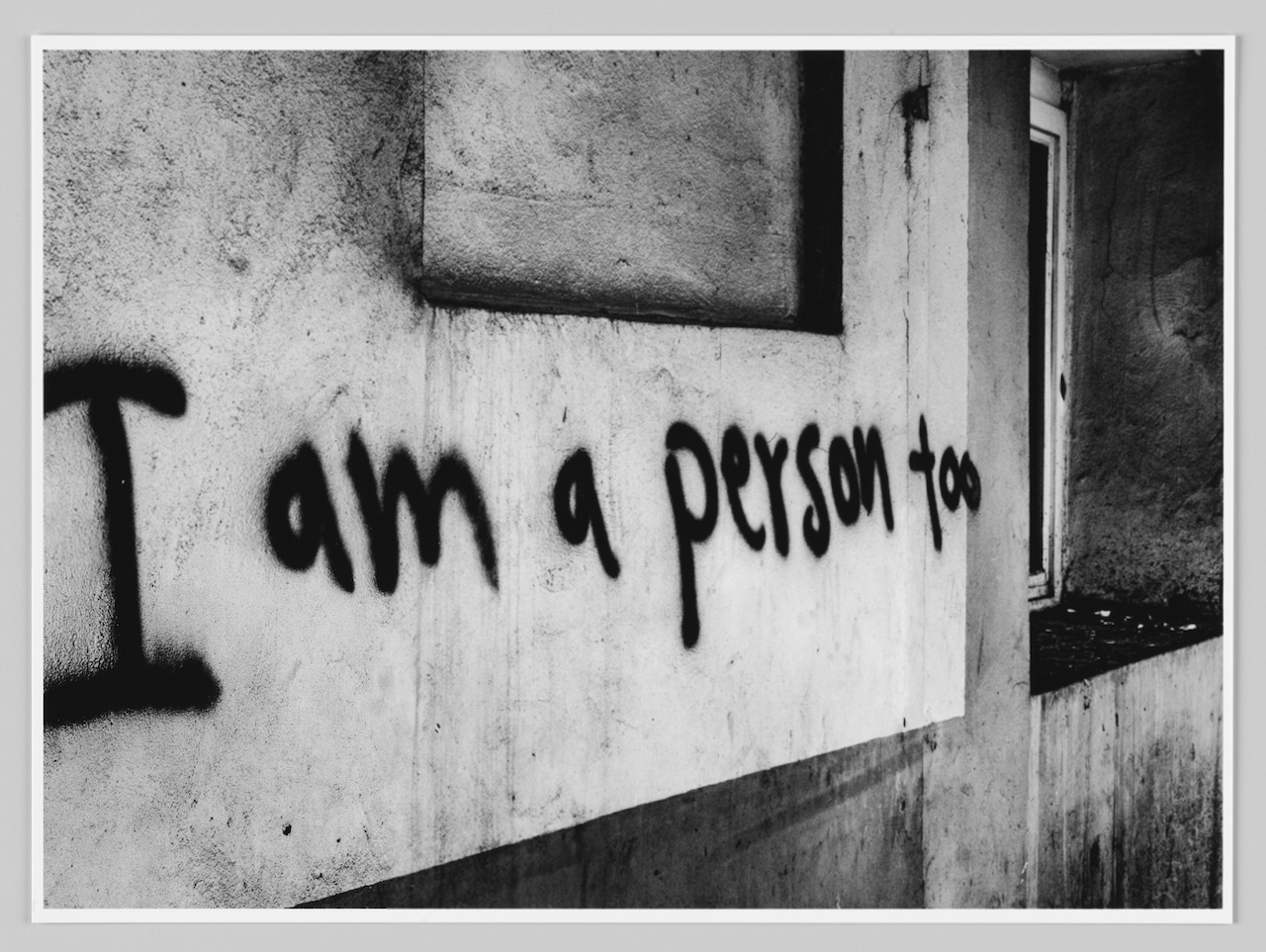
At the end, the exhibition brings the visitor back to the present: in the video installation Repeat after me, refugees from Ukraine imitate the sounds of gunfire, artillery and sirens. “Visitors are invited to reproduce these sounds, an effective way of reminding visitors that war exists not only in history textbooks but continues to shape human experience and break lives,” emphasise the curators.
Leaving the exhibition, take with you the image of Helvetia in traditional Bernese costume, as depicted in 1895 by Edouard Castres, holding in her hand the Federal Treaty of 7 August 1815 and leaning on the barrel of a cannon against an Alpine backdrop. I believe that this image will serve as yet another prompt ahead of the referendum, in which I wish us all to take part in sound mind and with clear judgement. In other words, fully armed.
